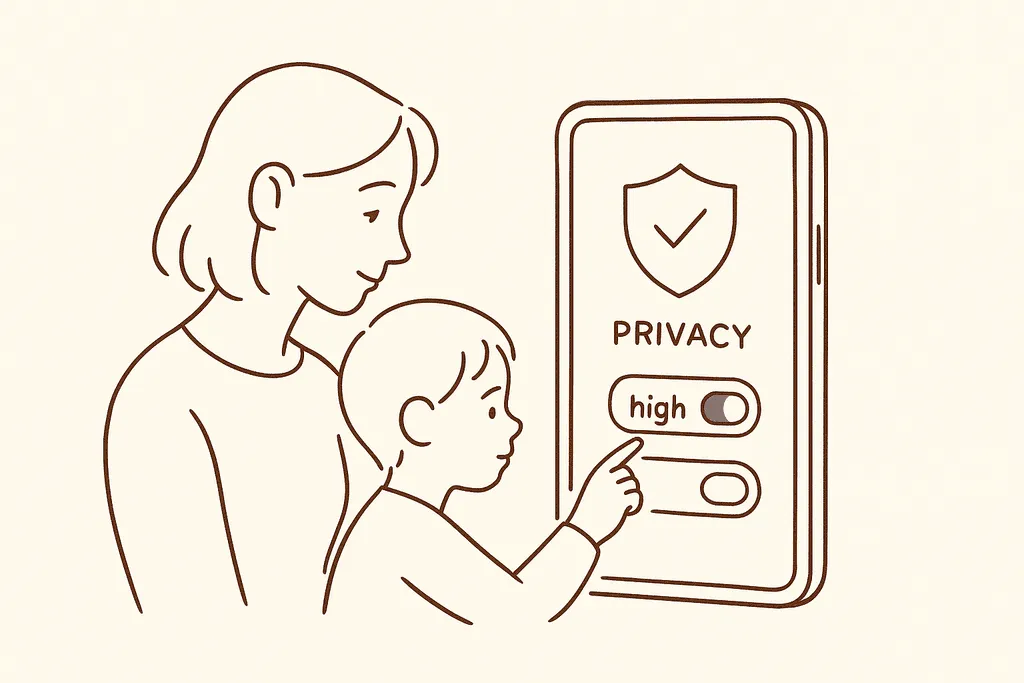
Smart defaults protect kids automatically — the Children's Code pushed major platforms to make safer settings the starting point.
- Safer settings that turn on automatically protect kids who never touch a settings menu.
- Defaults carry a lot of the load, so you don't have to configure everything by hand.
- Privacy settings can drift open over time, so a periodic check is worth the few minutes.
- Backing age-appropriate-design rules where you live extends protection by design, not by vigilance.
The situation, the move, the outcome.
The UK's Age Appropriate Design Code (the 'Children's Code'), in force since September 2021, requires online services likely to be used by kids to put children's best interests first by design. In practice that meant changing the defaults: high-privacy settings on by default, minimal data collection, geolocation off, and limits on profiling. Within months, Facebook, YouTube and TikTok announced concrete changes — defaulting minors' accounts to private, restricting how adults can find and contact them, limiting ads, and adding notification time-outs. Analysts counted dozens of changes across platforms tied to the code, including 43 relating to profiling and advertising.
The everyday effect of the code is that protection arrives at the moment an account is created, rather than depending on a parent later hunting through menus. Because young users are defaulted into high privacy, minimal data collection and limited contact from strangers, the safest configuration is the one a child lands in without doing anything. Platforms translated the requirement into visible features — private-by-default accounts, restrictions on how adults can find minors, and trimmed advertising and profiling. For families, that means the job shrinks to a periodic check that nothing has drifted open, instead of a full manual setup.
Why it matters beyond one family.
The code's power is that it shifts protection from the child's vigilance to the platform's defaults — so safer settings are automatic rather than something a parent has to hunt down. It influenced similar 'age-appropriate design' efforts elsewhere.
This generalizes because it targets the most reliable lever in any system: the default state. Most people, including teens, never change settings, so whatever a service ships as standard is what the vast majority actually live with. Moving the safe option to the front therefore protects far more children than any awareness campaign asking them to opt in. That insight is why the approach influenced age-appropriate-design efforts beyond the country that started it, and why supporting such rules locally pays off without requiring anyone to become a settings expert.
- The rule shifted protection from a child's constant vigilance to the platform's own defaults.
- Major platforms responded with concrete changes like defaulting minors' accounts to private.
- Analysts counted dozens of real changes across services, including many tied to profiling and advertising.
- Its influence spread, shaping similar age-appropriate-design efforts elsewhere.
How to apply it.
- Check that your teen's accounts are on the strictest privacy defaults — many now are.
- Understand that defaults do a lot of the work; you don't have to configure everything manually.
- Support age-appropriate-design rules where you live; they protect by design.
Hey, want to spend five minutes checking the privacy settings on your apps with me?
Why? Aren't they already private?
A lot of them probably are by default now, which is great. I just like to confirm nothing quietly switched back over.
Okay. This one says my account's private and location's off.
Perfect — that's exactly what we'd want. See how it's already set up that way? We're mostly just double-checking.
This other app lets adults message me unless I change something.
Good catch. Let's tighten who can contact you. That's the one setting I really care about.
Done. That was faster than I thought.
Concrete next steps.
- Review privacy and contact settings on each app and tighten anything that drifted open.
- Turn off location sharing and ad personalization for younger teens.
- Use the 5Rights / ICO explainers to understand what protections should already apply.
Read it for yourself.
Call or text 988 (Suicide & Crisis Lifeline, 24/7) · Text HOME to 741741 (Crisis Text Line) · Find a child psychiatrist at aacap.org · For immediate danger, call 911.