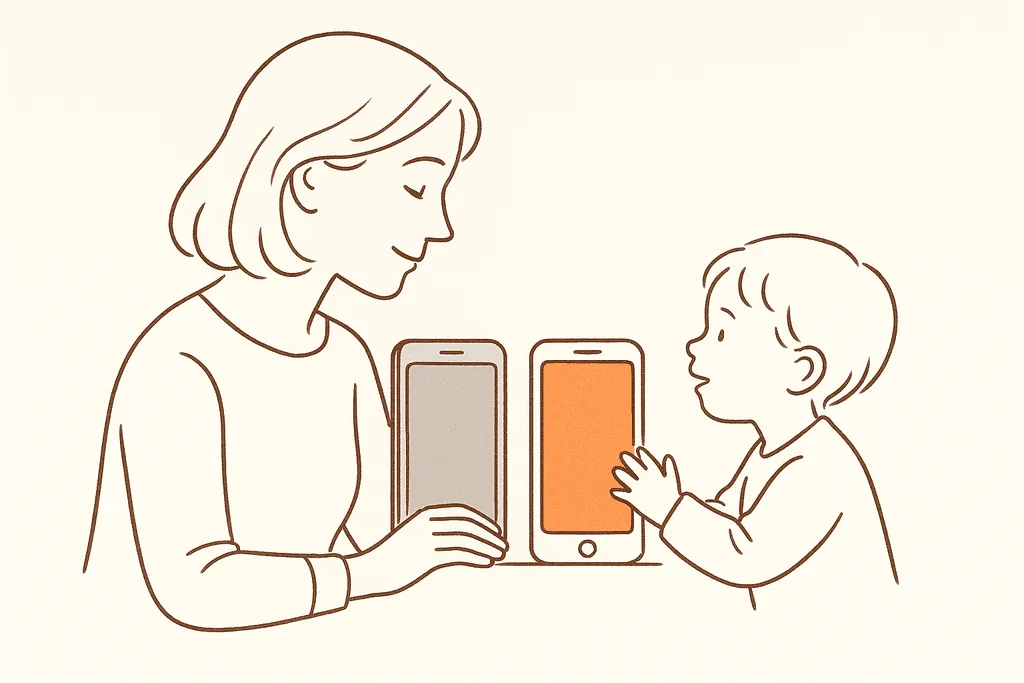
Grayscale and notifications-off are tiny, free settings changes with measured drops in screen time and distraction.
- These changes target the phone's design, not your teen's willpower.
- Keep messages from real people and mute the rest to cut the noise that fragments focus.
- Treat the tweaks as a low-stakes week-long experiment your teen can judge for themselves.
- Pair the settings with Focus or Do Not Disturb during homework and sleep for more effect.
The situation, the move, the outcome.
The phone is designed to grab attention with color and buzz — so two of the simplest counters are to remove both. In a controlled study, switching the screen to grayscale reduced daily screen time by about 20 minutes and left users feeling more in control, by stripping out the colorful cues that trigger dopamine-driven checking. Separately, research on notifications found that constant alerts degrade focus and even produce ADHD-like inattention, while muting them correlates with better concentration. Neither requires an app or a purchase — just a settings change.
In practice these are quick taps in the phone's own settings rather than a new routine to maintain: the screen loses the bright cues that invite a reflexive check, and the steady stream of non-essential alerts simply stops arriving. With the buzz and color removed, the phone becomes a bit less magnetic to pick up and a bit easier to set down. Keeping messages from real people means a teen stays reachable while the noise that fragments attention falls away. Because nothing relies on resisting temptation in the moment, the change tends to require very little ongoing effort.
Why it matters beyond one family.
These tweaks work because they target the design, not the willpower. They won't fix everything (deep-rooted checking habits persist), but as near-zero-effort experiments they punch above their weight.
This generalizes because shaping the environment usually beats relying on self-control, and a phone is an environment engineered to capture attention. Removing the design cues that trigger checking lowers the number of moments a teen has to resist at all. The same logic extends to other small frictions — charging the phone in another room, hiding tempting apps a tap deeper — that quietly reduce pull without a confrontation. These tweaks won't undo every habit, but as near-effortless experiments they earn their place.
- Both changes are free and instant — no app, purchase, or new habit required to start.
- Grayscale left people feeling more in control, not just spending less time.
- Muting alerts is linked with steadier concentration and less constant pulling-away.
- Because the win comes from settings, it doesn't depend on a teen having extra discipline.
How to apply it.
- Try grayscale for a week and let your teen judge whether the phone feels less magnetic.
- Turn off non-essential notifications — keep messages from real people, mute the rest.
- Model it on your own phone; teens notice hypocrisy fast.
Want to try a little experiment with me this week? It's just two settings, nothing drastic.
Like what? You're not taking my phone.
Not at all. One turns the screen grey, the other quiets the alerts you don't actually need.
Grey? That sounds kind of pointless.
Maybe. The idea is it stops grabbing your eye as much. You tell me at the end of the week if it feels different.
What about my texts though, I still want those.
Keep all the messages from real people. We're only muting the random app pings.
Fine, but you're doing it on yours too.
Deal — I'll go grey right alongside you.
Concrete next steps.
- Enable grayscale via accessibility/color-filter settings (or a quick-toggle shortcut).
- Audit notifications app-by-app and switch off badges and banners you don't need.
- Combine with Focus/Do Not Disturb modes during homework and sleep.
Read it for yourself.
Call or text 988 (Suicide & Crisis Lifeline, 24/7) · Text HOME to 741741 (Crisis Text Line) · Find a child psychiatrist at aacap.org · For immediate danger, call 911.