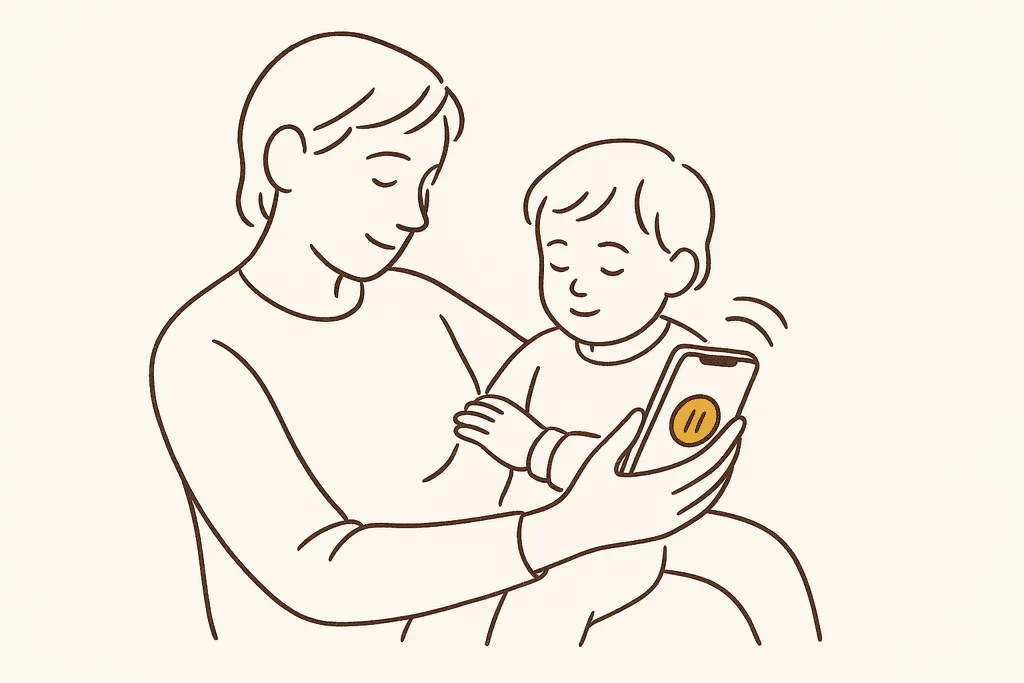
A one-second pause — and an easy way to back out — cut compulsive app-opening by about a third. Friction beats willpower.
- A small, well-placed pause interrupts an automatic habit better than willpower does.
- Making it easy to back out matters more than making the wait long.
- Frame it as redesigning the habit, not as a test of your teen's self-control.
- Free, built-in screen-time tools can recreate the same effect at no cost.
The situation, the move, the outcome.
Researchers tested 'one sec,' an app that adds a brief friction step — a deep breath and a short wait — whenever you try to open a target app like Instagram or TikTok, then offers an easy 'close it' option. In a six-week field study of 280 people published in PNAS, participants closed the target app about 36% of the time after the pause interfered, and attempts to open those apps fell roughly 37% by the end versus the first week. Breaking down the mechanism, the researchers found the option to back out was the strongest ingredient, with the time delay also helping.
The mechanism is almost mundane in how it works: by inserting a brief breath and a short wait between the impulse and the app, the friction catches the reflex before it completes. In that small gap the user is offered an easy way to back out, and the study found that exit option was the most powerful ingredient — the pause turns an automatic tap into an actual decision. Over weeks, the simple act of repeatedly deciding rather than reacting pulls the number of openings down. The takeaway for a family is that the design did the work, not heroic restraint.
Why it matters beyond one family.
The finding generalizes beyond one app: small, well-placed friction interrupts automatic habit loops better than relying on willpower or guilt. It's a design lesson families can borrow with free, built-in tools.
This generalizes far past one app because it targets the habit loop itself rather than the person's resolve. Automatic behaviors run on cues and speed; insert a little well-placed friction and you interrupt the loop without relying on willpower or guilt, which tend to fail under temptation. That is why the same principle shows up whether you use a dedicated tool or just move a tempting app off the home screen and into a folder. Families can borrow the lesson with free, built-in screen-time limits and timers — the goal is to redesign the path of least resistance, not to test anyone's character.
- The effect held up in a peer-reviewed field study, not just in theory.
- Participants often closed the app once a brief pause interrupted the reflex.
- Attempts to open the target apps fell meaningfully over the course of the study.
- It's a design lesson families can copy with free tools already on the phone.
How to apply it.
- Add a deliberate speed bump before the apps your teen opens on autopilot.
- Make backing out easy — the 'close it' option did the most work in the study.
- Treat it as redesigning the habit, not testing your teen's self-control.
Want to try a little experiment with me? Not a restriction — more of a hack.
What kind of hack?
We add a one-second pause before TikTok opens — a breath, then a little 'open it or skip it' choice. There's actually a study showing it cuts the autopilot opening.
So you're trying to stop me from using it.
Not at all. You can still open it every time. The point is just to make it a choice instead of a reflex. Half the time people realize they didn't even mean to open it.
I guess I do open it without thinking.
Right — that's the part we're redesigning, not your self-control. The easy 'skip it' button does most of the work.
Fine, I'll try it for a week and see.
Concrete next steps.
- Try one sec, or recreate the effect with built-in screen-time limits and app timers.
- Move tempting apps off the home screen and into a folder to add friction.
- Turn on 'take a break' / reminder features inside the apps themselves.
Read it for yourself.
Call or text 988 (Suicide & Crisis Lifeline, 24/7) · Text HOME to 741741 (Crisis Text Line) · Find a child psychiatrist at aacap.org · For immediate danger, call 911.