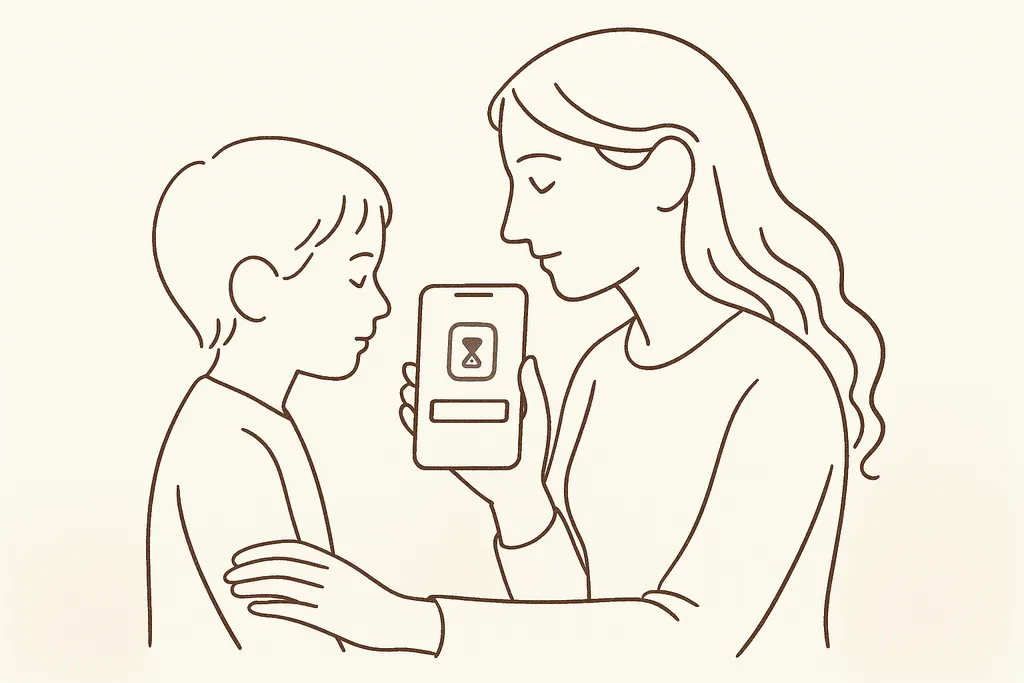
A built-in default limit is a useful nudge — TikTok now starts every teen at 60 minutes with a prompt to pause, plus weekly recaps.
- Defaults and small friction shape behavior, so leaving the limit on does quiet work on its own.
- Treat the built-in limit as a starting nudge to build on, not a finished solution.
- The weekly recap is more useful as a conversation opener than as a verdict.
- Layering family controls and phone-free times gives the nudge something sturdier to lean on.
The situation, the move, the outcome.
In March 2023 TikTok set a 60-minute daily screen-time limit by default for every account belonging to a user under 18. When a teen hits the limit, the app prompts them to enter a passcode to keep watching — turning continued use into a deliberate choice rather than mindless scrolling — and sends a weekly recap of their time. TikTok said it chose the 60-minute figure in consultation with the Digital Wellness Lab at Boston Children's Hospital.
In practice the limit works by inserting a small pause at the moment a teen would otherwise keep scrolling on autopilot: hitting the cap and being asked to enter a passcode turns 'just a bit more' into a conscious decision. That bit of friction, plus a weekly summary of time spent, nudges awareness without forcing it — which is the honest scope of the tool, since a determined teen can extend the limit. Used well, a parent treats the recap as a neutral prompt for a conversation rather than evidence in a case against their kid. The default is most useful when it's paired with household routines like phone-free meals and charging outside the bedroom, so the nudge isn't carrying the whole load.
Why it matters beyond one family.
The honest caveat: teens can extend the limit, so it's a nudge, not a wall. But defaults and friction shape behavior, and a built-in prompt plus weekly awareness is a meaningful starting point — best paired with family rules.
This generalizes because the underlying idea — that defaults and small frictions steer behavior more than willpower does — shows up well beyond one app. Making the healthier option the automatic one, and the less healthy choice slightly more effortful, reliably shifts how people behave even when they can technically override it. That's exactly why the limit is described as a nudge rather than a wall, and why it works best alongside family rules and routines that reinforce the same direction. The takeaway for parents is to lean on built-in defaults where they exist, then build the rest of the structure around them rather than expecting any single setting to solve screen time.
- A sensible default is switched on automatically, so families get a head start without configuring anything.
- Hitting the limit converts mindless scrolling into a deliberate choice, which is a genuine nudge.
- The weekly recap builds the kind of self-awareness that supports better habits.
- It was set in consultation with child-health specialists, lending the default some credibility.
How to apply it.
- Leave the default limit on and use the weekly recap as a conversation starter.
- Treat it as a nudge to build on, not a complete solution.
- Set Family Pairing controls for an extra layer with younger teens.
Your TikTok recap popped up — want to look at it together, no judgment?
It's going to say something embarrassing, isn't it.
Maybe. Mine would too if my phone tattled. I'm just curious what feels right to you.
Okay, that's more than I thought. But a lot of it's late at night when I can't sleep.
That's a useful thing to notice. The late stuff — does it actually help you wind down, or keep you up?
Keeps me up, honestly. Then I'm wrecked the next day.
What if we leave the limit on and park the phone outside your room overnight — see if sleep gets better?
Fine, but I keep it till bedtime, not at dinner like a little kid.
Deal. Let's try it a week and check the recap again.
Concrete next steps.
- Enable TikTok's screen-time limit and Family Pairing features.
- Combine with phone-free times and a charging station outside the bedroom.
- Review the weekly recap together to spot patterns.
Read it for yourself.
Call or text 988 (Suicide & Crisis Lifeline, 24/7) · Text HOME to 741741 (Crisis Text Line) · Find a child psychiatrist at aacap.org · For immediate danger, call 911.