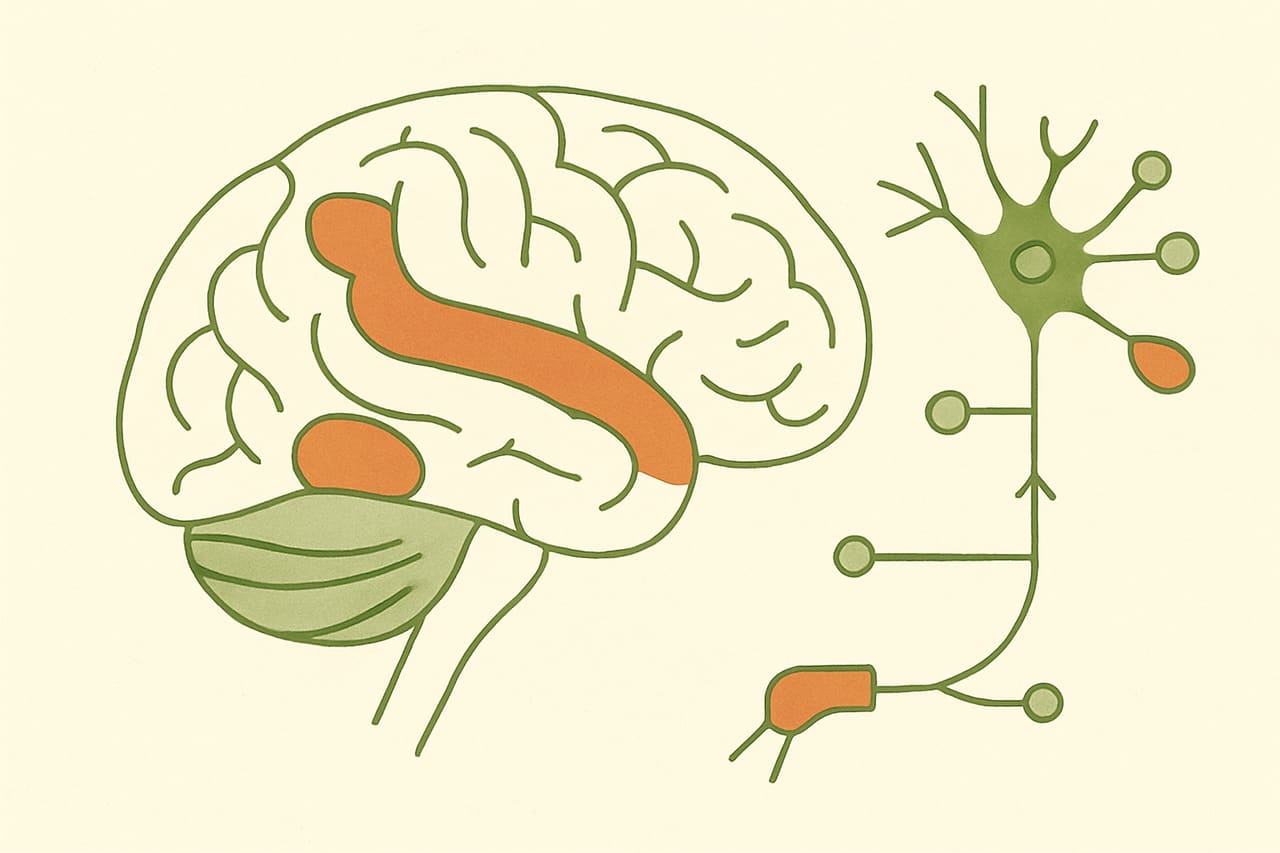
The judgment center finishes last — around age 25.
The short version.
The prefrontal cortex — the part behind the forehead that handles planning, weighing consequences, and putting on the brakes — is the slowest region of the brain to mature. It keeps wiring up into the mid-20s. The emotional, reward-seeking parts come online years earlier. That gap is the whole story of adolescence. Crucially, this lag is normal and universal — every generation of teenagers has had it, long before phones existed.
What researchers actually find.
- Brain development runs back-to-front: regions for movement and emotion mature early; the prefrontal cortex matures last.
- This isn't a metaphor — MRI studies track the change in gray and white matter year by year.
- A teen can know the right answer and still struggle to act on it under pressure, because the 'knowing' and the 'doing' systems are on different timelines.
- The maturation gap is one of the most replicated findings in developmental neuroscience, seen across cultures.
The reason the prefrontal cortex finishes last comes down to two slow processes: myelination and pruning. Myelin is a fatty coating that wraps the brain's wiring so signals travel faster and more reliably, and it spreads through the prefrontal regions gradually over years rather than all at once. At the same time, the brain is trimming weaker connections and reinforcing well-used ones, which makes the thinking circuits faster but also takes time to settle. Until that wiring is insulated and tuned, the link between knowing the right thing and doing it under pressure is genuinely slower and noisier. So the gap your teen shows isn't a willpower problem — it's signal speed catching up to intention. This is also why the same teen performs better when calm and rested: fewer competing signals for an unfinished system to manage.
You might recognize this.
- Great judgment one calm afternoon, baffling decisions the same night with friends.
- They can argue a point brilliantly, then forget a backpack three days running.
- 'What were you thinking?' genuinely has no answer — the thinking part wasn't in charge.
- Impulsive in the moment, then genuinely remorseful once the calm, thinking brain comes back online.
How to help.
- Be the prefrontal cortex they're still growing: think out loud about consequences with them, don't just demand them.
- Expect inconsistency. Maturity arrives in patches, not all at once.
- Scaffold instead of lecturing — shared calendars, reminders, and routines do the work the brain can't yet.
- Keep consequences immediate and concrete; long-delayed punishments barely register with a brain wired for the now.
How this changes by age
The gap is just opening: they can follow rules well in calm settings but get overwhelmed when several demands pile up at once. Keep instructions short and one-at-a-time, and build simple routines now so the structure is in place before the harder years.
This is when the mismatch is loudest — sharp reasoning one moment, baffling lapses the next, especially around friends. Stay a steady external brake: think out loud about consequences together rather than lecturing, and don't read the inconsistency as defiance.
Judgment is visibly firming up, but it's still patchy under stress, fatigue, or strong emotion. Hand over real responsibility in steps and let them practice decisions while you're still nearby to debrief, since coaching beats controlling at this stage.
Next time you'd normally ask "What were you thinking?", try "Walk me through how that felt in the moment" instead — it invites the calm brain to reconstruct what the in-the-moment brain couldn't manage, and it teaches reflection without putting them on the defensive.
A 16-year-old who makes a reckless choice has bad character.
More often they have a fully-online accelerator and a half-built brake. Character is still forming alongside the brain.
"Still being built" does not mean teens can't be held responsible or can't make good choices — they make excellent ones every day. It explains inconsistency under pressure; it does not excuse harm, and it isn't a reason to lower your expectations or stop letting them practice independence.
This is a plain-words summary of well-established psychology — a map, not a diagnosis. If your teen is struggling in a way that worries you, a pediatrician or licensed mental-health professional is the right next step. In crisis: call or text 988 (Suicide & Crisis Lifeline, 24/7) · text HOME to 741741 · call 911 for immediate danger.