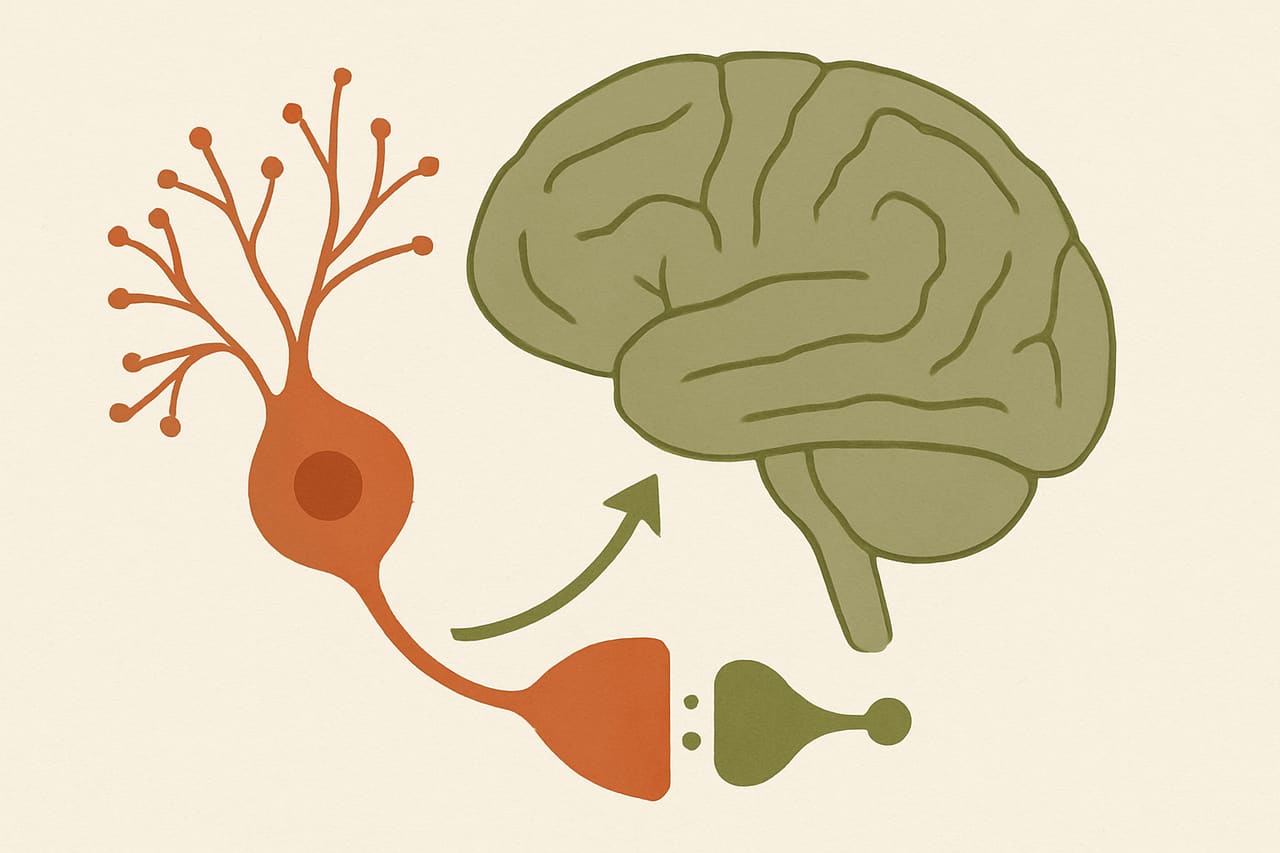
Two brain systems mature on different clocks — and it shows.
The short version.
Adolescent risk-taking comes from a mismatch, not a defect. The limbic system (reward, excitement, social buzz) is highly active in the teen years. The prefrontal control system that would temper it is still developing. Strong accelerator, soft brakes — especially when friends are watching. As the prefrontal 'brakes' finish wiring in the early 20s, the gap closes and risk-taking falls on its own.
What researchers actually find.
- Risk-taking peaks in mid-adolescence and falls as the control system catches up.
- The same teen is far more cautious alone than in a car full of peers — presence of friends amplifies the accelerator.
- This is a normal, even useful, design: it pushes teens to explore and leave the nest.
- Brain imaging shows the reward system lighting up more brightly in teens than in children or adults facing the same payoff.
The accelerator and the brakes aren't just two abstract ideas — they're two systems maturing on different biological clocks. The reward and social-arousal circuitry deep in the brain is highly responsive early in adolescence, partly because puberty hormones tune it up right as social life becomes the center of a teen's world. The prefrontal control system that would weigh consequences and apply the brake is still slowly wiring, so for a stretch of years the gas is strong and the brake is soft. The presence of peers makes this sharper because social reward feeds the same accelerator, effectively pressing it harder in the exact moments self-control is most needed. The gap isn't a malfunction; it's the timing mismatch itself. As the control system finishes maturing, the two systems come into balance and risk-taking falls on its own — which is why most teens "grow out of it" without any dramatic intervention.
You might recognize this.
- Sensible solo, suddenly bold in a group chat or a group hangout.
- Knows the rule, breaks it anyway when the reward feels immediate.
- Thrives on intensity — loud music, scary movies, fast everything.
- Big, impulsive purchases or dares they themselves can't fully explain afterward.
How to help.
- Manage the environment, not just the lecture: who, where, and when matter more than how many warnings you give.
- Pre-commit to exits — a no-questions-asked pickup code lets the brakes borrow your strength.
- Channel the accelerator toward sport, performance, and adventure instead of trying to switch it off.
- Slow decisions down — a built-in pause ('sleep on it') lets the brakes catch up to the accelerator.
How this changes by age
The accelerator is just warming up; most risk here is small and curiosity-driven. The biggest lever is shaping their environment and friend group early, before the thrill-seeking years arrive in force.
The gap is widening fast and peers turn the accelerator way up. Focus less on warnings and more on logistics — who, where, and when — and set up easy exits so the brake can borrow your strength.
Thrill-seeking is near its peak even as judgment improves, and the stakes (driving, parties, money) get higher. Channel the drive into intense but safe outlets and use pre-agreed rules like a no-questions pickup, rather than trying to talk them out of excitement.
Set up a one-word "come get me" code with your teen tonight — a text they can send with no explanation needed, that means you'll pick them up immediately and save the questions for later. It gives their soft brake an instant escape hatch in the moment it matters.
This model describes a tendency, not a guarantee — plenty of teens are cautious, and the "weak brakes" idea doesn't mean they're helpless or doomed to do something reckless. It also isn't a license to over-restrict: teens still need real chances to practice good judgment, which only develops through use.
This is a plain-words summary of well-established psychology — a map, not a diagnosis. If your teen is struggling in a way that worries you, a pediatrician or licensed mental-health professional is the right next step. In crisis: call or text 988 (Suicide & Crisis Lifeline, 24/7) · text HOME to 741741 · call 911 for immediate danger.