Acute stress builds; chronic stress erodes.
The short version.
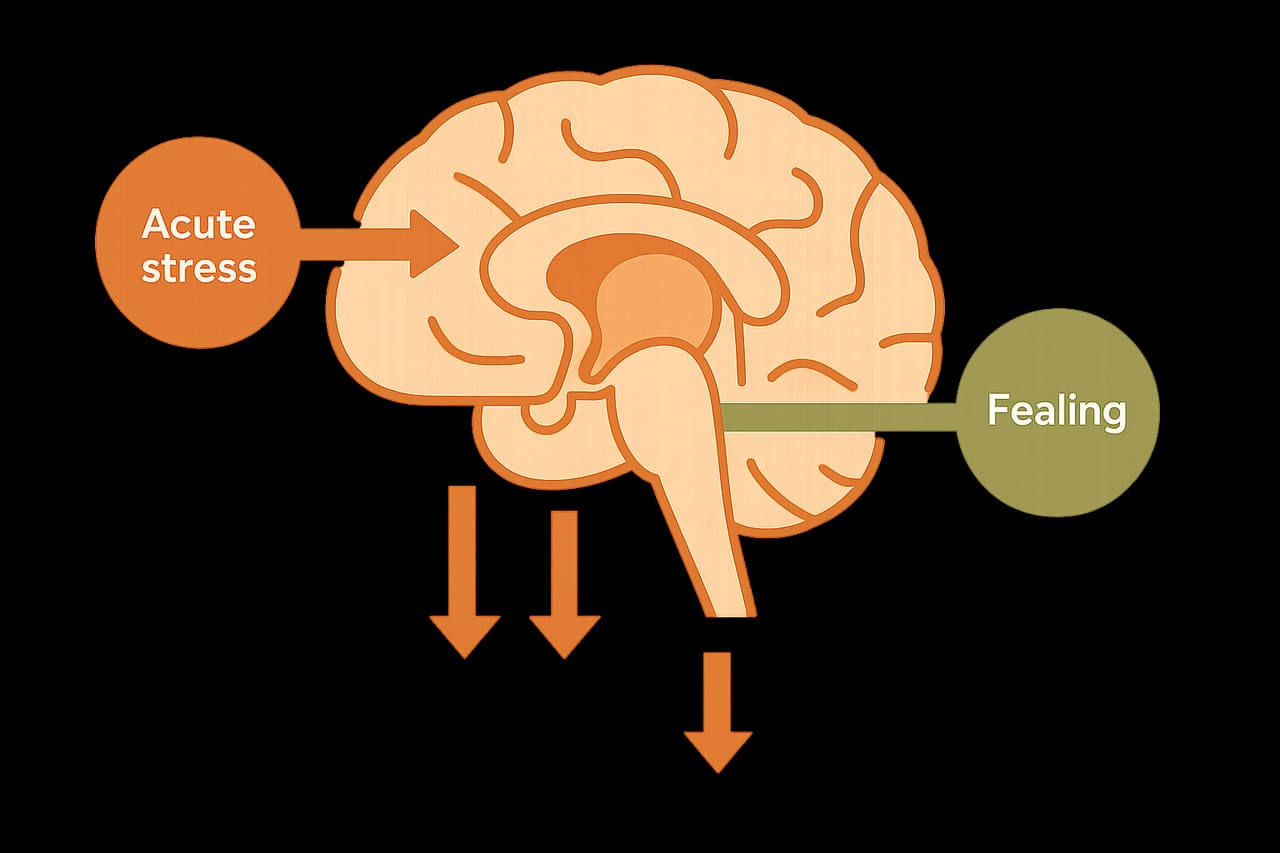
Stress triggers cortisol, which is helpful in short bursts and harmful when it never switches off. In adolescence, chronic stress — ongoing conflict, pressure, or insecurity — can disrupt mood, sleep, learning, and the developing stress-response system itself. The aim isn't a stress-free life — it's making sure the stress switches off again, reliably and often.
What researchers actually find.
- Cortisol mobilizes the body for short-term challenge; chronic elevation damages over time.
- The adolescent stress system is still calibrating and is sensitive to prolonged strain.
- Predictable routines and secure relationships buffer the effects.
- Predictable routines and at least one secure relationship measurably blunt the body's stress response.
Cortisol is meant to work in a loop: a stressor fires the alarm, the body floods with energy to meet it, and then a built-in brake quietly shuts the system back down once the threat passes. In a teen under constant strain, the brake rarely gets a chance to engage, so the body stays half-switched-on between stressors instead of fully resetting. Because the adolescent stress system is still being calibrated, the level it settles into during these years can become its working default — the brain learns what 'normal' arousal feels like. That's why two teens facing the same hard week can land very differently: the one who reliably returns to calm at night is recalibrating downward, while the one who never quite powers down is teaching the system to idle high. The most powerful lever a parent has isn't removing the stressor — it's protecting the recovery, the predictable nights and safe relationships where the brake finally catches.
You might recognize this.
- Constant low-grade tension, trouble winding down.
- Getting sick more often during high-stress stretches.
- Sleep and appetite disrupted by ongoing worry.
- Getting run-down or sick during long stretches of pressure, then bouncing back once it lifts.
How to help.
- Distinguish healthy challenge (a tryout) from toxic chronic stress (relentless pressure).
- Protect downtime, routine, and connection — the strongest buffers.
- Address ongoing sources (conflict, overload) rather than just the symptoms.
- Guard the recovery time — sleep, play, downtime — as carefully as you'd guard against the stressor itself.
How this changes by age
Stress often shows up in the body rather than in words — stomachaches, headaches, trouble falling asleep, or clinginess on hard days. A steady, predictable rhythm (same bedtime, a calm landing after school) does more at this age than any conversation about feelings.
The load piles up fast — social drama, academic pressure, and a body in flux — and they may not connect their irritability or exhaustion to stress at all. Help them name what's draining them and guard sleep fiercely, since this is when running-on-empty starts to feel normal.
Real high-stakes pressure arrives — exams, college, jobs, relationships — and they'll often push through by cutting the very recovery they need. Coach them to treat downtime as part of performing well, not a reward for it, and to spot when 'busy' has tipped into chronically wired.
Pick one small, repeatable wind-down anchor and protect it tonight — phones out of the bedroom, lights low, the same fifteen quiet minutes before sleep. You're not adding a rule; you're handing the stress system a reliable place to switch off.
This doesn't mean stress is the enemy or that a stressed teen is being harmed — short, recoverable stress is how they build resilience, and a hard season isn't damage. The concern is only the kind that never lets up and never switches off; a stressful week with good recovery is the system working as designed, not breaking.
This is a plain-words summary of well-established psychology — a map, not a diagnosis. If your teen is struggling in a way that worries you, a pediatrician or licensed mental-health professional is the right next step. In crisis: call or text 988 (Suicide & Crisis Lifeline, 24/7) · text HOME to 741741 · call 911 for immediate danger.