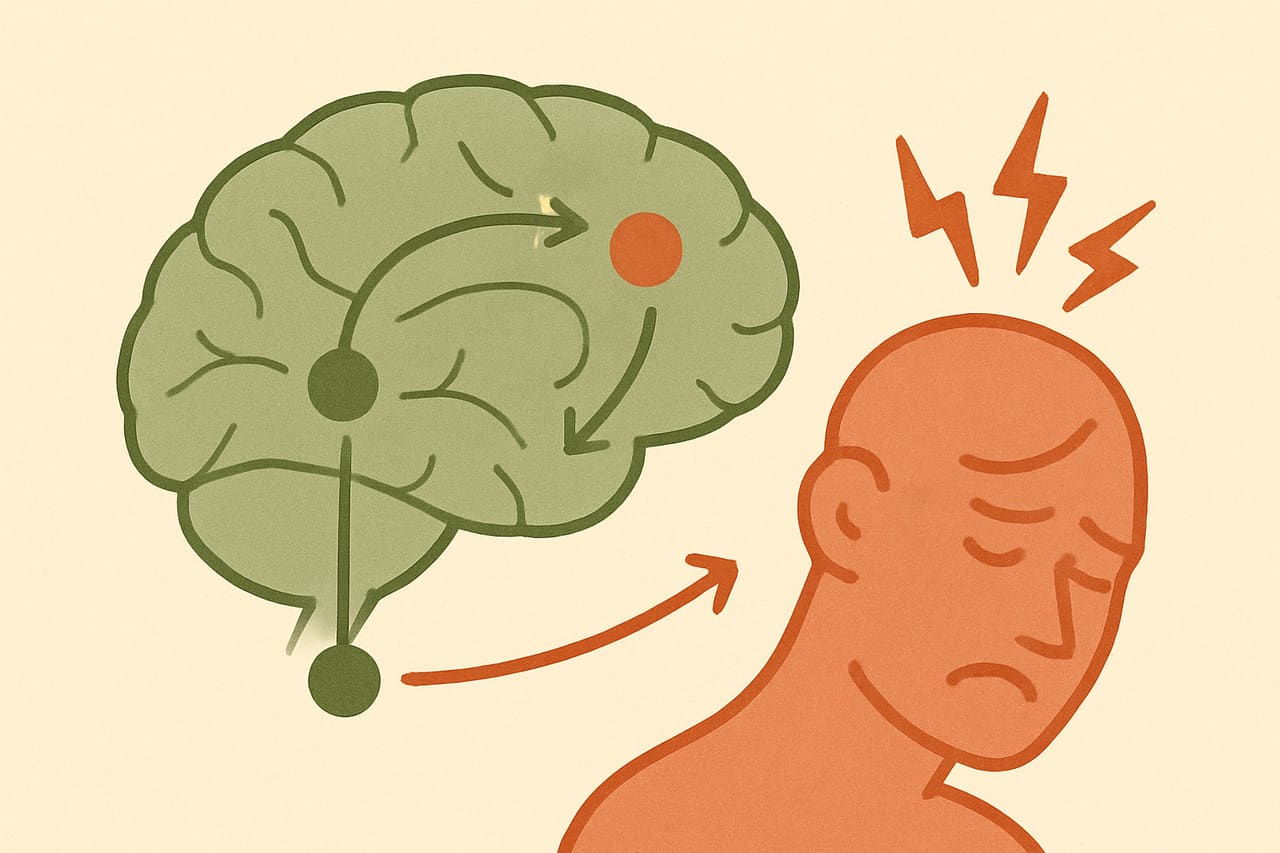
Anxiety is now the most common teen mental-health issue.
The short version.
Anxiety becomes more common in adolescence as the social and academic stakes rise and the threat-sensitive brain runs hot. Rates have increased over the past decade. Some anxiety is normal and protective; the concern is when it stops a teen from living their life. The good news inside the hard numbers: anxiety is among the most treatable mental-health conditions when it's caught.
What researchers actually find.
- Adolescence is a peak window for the onset of anxiety disorders.
- Avoidance feels better short-term but feeds anxiety long-term.
- Untreated anxiety raises later risk for depression — but it responds well to treatment.
- Half of all lifetime mental-health conditions begin by the mid-teens, which makes early response especially valuable.
Anxiety climbs in adolescence partly by design: the teen brain is wired to be acutely sensitive to social threat and judgment right as the social and academic stakes of life ramp up, so the alarm system runs hot in a world that gives it plenty to react to. The trouble is that anxiety teaches a tempting lie — that avoiding the feared thing brings relief — and it does, briefly, which is exactly why avoidance is so reinforcing. Each dodge confirms to the brain that the situation was genuinely dangerous and that escape was necessary, so the fear grows and the teen's world quietly shrinks. Breaking that cycle means doing the opposite of what anxiety demands: approaching feared situations in small, tolerable steps so the brain collects new evidence that it can cope. This is why constant reassurance, however loving, can backfire — it functions as one more form of avoidance. The encouraging part is that anxiety responds unusually well to this kind of structured, gradual facing, especially when caught early.
You might recognize this.
- Avoiding situations — school, social events, calls — that provoke worry.
- Physical signs: racing heart, stomachaches, trouble sleeping.
- Reassurance that helps for a minute, then the worry returns.
- Reassurance-seeking that calms them for a moment but returns stronger soon after.
How to help.
- Support facing fears in small steps rather than avoiding them.
- Avoid over-accommodating; constant reassurance can feed the cycle.
- Seek evidence-based help (CBT) when anxiety shrinks their world.
- Praise brave, small steps toward feared things rather than helping them avoid the fear.
How this changes by age
Anxiety often shows as physical complaints, bedtime worries, or clinging and school reluctance rather than the word 'anxious.' Keep routines predictable and gently encourage small approaches instead of letting them skip the hard thing entirely.
Social and performance worries usually intensify, and reassurance-seeking can become a loop that calms for a minute then returns stronger. Resist over-accommodating, and praise small brave steps toward feared situations rather than helping them avoid.
Stakes feel higher — tests, college, driving, relationships — and avoidance can quietly narrow their life while looking like 'choices.' Partner with them on facing fears in steps, and seek evidence-based help like CBT when anxiety is shrinking their world.
Pick one small thing your teen has been avoiding out of worry and offer to help them take just the first, easiest step toward it tonight — then notice and name their courage, not the outcome. Praising the brave step teaches their brain that approaching is survivable in a way reassurance never can.
Some anxiety is normal, protective, and even useful — the goal is not to eliminate worry but to keep it from stopping a teen from living their life. Rising rates are real, but a single anxious phase is not a disorder, and gentle exposure is not the same as forcing a panicked teen into overwhelming situations. When anxiety meaningfully shrinks their world, reach for evidence-based help rather than managing it alone.
This is a plain-words summary of well-established psychology — a map, not a diagnosis. If your teen is struggling in a way that worries you, a pediatrician or licensed mental-health professional is the right next step. In crisis: call or text 988 (Suicide & Crisis Lifeline, 24/7) · text HOME to 741741 · call 911 for immediate danger.