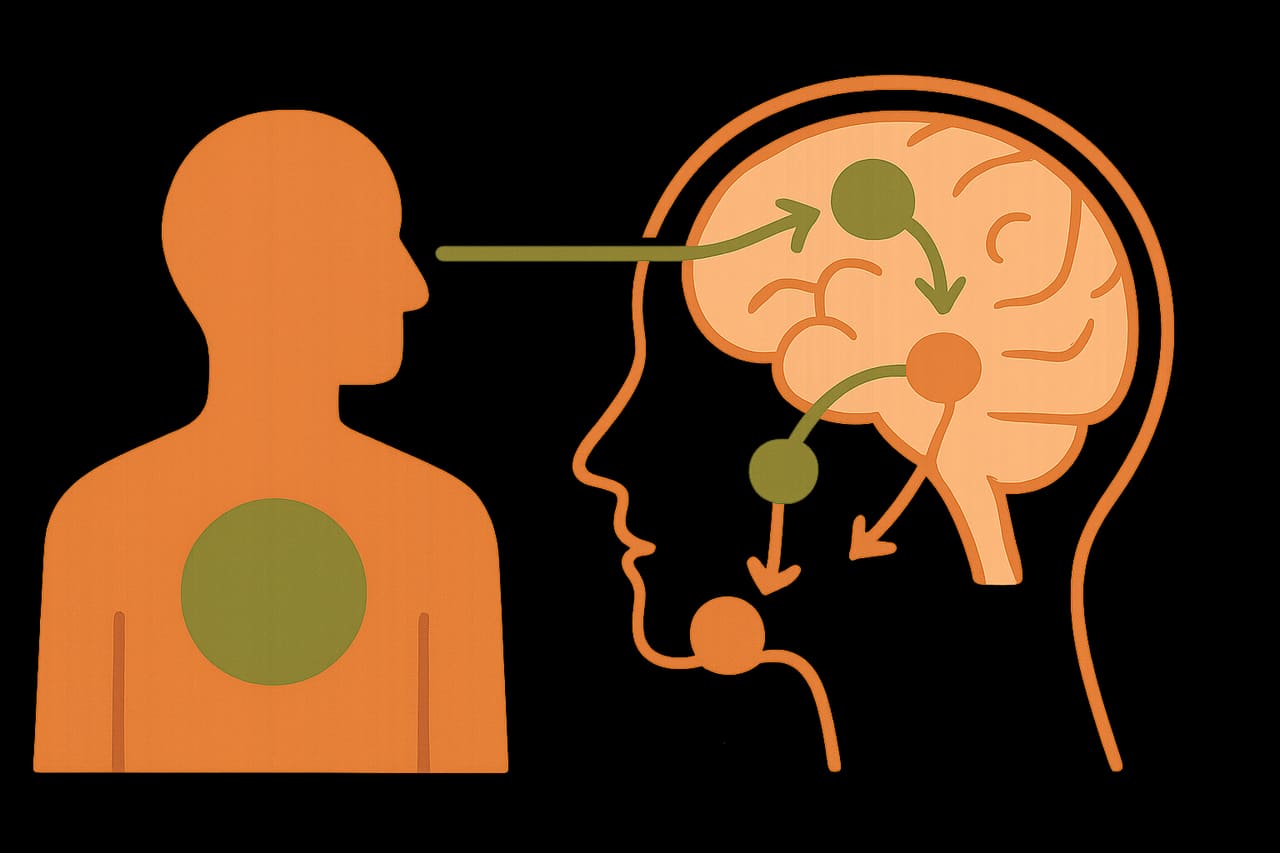
Regulation is caught from you before it's built in them.
The short version.
Co-regulation is the process by which a calm adult nervous system helps settle a dysregulated young one. Long before teens can self-soothe reliably, they regulate by tuning to a steady adult. Your tone, pace, and body language are part of the treatment. It's also why your own stress management isn't selfish — a regulated parent is the tool a teen borrows to regulate.
What researchers actually find.
- Human nervous systems sync — calm is contagious, and so is panic.
- Repeated co-regulation is how teens slowly build self-regulation.
- Reacting to a teen's storm with your own escalates both of you.
- Heart rate and stress hormones can sync between people, for calm as well as for panic.
Co-regulation rests on the fact that human nervous systems are built to read and respond to each other automatically — we pick up on a person's tone, pace, breathing, and facial tension below the level of conscious thought and adjust our own state to match. A teen in distress is, in effect, scanning you for whether the situation is truly an emergency; a steady voice and an unhurried body tell their threat system 'we're safe' more convincingly than any words. This is why your calm is doing physiological work, not just being nice. The deeper point is developmental: the brain circuits a teen will eventually use to calm themselves are built through thousands of repetitions of first being calmed by someone else. Each time you lend your steadiness during a storm, you're not just defusing this moment — you're laying down the wiring they'll later use alone. That's also why your own regulation isn't a luxury: you can only lend calm you actually have.
You might recognize this.
- Your raised voice making their meltdown worse.
- Them settling when you stay quietly steady.
- Seeking you out after a blow-up, even while pushing you away during it.
- A tense room settling once one calm adult lowers their voice and slows down.
How to help.
- Regulate yourself first — slow your breathing and lower your voice on purpose.
- Be the calm anchor, not a second storm.
- Reconnect afterward; the repair teaches as much as the calm.
- Build your own reset habit (a breath, a pause, a walk) so you have calm to lend when it's needed.
How this changes by age
Younger teens still co-regulate openly — physical closeness, a steady presence, and a calm voice settle them quickly. This is the season to deposit lots of these experiences, because the self-regulation circuitry is just beginning to build.
They may push you away during a storm while still needing your steadiness, which can feel contradictory. Stay quietly anchored without crowding them, and expect them to seek you out for repair after they've blown up.
Co-regulation gets subtler — sometimes just your unbothered presence in the next room is enough. Keep modeling your own resets out loud, since you're now handing off the skill they'll soon rely on entirely as young adults.
Before responding to your teen's next flare-up, take one slow breath and deliberately lower your own voice and slow your pace — even if you say almost nothing. Let your calm body do the talking, and notice whether the temperature in the room drops with yours.
Co-regulation means lending calm, not staying silent while you're walked over or absorbing genuinely abusive treatment — staying regulated and holding a limit are not opposites. And a steady parent isn't a guarantee a teen will settle every time; some storms have to run their course, and a teen with deeper struggles may need professional support no amount of parental calm replaces.
This is a plain-words summary of well-established psychology — a map, not a diagnosis. If your teen is struggling in a way that worries you, a pediatrician or licensed mental-health professional is the right next step. In crisis: call or text 988 (Suicide & Crisis Lifeline, 24/7) · text HOME to 741741 · call 911 for immediate danger.