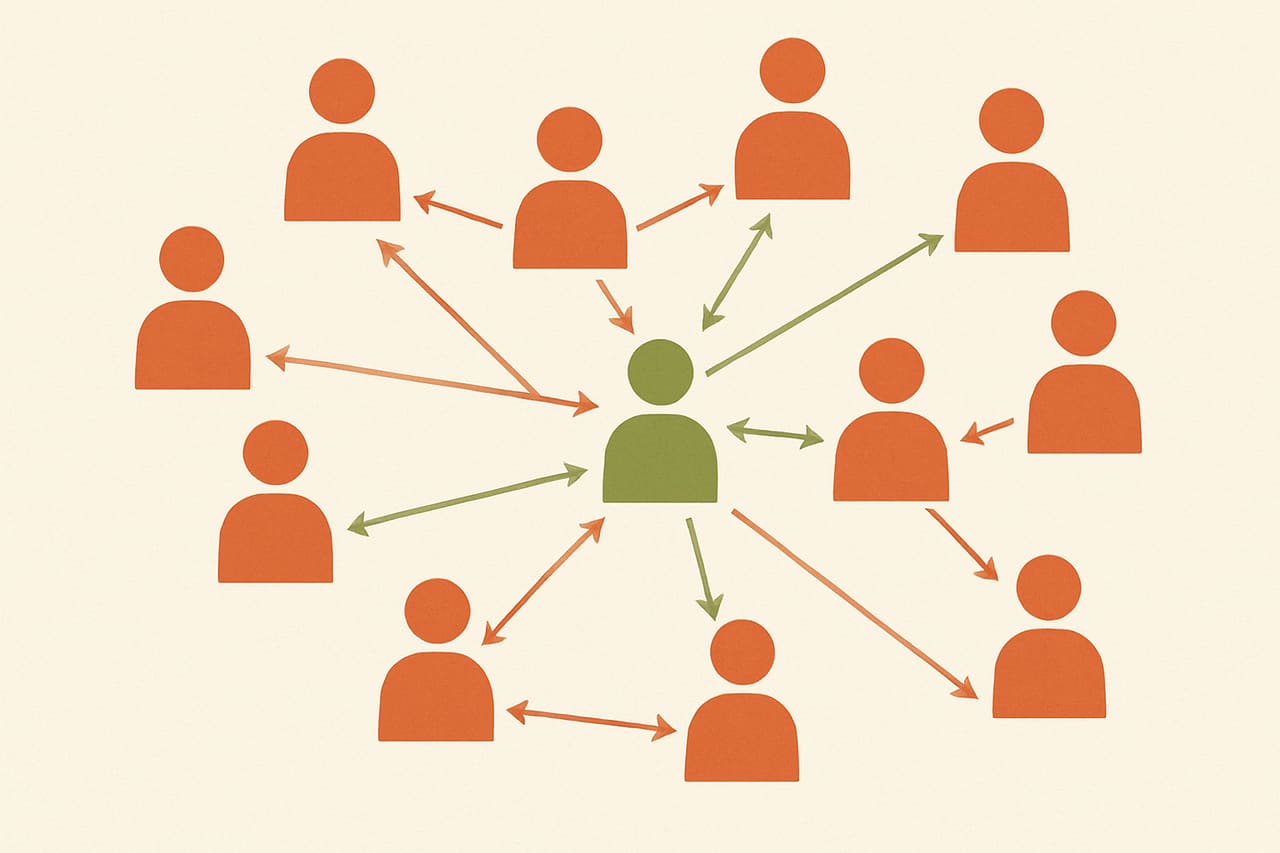
Feeds invite a comparison the teen always seems to lose.
The short version.
Social comparison — measuring yourself against others — is a normal way humans gauge where they stand. Social media supercharges it: an endless stream of curated highlights makes ordinary teens feel they're falling short on looks, popularity, and fun. Because the feed is curated, the comparison is rigged: their ordinary insides will always lose to everyone else's edited outsides.
What researchers actually find.
- Upward comparison (to those seemingly better off) reliably lowers mood.
- Curated, filtered feeds make the comparison standard unrealistic.
- Appearance-focused platforms hit body image hardest, especially for girls.
- Image- and video-first platforms show the strongest links to body-image worry, especially among girls.
Comparing ourselves to others is a normal, built-in way humans figure out where we stand — there's nothing wrong with the instinct itself. What social media changes is the sample: instead of measuring against the real, mixed range of people around them, teens are measuring against an endless stream of other people's best, most filtered, most flattering moments. That makes the comparison structurally unfair, because they're matching their full unedited inside — the boredom, the bad skin day, the ordinary Tuesday — against everyone else's curated outside. Upward comparison, against people who look better off, reliably pulls mood down, and a feed is engineered to serve up a near-constant stream of exactly that. The trap isn't that teens are vain or fragile; it's that the standard they're being held to was never real, so no amount of effort can ever close the gap — the only winning move is to see the game for what it is.
You might recognize this.
- Low mood after scrolling.
- Comments comparing their looks or life to influencers and peers.
- Feeling boring or behind despite a full, fine life.
- A good mood deflating within minutes of opening an app.
How to help.
- Name the rigged game: feeds are highlight reels, not reality.
- Curate together — unfollow accounts that consistently sink their mood.
- Anchor worth offline, in real relationships and real competence.
- Build offline arenas of real competence and connection where worth isn't measured in likes.
How this changes by age
As they enter these feeds, comparison often starts with followers, likes, and who has which phone or clothes. Delay and limit appearance-heavy platforms where you can, and start naming early that what they see online is a highlight reel, not real life.
Comparison hits hardest here as bodies change and image-focused apps dominate — a good mood can deflate within minutes of opening a feed, especially around looks. Curate together by unfollowing accounts that consistently sink their mood, and keep building real-world arenas where worth isn't measured in likes.
Comparison broadens to status, relationships, college, and 'everyone's life looks more figured out than mine.' Talk frankly about how curated and even monetized these feeds are, and help them recognize and step back from the specific accounts and moments that leave them feeling behind.
Sit beside them and scroll their feed together for a few minutes, gently spotting the seams — the angle, the filter, the staged 'candid.' Then unfollow one or two accounts that reliably leave them feeling worse; you're teaching them to see the edit, not just the image.
This doesn't mean social media simply causes unhappiness in every teen, or that comparison is always harmful — for some, feeds are a source of connection, inspiration, and community. The effect varies a lot from teen to teen and depends heavily on who they follow and how they use it, so the goal is curating the experience, not assuming the worst.
This is a plain-words summary of well-established psychology — a map, not a diagnosis. If your teen is struggling in a way that worries you, a pediatrician or licensed mental-health professional is the right next step. In crisis: call or text 988 (Suicide & Crisis Lifeline, 24/7) · text HOME to 741741 · call 911 for immediate danger.