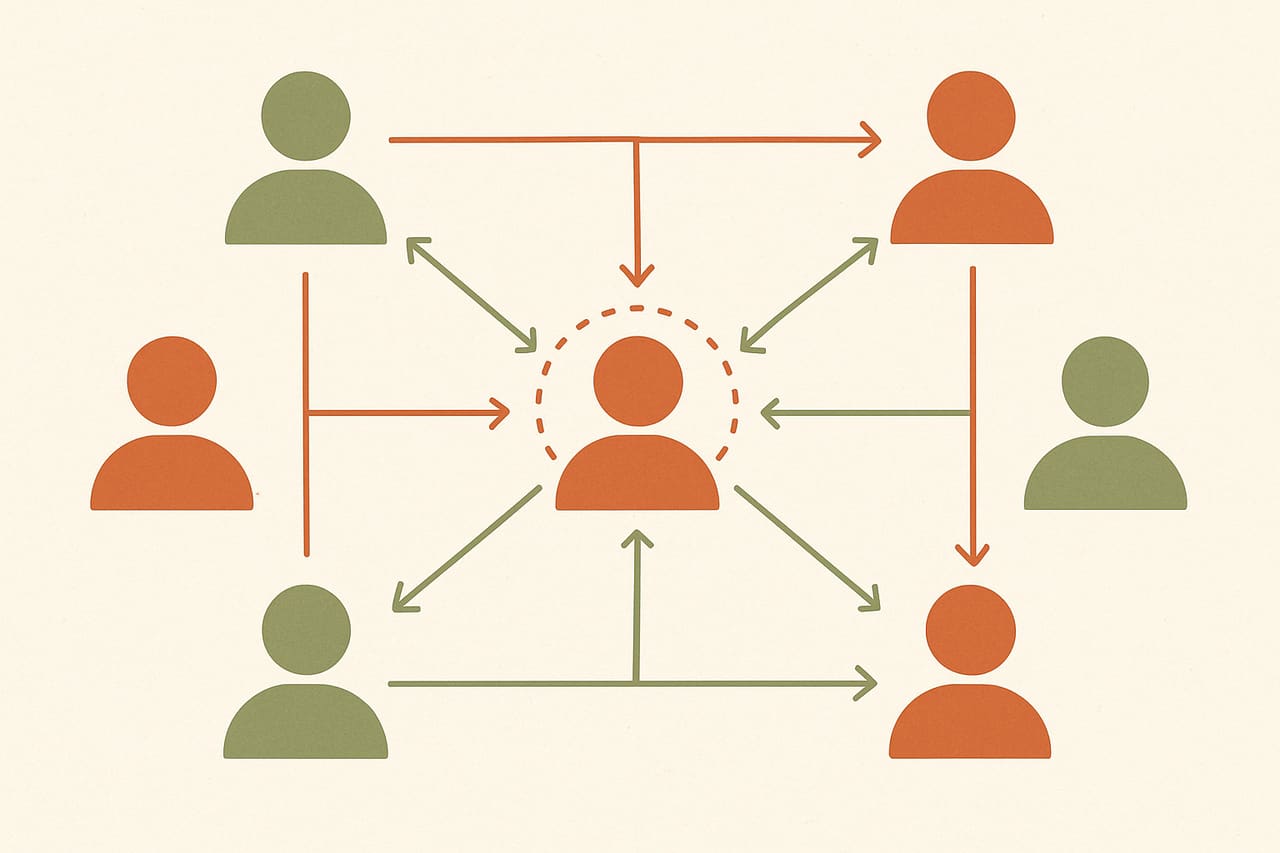
Performing a self online is real, invisible work.
The short version.
Online, teens build a presented self — chosen photos, captions, and reactions — that can diverge from the everyday one. Maintaining the gap between performed and real takes emotional energy, and the metrics (likes, views) turn identity into a scoreboard. The bigger and more public the performed self, the more energy it takes to maintain — and the more it can crowd out the real one.
What researchers actually find.
- Self-presentation online is more deliberate and curated than offline.
- Big gaps between online and real self are linked to more distress.
- Quantified feedback ties self-worth to public metrics.
- Larger gaps between the online persona and the everyday self are linked to more distress.
The strain of an online self comes from a basic mismatch: in person, identity unfolds in real time and is mostly forgiven, but online it's edited, permanent, and scored. Curating photos and captions is a form of impression management every human does — teens just do it on a public stage with a visible tally of likes and views attached. The wider the gap between the polished version and the everyday one, the more energy goes into maintaining the performance and bracing against being 'found out,' which is quietly draining. Because the platform converts approval into numbers, self-worth can get outsourced to a metric that updates by the minute and never feels like enough. The relief many teens feel on a day off the feed is a clue that the performance had become work, not play — the nervous system gets to stop managing the gap.
You might recognize this.
- Agonizing over what to post and how it performs.
- A confident online presence alongside private insecurity.
- Mood riding on likes and view counts.
- Relief, not just boredom, on days spent off the feed.
How to help.
- Talk about the gap between highlight reels (theirs and others').
- Praise who they are offline, loudly and often.
- Help them notice when posting feels like work, not fun.
- Celebrate the offline self often enough that it doesn't need the scoreboard to feel real.
How this changes by age
Most are just entering this — first accounts, first posts, watching how things 'do.' Set the early frame that everyone online is showing a highlight reel, and keep your praise aimed at who they are off-screen before the scoreboard takes hold.
The gap and the stakes both widen; mood can visibly ride on a post's performance, and a confident feed can mask private insecurity. Talk openly about editing and filters — including others' — so the comparison feels less like measuring up to something real.
Many are growing savvier about curation and may start craving authenticity or smaller, private spaces. Support the move toward 'finstas,' group chats, and being real with a few people over performing for many.
Tonight, point your praise squarely at the offline self — something only you'd know: 'I noticed how patient you were with your little cousin today.' Said often enough, it tells them their worth doesn't live on a screen or depend on a count.
A curated online self isn't fake or a sign of trouble on its own — self-presentation is normal, and a posted highlight reel doesn't mean a teen is struggling. The concern is the size and rigidity of the gap and how much it costs to maintain, not the simple fact that they edit what they share.
This is a plain-words summary of well-established psychology — a map, not a diagnosis. If your teen is struggling in a way that worries you, a pediatrician or licensed mental-health professional is the right next step. In crisis: call or text 988 (Suicide & Crisis Lifeline, 24/7) · text HOME to 741741 · call 911 for immediate danger.