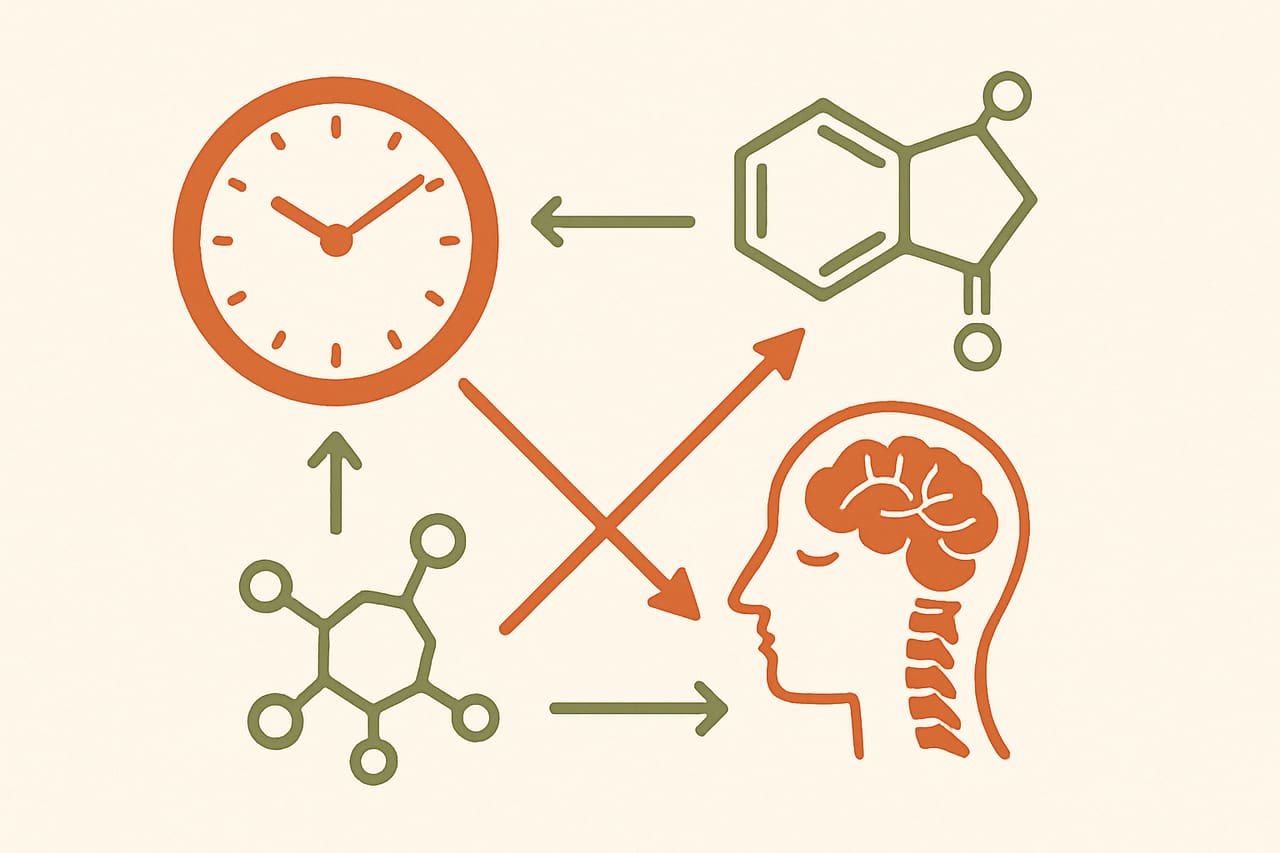
Sleep is the lever that moves mood and school at once.
The short version.
Sleep is when the brain consolidates memory, regulates emotion, and clears metabolic waste. Short-change it and three things slide together: mood drops, learning weakens, and self-control thins. For teens this triangle is the difference between a good month and a rough one. Because the three move together, fixing sleep often lifts mood and school at the same time — one change, triple return.
What researchers actually find.
- Memory formed during the day is filed during sleep; less sleep means weaker learning.
- Sleep deprivation amplifies negative emotion and blunts the brain's brakes.
- Even one extra hour of sleep is linked to better mood and academic performance.
- Studies link each additional hour of teen sleep to measurably better grades and lower rates of sadness.
Sleep isn't one process but several overnight jobs, and skimping on it shortchanges the ones teens need most. Deep sleep early in the night is when the body and brain do heavy maintenance, while the dream-rich REM sleep that clusters toward morning is when the brain files emotional memories and takes the sting out of the day's stresses. Because REM loads into the last hours, a teen who stays up late but still wakes for school loses a disproportionate share of exactly the sleep that steadies mood. Meanwhile the brain's emotional accelerator runs hot on too little sleep and its 'brakes' — the prefrontal control regions — come back online slowly, so small frustrations feel huge and self-control runs thin. The triangle moves together because all three depend on the same nightly housekeeping; restore the hours and you're not fixing three problems, you're fixing one.
You might recognize this.
- Grades and mood dip together during high-screen, low-sleep stretches.
- Small problems feel unmanageable when they're tired.
- Sunday-night dread after a weekend of disrupted sleep.
- A rough patch at school that turns out to trace back to weeks of late nights, not the subject itself.
How to help.
- Treat sleep as the first lever, not the last — fix it before adding tutoring or consequences.
- Make the bedroom dark, cool, and phone-free.
- Anchor a consistent wake time seven days a week to stabilize the whole triangle.
- Before adding tutors or screen-time battles, run a two-week sleep experiment and watch what changes.
How this changes by age
Tiredness here often looks like silliness, tears, or hyperactivity rather than obvious fatigue, and the academic stakes are still gentle. Protecting a calm, screen-free wind-down builds the routine that will carry through the harder years.
Grades and workload start to climb just as sleep gets squeezed, so a tired stretch can look like a kid 'not trying' when it's really sleep debt. Before adding pressure about a slipping class, look first at how the last few weeks of sleep have gone.
The stakes feel highest — exams, college, jobs — and teens often trade sleep for study, which backfires because tired brains learn and recall poorly. Help them see sleep as part of doing well, not the thing sacrificed for it, especially the night before a test.
Pick one upcoming low-stakes week and propose a two-week experiment: same wake time every day and lights-out 30–60 minutes earlier, then notice together whether mood and focus shift — letting the result, not a lecture, make the case.
Sleep is a powerful lever, but it isn't the explanation for every bad grade or low mood, and 'just sleep more' can ring hollow to a teen who's genuinely anxious or struggling. If mood stays low even after sleep improves, that's a signal to look further, not to push more bedtime.
This is a plain-words summary of well-established psychology — a map, not a diagnosis. If your teen is struggling in a way that worries you, a pediatrician or licensed mental-health professional is the right next step. In crisis: call or text 988 (Suicide & Crisis Lifeline, 24/7) · text HOME to 741741 · call 911 for immediate danger.