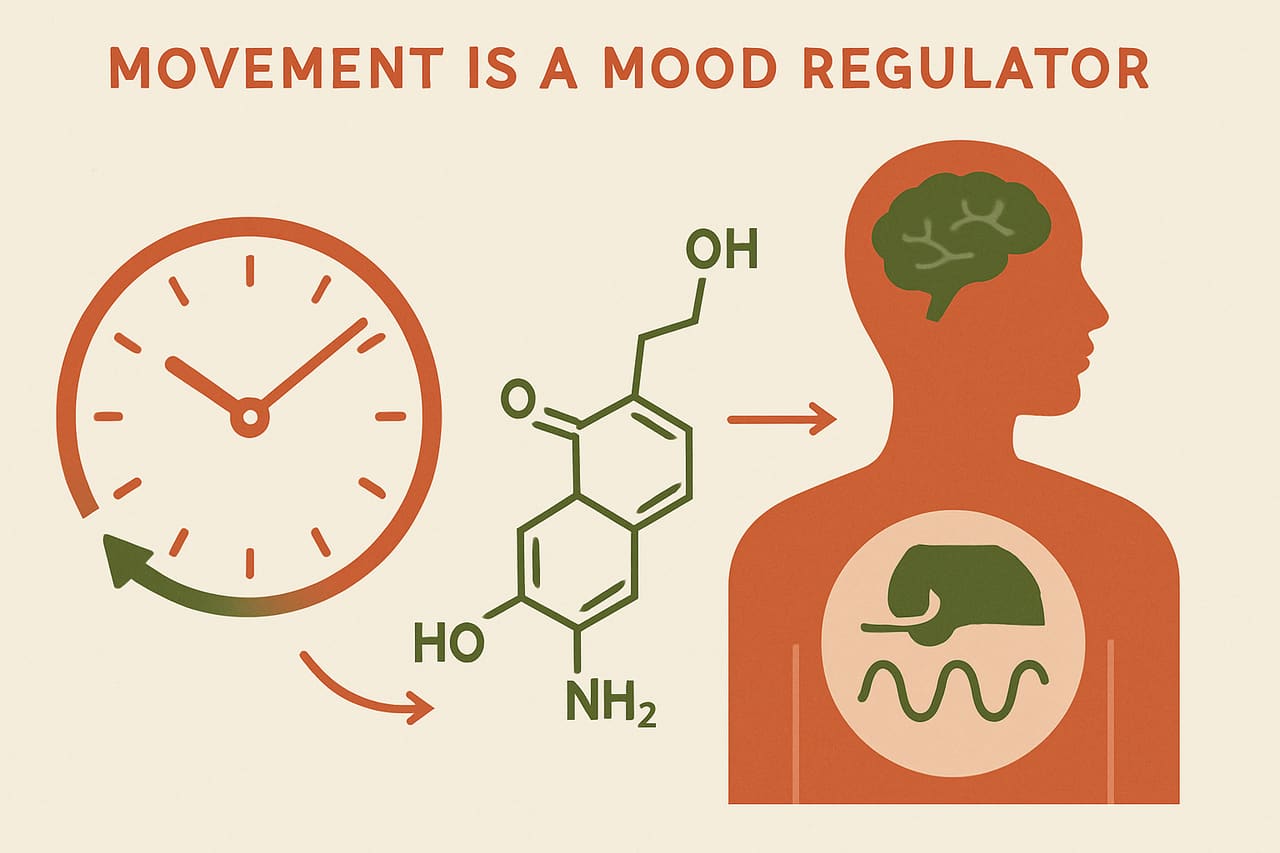
Moving the body is one of the strongest mood treatments we have.
The short version.
Physical activity changes brain chemistry in ways that reduce anxiety and depression, improve sleep, and sharpen focus. It's not a nice-to-have; for the adolescent brain it functions like medicine — and it's almost always undersupplied. Unlike most interventions it's free, has almost no downside, and improves sleep, mood, focus, and confidence all at once.
What researchers actually find.
- Regular exercise reduces symptoms of anxiety and depression about as well as some first-line treatments for mild-to-moderate cases.
- Activity boosts BDNF, a protein that helps the brain build new connections.
- Guidelines call for ~60 minutes of activity a day; most teens fall well short.
- Even short bouts — a brisk walk, a quick game — measurably lift mood for hours afterward.
Movement works on the teen brain through several pathways at once, which is why its effects feel so broad. Physical activity prompts the release of neurochemicals tied to mood and reward, and over time it raises BDNF, a protein that acts almost like fertilizer for brain cells, helping them form and strengthen connections — including in regions that support learning and emotional control. Exercise also burns off the physical residue of stress and deepens the night's sleep, so part of its mood benefit arrives the next morning rather than just during the workout. There's a feedback loop, too: moving the body produces small, visible wins and a sense of competence that feeds confidence, which makes a teen more likely to move again. None of this requires sport or sweat-soaked workouts — the brain responds to regular, moderate movement, which is exactly the dose most teens are missing.
You might recognize this.
- Mood and sleep visibly better on active days.
- Restlessness and irritability on long sedentary, screen-heavy days.
- Resistance to 'exercise' but willingness to move when it's social or fun.
- A noticeably brighter, calmer kid on days that include real physical activity.
How to help.
- Make it social and playful — a team, a friend, a dog walk beats a treadmill lecture.
- Lower the bar: any movement counts, and small daily doses beat occasional marathons.
- Model it. Teens move more when movement is a normal part of family life.
- Attach movement to something they already enjoy — music while they walk, friends on the court — so it doesn't feel like a chore.
How this changes by age
Movement here is mostly play, and the goal is simply to keep it joyful before sports get competitive or self-conscious. Protect unstructured active time — bikes, parks, messing around outside — rather than channeling everything into formal training.
Many kids who drop the one sport they tried conclude they're 'not athletic' and stop moving altogether. Help them find a low-pressure form — walking with friends, dance, pickup games — so movement survives the self-consciousness of these years.
Schedules tighten and movement competes with homework, jobs, and screens, so it has to be convenient to survive. Frame walks, gym sessions, or active hangouts as a reliable reset for stress and focus, something they can reach for on their own.
Instead of suggesting 'exercise,' invite them on a short walk after dinner with no agenda — phones optional, conversation optional — so movement arrives as time together rather than a health directive.
Exercise is a genuine mood booster and can ease mild-to-moderate symptoms, but it isn't a substitute for treatment when a teen is seriously depressed or anxious. Pushing a struggling kid to 'just go for a run' can land as dismissive — offer movement as support alongside real help, not as the whole answer.
This is a plain-words summary of well-established psychology — a map, not a diagnosis. If your teen is struggling in a way that worries you, a pediatrician or licensed mental-health professional is the right next step. In crisis: call or text 988 (Suicide & Crisis Lifeline, 24/7) · text HOME to 741741 · call 911 for immediate danger.