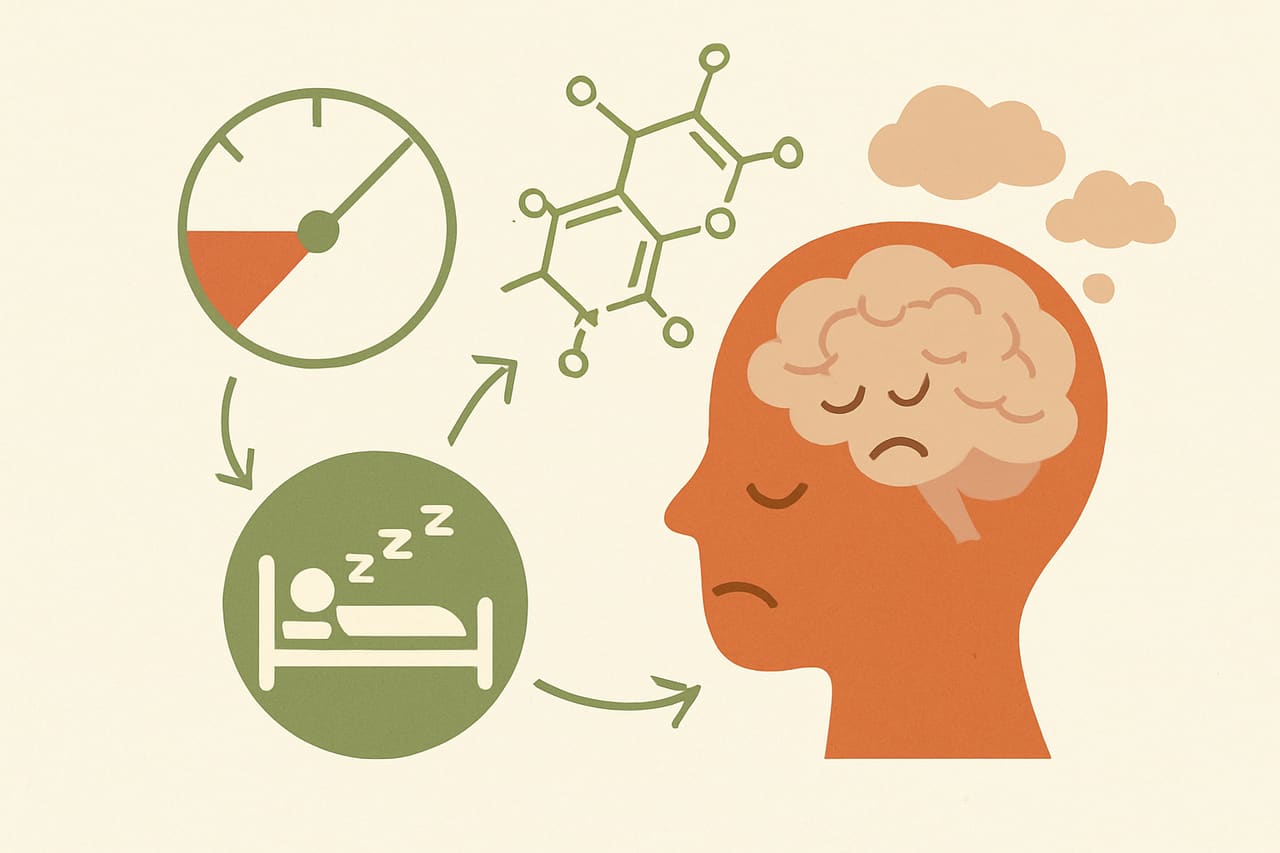
An unfed brain is a moody, foggy brain.
The short version.
The brain is an energy-hungry organ, and the teen brain is growing fast. Erratic eating — skipped meals, high-sugar spikes and crashes, too little protein and iron — translates directly into mood swings, poor concentration, and fatigue. None of this requires perfect eating — just enough regular fuel to keep the brain off the blood-sugar rollercoaster.
What researchers actually find.
- Blood-sugar crashes after sugary foods can trigger irritability and shakiness.
- Iron deficiency, more common in menstruating teens, causes fatigue and poor focus.
- Regular protein-containing meals stabilize energy and attention across the day.
- Breakfast-skipping is linked in studies to lower mood and weaker concentration through the morning.
The brain runs almost entirely on a steady supply of glucose and has very little of its own reserve, so how a teen eats shows up quickly in how they think and feel. A sugary, low-protein breakfast spikes blood sugar and then drops it sharply, and that mid-morning crash arrives as irritability, shakiness, and foggy attention right when school demands focus. Pairing carbohydrates with protein and fiber slows that absorption, giving the brain a level supply instead of a rollercoaster. Beyond minute-to-minute fuel, certain building blocks matter more in adolescence: iron, often short in menstruating teens, carries oxygen the brain needs, and chronic shortfalls drain energy and concentration in ways that masquerade as laziness or low mood. The point isn't a perfect diet — it's enough regular, balanced fuel that the brain never has to run on empty or ride the spike-and-crash.
You might recognize this.
- Late-afternoon meltdowns that resolve with a real snack.
- Skipped breakfast, then crash and burn by mid-morning.
- Mood and focus visibly better on well-fed days.
- Sharper focus and steadier mood on days that start with a real breakfast.
How to help.
- Anchor the day with breakfast — even something small beats nothing.
- Pair carbs with protein to flatten the spike-and-crash.
- Keep easy, real food in reach; convenience drives teen choices.
- Keep grab-and-go protein (eggs, yogurt, nuts) visible and easy; teens eat what's in reach.
How this changes by age
Appetite often surges with the growth spurt, and skipped meals show up fast as cranky, scattered afternoons. Keep predictable meal and snack rhythms and easy real food in reach, since at this age they eat largely what's put in front of them.
Independence and skipped breakfasts collide here, and for some, body-image worries start shaping eating in unhealthy ways. Keep grab-and-go protein visible and stay curious, not controlling, about food — pressure and policing tend to backfire.
Busy, autonomous schedules mean caffeine, energy drinks, and skipped meals can become the default fuel. Help them connect their own crashes to what they did or didn't eat, so steady fueling becomes a choice they own rather than a rule you enforce.
Stock one visible, grab-and-go protein they actually like — yogurt, cheese sticks, hard-boiled eggs, nuts — at eye level in the fridge or pantry tonight, so the easy choice tomorrow morning is also the steadying one.
Food affects mood and focus, but it isn't a cure for depression or anxiety, and over-focusing on 'good' and 'bad' foods can tip a sensitive teen toward unhealthy eating. If you notice rigid rules, skipped meals, or distress around food, that's a reason to step back from diet talk and pay attention to the relationship with eating itself.
This is a plain-words summary of well-established psychology — a map, not a diagnosis. If your teen is struggling in a way that worries you, a pediatrician or licensed mental-health professional is the right next step. In crisis: call or text 988 (Suicide & Crisis Lifeline, 24/7) · text HOME to 741741 · call 911 for immediate danger.