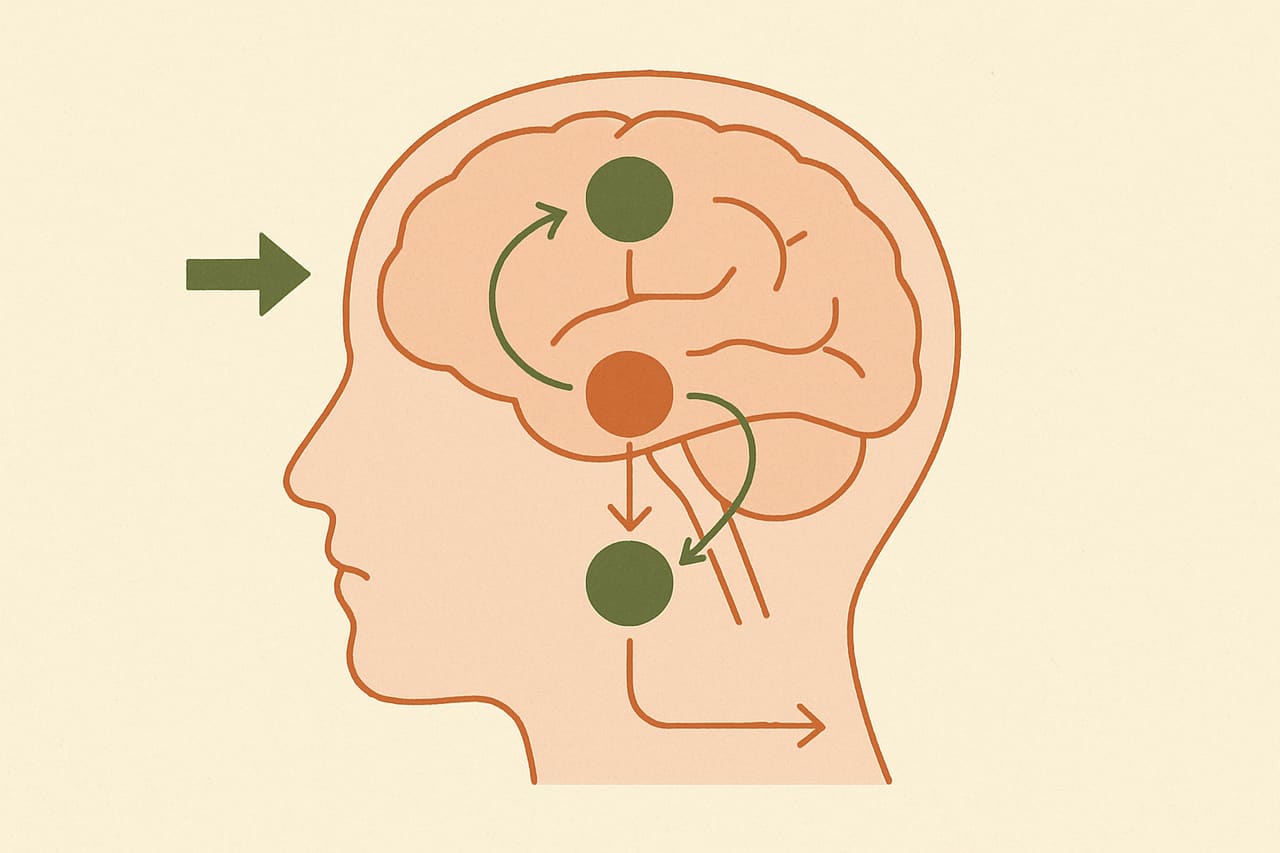
Irritability and withdrawal can be depression in disguise.
The short version.
Adolescent depression often doesn't look like the textbook picture of tearfulness. It can present as irritability, anger, boredom, physical aches, loss of interest, or emotional flatness — which is why it's frequently missed or written off as attitude. Because it hides as attitude, teen depression is easy to miss — which is exactly why a sustained change in baseline deserves attention.
What researchers actually find.
- Diagnostic criteria recognize irritability (not just sadness) as a core feature in youth.
- Withdrawal, sleep and appetite changes, and falling grades are common signals.
- Persistent change lasting two weeks or more is the threshold to take seriously.
- Boys especially may show depression as anger, risk-taking, or numbness rather than visible sadness.
Teen depression often wears the mask of attitude because the developing brain channels low mood differently than an adult's, and because adolescents frequently lack the words — or the willingness — to say 'I feel hopeless.' Instead, the pain leaks out sideways as irritability, boredom, snapping at small things, physical aches, or a flat numbness that reads as laziness or defiance. The give-away isn't any single symptom but a sustained shift from a teen's own baseline: the kid who used to light up at something has gone gray about it for weeks, not days. This matters because the disguise is exactly why teen depression gets written off as 'just being a teenager' and goes unaddressed for too long. The point isn't to diagnose at home but to notice change and stay curious. Catching a real shift early, and bringing in help when it persists, makes a meaningful difference.
You might recognize this.
- A previously engaged kid going flat, snappish, or checked out.
- Dropping friends and activities they used to love.
- Vague physical complaints with no medical cause.
- Loss of interest in the things that used to light them up, masked by general crankiness.
How to help.
- Watch for sustained change in baseline, not single bad days.
- Open the door without interrogating: 'You haven't seemed yourself — I'm here.'
- When it persists, involve a professional; don't wait it out alone.
- Track how long a change has lasted; two weeks of a different kid is the line to act on.
How this changes by age
Early signs can be vague — more stomachaches and headaches, clinginess, or new crankiness rather than stated sadness. Keep the door open with low-pressure presence and loop in their doctor if physical complaints have no medical cause.
This is a common onset window, and it often shows up as anger, withdrawal from friends, and falling grades that look like an attitude problem. Watch the trajectory over weeks, and name what you see without interrogating ('you haven't seemed yourself lately').
Older teens may hide it better and self-medicate with screens, substances, or overwork, and boys especially may show numbness or risk-taking over visible sadness. Treat a sustained change as worth professional input, and ask directly and calmly about how they're really doing.
Open a low-pressure door with something like 'You haven't seemed like yourself lately, and I'm not mad — I just want you to know I'm here whenever you want to talk.' Then let it sit; you're signaling safety, not demanding an answer tonight.
Irritability and withdrawal can have many ordinary causes — poor sleep, stress, normal pulling-away — so a moody week is not evidence of depression. The signal is a sustained change from their baseline lasting two weeks or more; when it persists, that's the line to consult a professional rather than diagnose at home or wait it out alone. If a teen ever expresses hopelessness about living or thoughts of self-harm, treat it as urgent and seek help right away.
This is a plain-words summary of well-established psychology — a map, not a diagnosis. If your teen is struggling in a way that worries you, a pediatrician or licensed mental-health professional is the right next step. In crisis: call or text 988 (Suicide & Crisis Lifeline, 24/7) · text HOME to 741741 · call 911 for immediate danger.