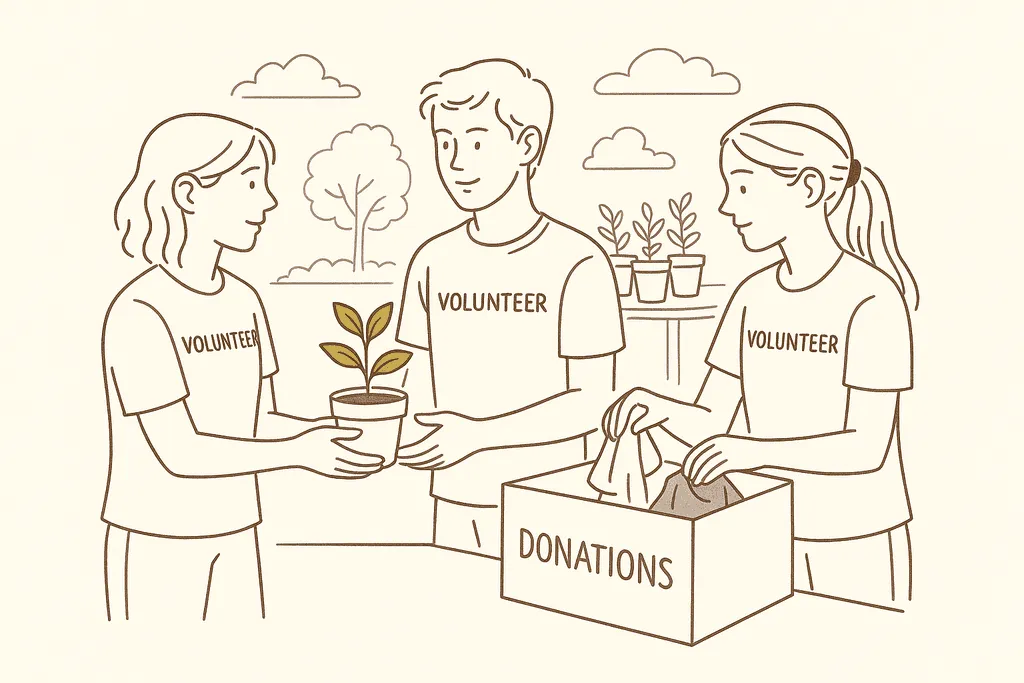
Helping others helps teens too — volunteers were more likely to flourish and less likely to be anxious, via purpose and connection.
- Choose service that fits who your teen already is, not who you wish they'd become.
- Consistency beats intensity — a small regular commitment does more than a one-time event.
- Doing it alongside your teen turns the volunteering into shared time, not another errand.
- Treat service as one support among several when your teen is struggling, never the whole answer.
The situation, the move, the outcome.
National data found that teens who did community service in the past year were 66% more likely to be considered 'flourishing,' 35% less likely to have behavioral problems, and roughly 25% less likely to have anxiety than peers who didn't. Longitudinal research links adolescent volunteering to lower substance use, higher self-esteem and better academic outcomes. The mechanisms teens describe are purpose, connection, competence and feeling they're making a difference.
In practice, the lift comes less from the activity itself and more from what the activity gives a teen access to: a reason to show up, people who count on them, and the felt sense that their effort changed something. A parent's job is mostly matchmaking and removing friction — surfacing options, handling the logistics of a first visit, and then stepping back so the experience belongs to the teen. The conversation works best when it starts from genuine interest rather than obligation, because teens can tell the difference instantly. Once a teen feels useful in one setting, the motivation to continue tends to come from them, not from reminders.
Why it matters beyond one family.
The benefit runs both ways: communities gain, and so do the young volunteers. Some researchers even propose adding volunteering as a component of treatment for adolescent depression.
The reason this generalizes is that the underlying needs — purpose, belonging, and competence — are nearly universal in adolescence, and service happens to deliver all three at once. That's also why it isn't a cure on its own: the same teen who feels lifted by volunteering may still need sleep, connection, and sometimes professional support to be well. Framed that way, service becomes a renewable source of meaning a family can return to as a teen grows, rather than a one-time fix. The mutual benefit is what makes it sustainable — it doesn't ask a struggling teen to give without getting something back.
- This is grounded in broad national data and longitudinal research, not a single small study.
- The upside is mutual: the community is helped and the young volunteer benefits at the same time.
- It works through everyday, accessible feelings — purpose, connection, competence — that any family can foster.
- Researchers take the effect seriously enough to explore it as part of treatment, which signals real promise.
How to apply it.
- Help your teen find service tied to something they genuinely care about.
- Frame it around purpose and connection, not résumé-building.
- Do some of it together to strengthen your bond at the same time.
You've mentioned a few times that the animal shelter near us takes weekend help. Ever thought about it?
Maybe. But it kind of feels like one more thing to put on a college application.
Honestly, I'm not thinking about applications. You just light up around animals, and I figured you might enjoy it.
I do like the idea. I just don't want to commit to something huge.
Then let's start tiny — one Saturday morning, see how it feels. No pressure to keep going.
That's fair. Could you come the first time?
I'd love to. We'll go together, and afterward we grab breakfast and you tell me if it's worth a second trip.
Concrete next steps.
- Look for local causes, faith or community groups, or school service options.
- Start small and regular rather than one big one-off.
- Pair volunteering with other supports if your teen is struggling.
Read it for yourself.
Call or text 988 (Suicide & Crisis Lifeline, 24/7) · Text HOME to 741741 (Crisis Text Line) · Find a child psychiatrist at aacap.org · For immediate danger, call 911.