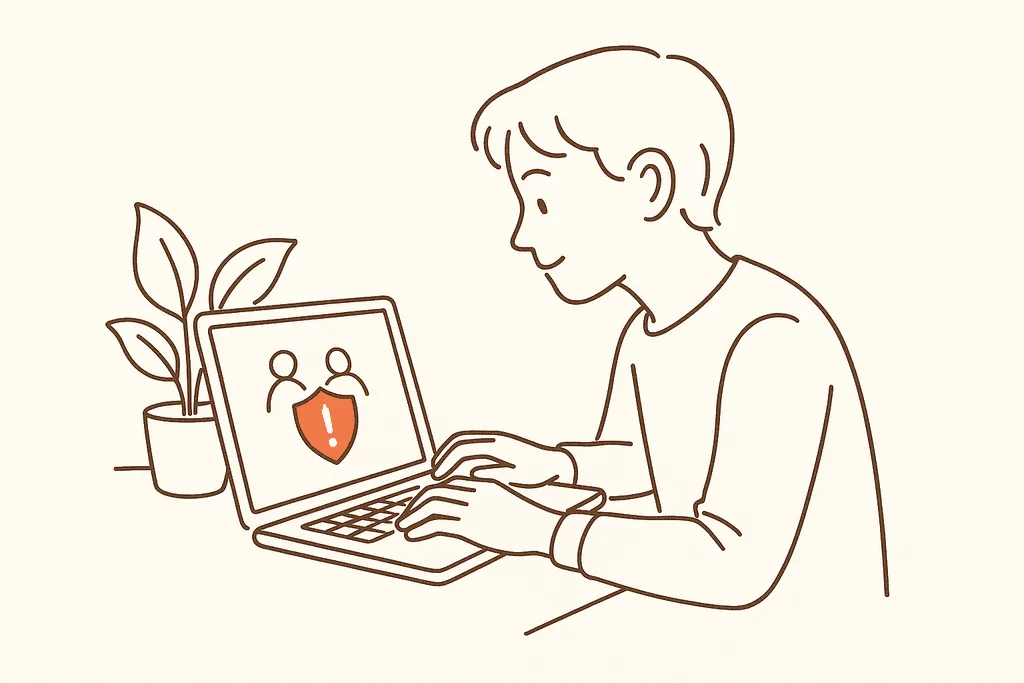
A short 'inoculation' game teaches teens the tricks of manipulation — so they spot fake news themselves, with effects lasting months.
- Learning the manipulator's playbook transfers to content the game never showed your teen.
- Spotting a trick is a skill that fades, so an occasional refresher keeps it sharp.
- The pause before sharing is where most of the protection actually happens.
- Teens who start out easiest to fool tend to gain the most from playing.
The situation, the move, the outcome.
Researchers at Cambridge tested 'psychological inoculation': expose people to a weak dose of misinformation tactics so they build resistance. In the free Bad News game, players spend about 15 minutes role-playing a fake-news creator, learning six common manipulation techniques. Afterward, players rated fake headlines as 21% less reliable — while still rating real news accurately — and the effect lasted at least three months with light boosters. Those most susceptible to fake news at the start benefited the most.
The mechanism is closer to a flight simulator than a fact sheet: by briefly building the manipulation themselves, players learn to recognize the underlying structure rather than memorizing which specific stories are false. That structural knowledge is what lets the skill carry over to brand-new content the game never covered. Because recognition can fade with time, light periodic refreshers keep the resistance topped up. Debriefing afterward — asking a teen which tricks they spotted — turns a single session into a habit of looking for the technique behind a post.
Why it matters beyond one family.
Prebunking flips the usual fact-checking script: instead of correcting falsehoods after they spread, it builds the mental antibodies in advance. The effect has now replicated across cultures.
Prebunking generalizes because it targets a small set of recurring tactics rather than an endless stream of individual claims. Misinformation tends to reuse the same moves — manufactured outrage, false either-or framing, blaming a group — so learning to flag the moves covers far more ground than chasing each falsehood after it spreads. That makes it a sustainable strategy for families, who can't possibly fact-check everything a teen scrolls past. It also shifts the work from policing content to building judgment, which is the part that stays useful long after any one rumor fades.
- The approach builds a durable skill rather than correcting one false claim at a time.
- It's free, short, and genuinely fun, so it doesn't feel like a lecture.
- The protective effect has held up across different cultures, not just one study group.
- Playing together gives parents a low-stakes way into a topic that can feel preachy.
How to apply it.
- Teach the techniques, not just the facts — recognizing manipulation generalizes.
- Play a prebunking game together and debrief what tricks your teen spotted.
- Encourage a habit of pausing before sharing emotionally charged content.
There's this short game that puts you in the seat of someone making fake news. Want to try it with me?
Why would I want to make fake news?
That's the trick of it — once you see how the manipulation is built, you start noticing it everywhere.
Fine, fifteen minutes. What's the first technique?
Looks like loaded emotional language. Notice how the angrier the headline, the more clicks it gets?
Oh, that's exactly what that account I follow does.
Now that you can name it, you'll catch it on your own feed. That's the whole point.
Kind of makes me want to go check some of the stuff I almost reposted.
That instinct — pausing before you share — is the strongest defense there is.
Concrete next steps.
- Try the free Bad News game and related tools with your teen.
- Combine with lateral reading — checking other sources before believing or sharing.
- Revisit periodically; light boosters extend the protective effect.
Read it for yourself.
Call or text 988 (Suicide & Crisis Lifeline, 24/7) · Text HOME to 741741 (Crisis Text Line) · Find a child psychiatrist at aacap.org · For immediate danger, call 911.