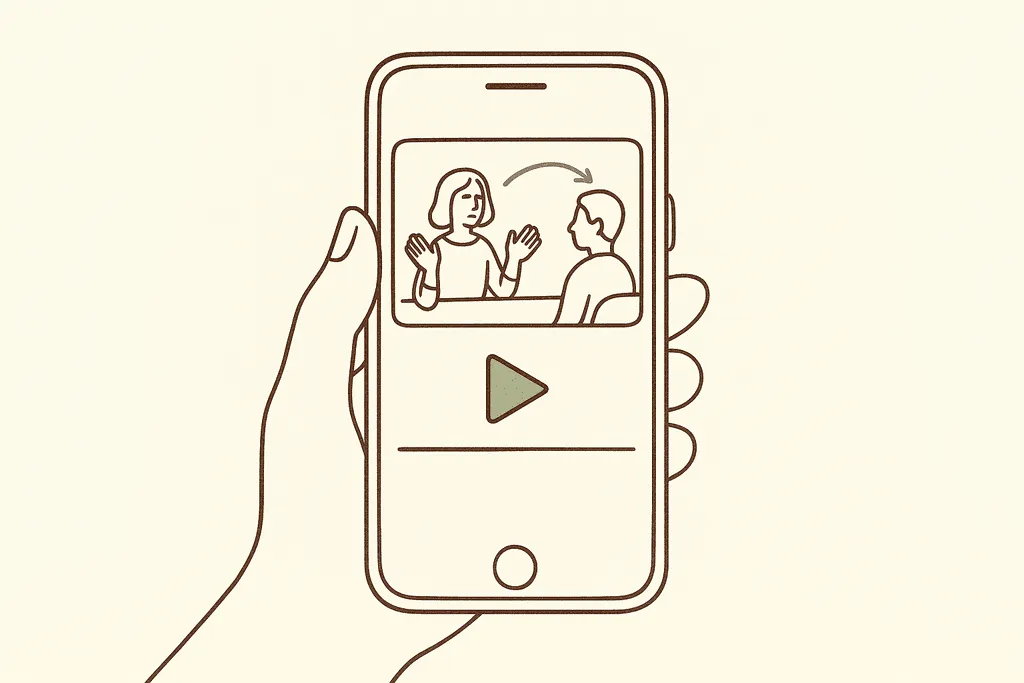
Brief 'prebunking' videos, delivered where teens already are, measurably improved their ability to spot manipulation — at massive scale.
- You can teach this skill in the same feed where the manipulation lives — no separate class required.
- Naming a specific technique out loud makes it far easier for a teen to catch it later.
- Modeling your own skepticism does more than telling your teen to be skeptical.
- Better sharing decisions, not just better feelings, are the real measure of success.
The situation, the move, the outcome.
Building on the inoculation idea, Google's Jigsaw division and Cambridge researchers made five short videos explaining common manipulation techniques — emotionally loaded language, false dichotomies, scapegoating and more — and ran them as YouTube pre-roll ads. Across seven studies, including a real-world field test with 22,632 viewers, the videos improved people's ability to recognize manipulation by about 5% even amid YouTube's distractions, boosted confidence in spotting it, and led to better sharing decisions — with effects robust across the political spectrum.
What makes this work in practice is that it borrows the very delivery system used to spread manipulation — short, attention-grabbing clips slotted into a normal viewing session. Rather than pulling teens out of their environment for a lesson, it teaches the skill inside the environment, which is where they'll need it. Watching one or two videos together and giving the techniques their plain names — false dichotomy, scapegoating, loaded language — gives a family shared vocabulary to point at later. From then on, the move is simply tagging examples as they appear in real feeds.
Why it matters beyond one family.
The breakthrough is scale: prebunking can be delivered to millions through the same ad systems that spread misinformation, meeting teens on the platforms they actually use.
The reason this scales is that the same ad infrastructure that distributes misleading content can distribute the antidote to enormous audiences. That matters for the generalization point: prebunking doesn't depend on schools, sit-down conversations, or a teen's willingness to attend a lesson — it can meet people in the flow of ordinary use. Because it targets recognizable techniques rather than specific political claims, the benefit held up regardless of viewpoint. For parents, the takeaway is that effective media literacy can be lightweight and embedded, not a separate curriculum to enforce.
- The approach reaches teens on the platforms they already use, instead of asking them to come elsewhere.
- It worked across the political spectrum, so it isn't pushing a particular viewpoint.
- Even brief, ad-length exposure produced a measurable, real-world improvement.
- The short videos make easy, no-pressure conversation starters for busy families.
How to apply it.
- Name the specific techniques (false dichotomy, scapegoating) so your teen can spot them.
- Watch a couple of the prebunking videos together as a quick literacy boost.
- Model questioning emotionally manipulative content in your own feed.
I saw a couple of short clips that break down the tricks people use to manipulate you online. Want to watch one before your video?
Is this going to be a whole thing?
Ninety seconds. This one's about false dichotomies — when something acts like there are only two options.
Like 'you either agree with us or you're the enemy'?
Exactly that. Once it has a name, you'll start seeing it constantly.
Honestly a creator I watch does the scapegoating one all the time.
Good catch. I try to ask the same question on my own feed — who made this, and what do they want me to feel?
That's kind of a useful question.
It is. You don't have to stop following anyone — just notice when you're being worked.
Concrete next steps.
- Find the Jigsaw/Cambridge prebunking videos and use them as conversation starters.
- Practice spotting techniques in real posts your teen encounters.
- Combine with Finland-style 'who made this and why?' habits.
Read it for yourself.
Call or text 988 (Suicide & Crisis Lifeline, 24/7) · Text HOME to 741741 (Crisis Text Line) · Find a child psychiatrist at aacap.org · For immediate danger, call 911.