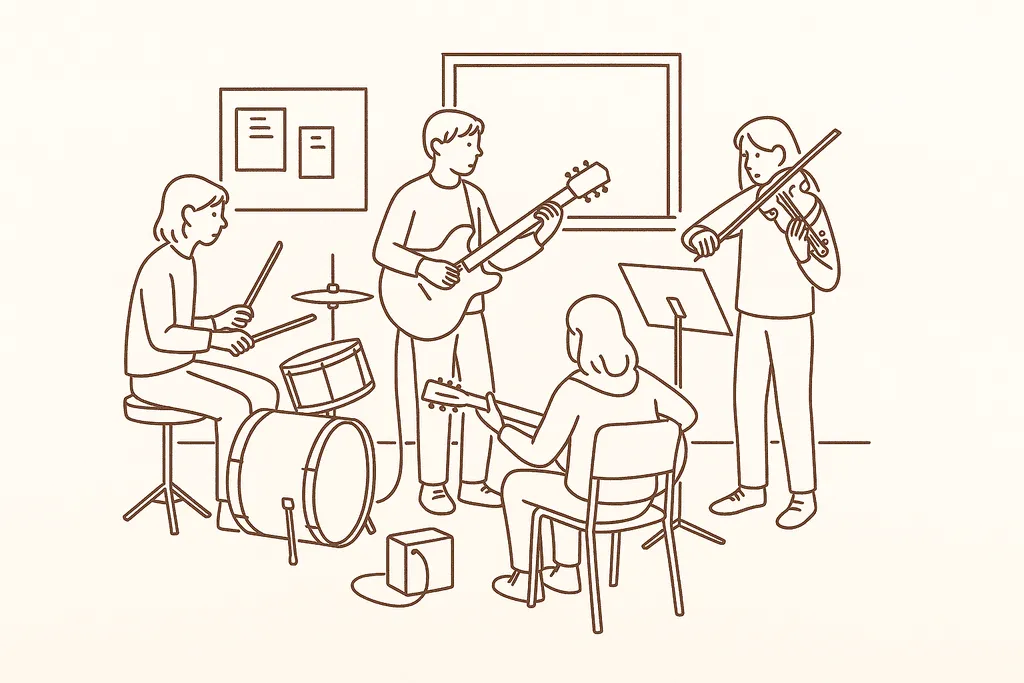
Crowding out the harmful thing with engaging real-world alternatives — and involving the whole community — worked where lectures failed.
- A teen's calendar is one of your most powerful prevention tools — a full, enjoyable week leaves less room for trouble.
- The activity matters less than the engagement; pick what your teen actually likes, not what looks impressive.
- Prevention is a team sport — shared norms with other families carry far more weight than rules enforced alone.
- Your time and presence are an ingredient, not a backdrop, in keeping risky behavior at bay.
The situation, the move, the outcome.
In the late 1990s Iceland had some of Europe's worst teen substance use. Rather than run scare campaigns, sociologist Inga Dóra Sigfúsdóttir helped design a community model — now called Planet Youth — that barely mentions drugs. It floods teens' free time with subsidized sport, music and clubs, gets parents involved and present, and adds practical guardrails like curfews for under-16s. The results were dramatic: from 1998 to 2016, the share of 15-16-year-olds drunk in the past month fell from 42% to 5%, daily smoking from 23% to 3%, and cannabis use from 17% to 5%.
In practice the model works by quietly reshaping the default options available to a teen rather than by issuing more warnings. When affordable sport, music and clubs are genuinely accessible and parents are encouraged to be present and coordinated, the appealing path and the safe path become the same path. Families and communities pull in one direction at once, so a teen isn't the lone holdout under a rule no one else follows. Over time the new routines feel ordinary, and the risky behavior simply has less room and less social reward.
Why it matters beyond one family.
The model's insight transfers directly to the screen era: you change behavior less by warning about the bad thing and more by crowding it out with engaging, supervised real-world alternatives — and by mobilizing the whole community, not just the individual teen.
The reason this generalizes beyond alcohol is that it targets the environment around a behavior instead of trying to win an argument inside one teen's head. Most tempting activities — including screens — thrive on empty, unsupervised time and the sense that everyone else is doing them. Crowd that time with things a teen enjoys, surround them with engaged adults, and align the norms across families, and the appeal of the harmful option erodes on its own. The lever is the community and the calendar, which is why the same logic can be applied wherever a habit you'd rather discourage has taken hold.
- A whole society chose to invest in teens' free time instead of frightening them, and the trend turned around.
- The approach treated parents as partners rather than problems, giving families a constructive role.
- It proved that structural support — affordable activities and safe spaces — can outperform willpower and warnings.
- The change held over many years, suggesting it built durable habits rather than a short-lived dip.
How to apply it.
- Compete with screens by filling time with sport, music, clubs and family activity.
- Be present and involved — parental time and attention is a core ingredient, not a side note.
- Push for community options (affordable activities, safe spaces) alongside home rules.
I was thinking about that climbing gym you mentioned — want to try a session this weekend?
Maybe. I don't really know anyone who goes there though.
That's fair. Would it help if I came the first time, or if we asked one of your friends along?
A friend would be better. Less weird.
Done. I'll figure out the cost and times — you just pick who to invite.
Okay. And if I hate it, I don't have to keep going?
Right, no pressure. We're just looking for something you'd actually look forward to.
Yeah, alright. I'll text Sam.
Concrete next steps.
- Enroll your teen in structured activities they actually enjoy, not just 'productive' ones.
- Coordinate with other parents on shared norms like curfews and check-ins.
- Advocate locally for funded youth programs modeled on Planet Youth.
Read it for yourself.
Call or text 988 (Suicide & Crisis Lifeline, 24/7) · Text HOME to 741741 (Crisis Text Line) · Find a child psychiatrist at aacap.org · For immediate danger, call 911.