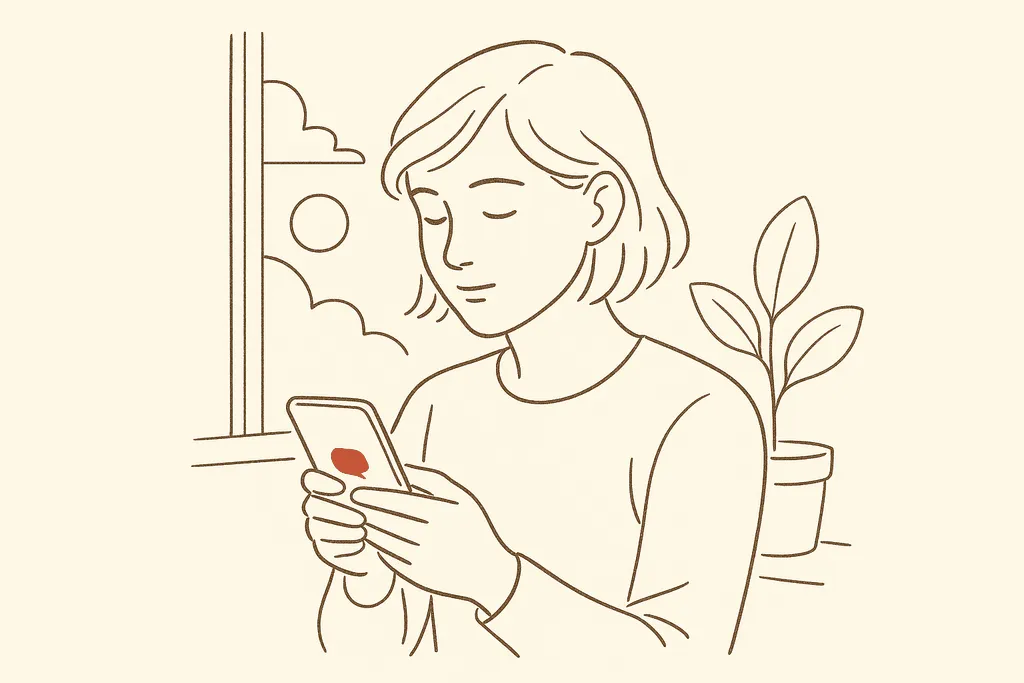
For teens who'd never call, a free text reaches a trained counselor — and the model is built to de-escalate, fast.
- Offer texting as a real option, since many teens will type long before they'll call.
- Frame reaching out in a hard moment as a skill worth practicing, not a failure.
- A private channel lets a teen ask for help without performing for anyone.
- Crisis support and the 988 lifeline complement each other rather than compete.
The situation, the move, the outcome.
Many teens in crisis will never pick up a phone, but they will text. Crisis Text Line built its whole model around that: a teen texts a short word to 741741 and a trained volunteer counselor responds, working with them to move from a 'hot moment' of acute distress to a calmer 'cool moment.' Counselors complete about 30 hours of training in rapport-building, risk assessment and collaborative problem-solving. Since 2013 the service has handled nearly 7 million conversations, and texters frequently credit it with preventing self-harm and suicide.
In practice a teen sends a short message and a trained counselor texts back, working patiently to bring the conversation down from an acute spike of distress toward a steadier place before anything else is decided. Because it's text, there's no pressure to speak through tears or find the right tone of voice, which is exactly what stops many young people from picking up a phone. The counselor's job is to build rapport quickly, gauge safety, and problem-solve alongside the teen rather than at them. The aim is to make the next hour survivable and calmer, not to fix everything at once.
Why it matters beyond one family.
Text-based support lowers the barrier for a generation more comfortable typing than talking — and it works quietly, without an in-person response in most cases. It's a complement to 988, not a replacement.
This approach generalizes because the medium meets a generation where it already lives, removing the friction that keeps people from reaching for help at all. Lowering that first barrier — letting someone type instead of speak, privately, without an in-person response showing up — tends to widen who is willing to reach out. The same insight applies anywhere support is offered to teens: accessibility and discretion often matter as much as the quality of the help itself. It works quietly and alongside other lifelines, which is why it functions as a complement rather than a replacement.
- The model meets teens in the medium they already trust, lowering the barrier to reach out.
- Trained counselors are equipped specifically to move someone from panic toward calm.
- Support is free, confidential, and available without anyone having to find the words aloud.
- Texters themselves frequently credit it with helping them through their worst moments.
How to apply it.
- Save 741741 in your teen's phone and mention texting as an option, not just calling.
- Normalize it: reaching out in a hard moment is a skill, not a weakness.
- Let your teen know they can use it privately — they don't have to perform for anyone.
I want to put a number in your phone — you don't have to use it, but I'd feel better knowing it's there.
What kind of number?
A crisis text line. If you're ever in a really dark spot and can't talk to me, you can text someone trained to help.
I'm not going to call some hotline, that's so awkward.
That's the thing — it's texting, not calling. No talking out loud, totally private.
So nobody would know?
It's confidential. Reaching out when things get heavy isn't weak — it's honestly a smart move.
Okay. You can put it in.
Done. And the door's always open with me too, whenever you want it.
Concrete next steps.
- Text HOME to 741741 (US) anytime for free, confidential support.
- Use 988 (call or text) as the parallel national lifeline.
- For ongoing struggles, follow up with a counselor or pediatrician.
Read it for yourself.
Call or text 988 (Suicide & Crisis Lifeline, 24/7) · Text HOME to 741741 (Crisis Text Line) · Find a child psychiatrist at aacap.org · For immediate danger, call 911.