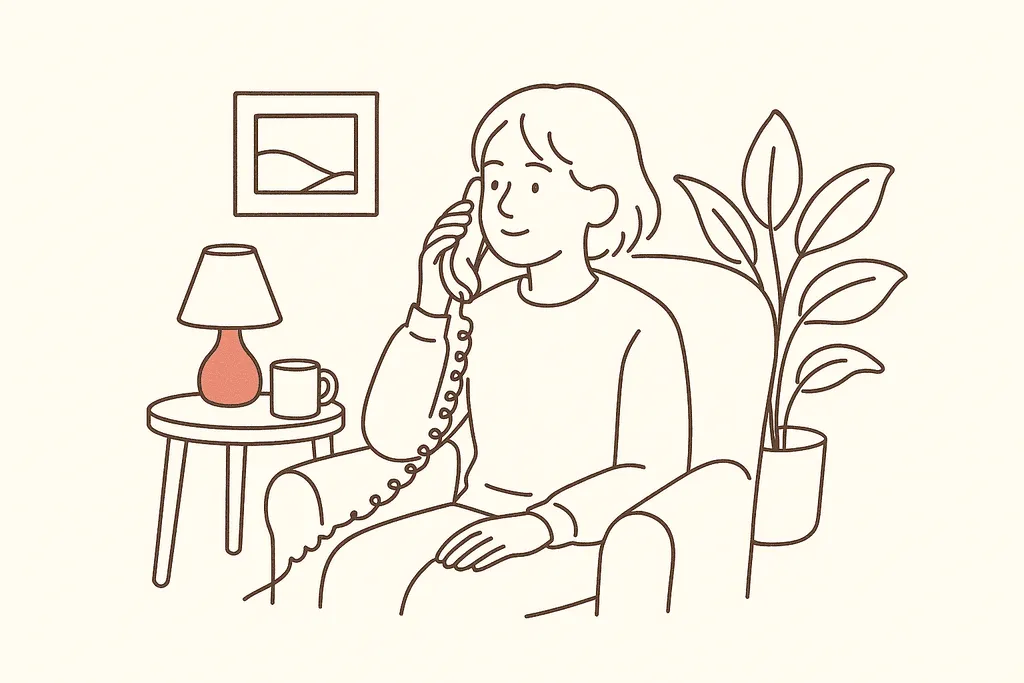
A free, confidential line where a young person is simply heard — Childline delivers over 160,000 counselling sessions a year, no problem too small.
- Make sure your teen knows a confidential line exists for any worry, not only emergencies.
- Describe reaching out as normal and brave, which lowers the bar for a first call.
- Look up your own country's equivalent line and save it in your teen's phone before it's needed.
- A trusted outside listener can complement, not replace, the conversations you have at home.
The situation, the move, the outcome.
Childline, run by the NSPCC, offers free, confidential counselling for anyone under 19 in the UK by phone, online chat or email, plus self-help tools and peer support on its site. In 2024/25 it delivered 162,018 counselling sessions, with mental and emotional health the leading topic. Its 'enhanced counselling model' blends established therapeutic techniques so counsellors can do more than listen — helping young people feel heard and take positive steps.
In practice the service lowers every barrier that usually stops a young person from reaching out: it costs nothing, keeps the conversation confidential, and lets the teen choose the channel that feels least intimidating. Its counselling model is built so that a call isn't only venting — trained counsellors help a young person feel heard and then move toward a positive next step. That blend matters because many teens carry worries they judge too small to mention to anyone they know. A parent's role is mostly to plant awareness early, normalize using it, and keep their own door open as a parallel option.
Why it matters beyond one family.
Like 988 and Crisis Text Line in the US, Childline shows the value of an always-available, no-judgment channel built specifically for young people, who often won't open up to adults they know first.
The case generalizes because the need it meets is universal: young people often won't open up first to the adults closest to them, however loving. An always-available, judgment-free line built specifically for them fills that gap, which is why comparable services exist across countries. The specific number matters less than the principle — that every teen should have a confidential outside listener saved and ready before a hard moment arrives. For families, the practical lesson is to treat such a line not as a sign of failure at home but as a healthy complement to the conversations there.
- It's genuinely free and confidential for any young person, removing cost and fear as barriers.
- It meets teens through whatever feels easiest — phone, chat, or email — rather than forcing one format.
- Its counsellors are trained to do more than listen, helping a young person take concrete next steps.
- It treats every problem as worth a conversation, signaling that nothing is too small to raise.
How to apply it.
- Make sure your teen knows a confidential helpline exists for any problem, big or small.
- Frame reaching out as normal and brave, not a last resort.
- Know your country's equivalent line and save it in their phone.
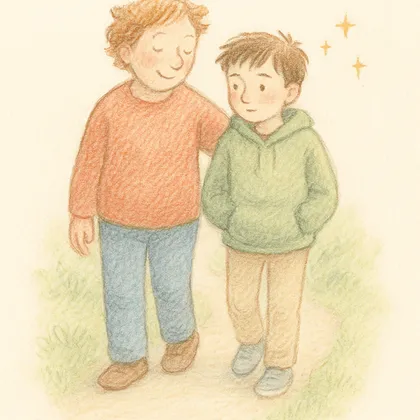
There's stuff on my mind lately, but it feels too small to make a big deal about with you.
Nothing's too small for me to want to hear. But I also want you to know there's a confidential line you can call anytime.
Like only if something's really wrong?
No — for anything at all. The whole point is that no problem is too small, and they keep it private.
I don't know. Calling a stranger feels kind of awkward.
It can feel that way at first, but reaching out is actually a brave, normal thing to do. Plenty of people use it.
Maybe I'll keep the number, just in case.
Let's save it in your phone right now. And my door's always open too — whichever feels easier in the moment.
Concrete next steps.
- In the UK, Childline: 0800 1111 or childline.org.uk.
- In the US, 988 (call/text) and Crisis Text Line (text HOME to 741741).
- Pair helplines with ongoing, open conversation at home.
Read it for yourself.
In the US: call or text 988 (Suicide & Crisis Lifeline, 24/7) or text HOME to 741741. In the UK: Childline 0800 1111. For immediate danger, call your local emergency number.