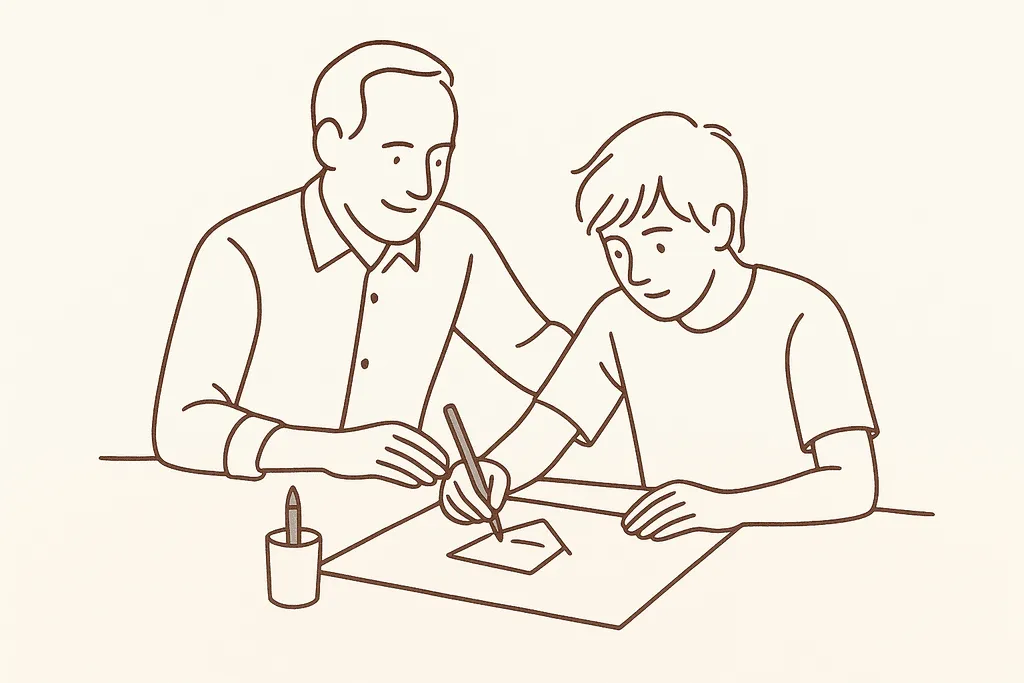
One consistent, caring mentor measurably lowered arrests and substance use — and the benefits showed up years later.
- The active ingredient is consistency, so a steady once-a-week adult beats an intense but short-lived one.
- A mentor adds support without competing with you — it isn't a referendum on your parenting.
- Coaches, teachers, and relatives can fill this role too, not only formal programs.
- Give a match real time; trajectories shift over months and years, not in a few weeks.
The situation, the move, the outcome.
Big Brothers Big Sisters pairs young people with a screened, supported volunteer mentor. In randomized trials, mentored youth were 54% less likely to have been arrested and 41% less likely to use substances at 18 months, with gains in school engagement, self-control, grit and family functioning. A four-year trial found 20-40% reductions in substance use and delinquent behavior, and long-run data link mentoring to higher earnings and college enrollment.
In practice, the benefit doesn't come from any single conversation but from a relationship that simply keeps showing up over time. A screened, supported volunteer offers something a parent structurally can't — an adult voice that isn't entangled in household rules or family history, which can make a teen more willing to be honest. Quality programs invest heavily in matching and ongoing support precisely because the durability of the bond, not its intensity, is what moves outcomes. Families help most by protecting the consistency of the match and resisting the urge to expect quick results.
Why it matters beyond one family.
Researchers call the combined evidence 'highly promising' rather than definitive — some effects attenuate over time. But the core lesson is durable: a sustained relationship with one caring adult changes trajectories.
This generalizes because the underlying need — at least one stable, caring adult outside the home — is nearly universal for adolescents navigating risk. The relationship works through several quiet channels at once: someone noticing, someone modeling, someone holding a teen to a slightly higher version of themselves. That's why the same protective pattern shows up with coaches, teachers, and extended family, not only formal mentoring. The honest caveat is that some effects soften over time and the evidence is called promising rather than ironclad, but the core lesson is sturdy: sustained relationship beats one-off intervention.
- The benefits were measured in randomized trials, the most trustworthy kind of evidence.
- Gains showed up across many areas at once — behavior, school, self-control, and family life.
- Some effects persisted for years, including into work and college.
- Vetted programs screen and support mentors, so families aren't vetting strangers alone.
How to apply it.
- If your teen could use another supportive adult, seek a quality mentoring match.
- Prioritize consistency — the benefit comes from a sustained relationship.
- Support school or community mentoring programs that are evidence-based.
I've been thinking it might be good for you to have another adult in your corner — someone who's just yours to talk to.
Why? Is something wrong with how things are?
Nothing's wrong. It's just that I can't be everything, and a mentor is one more person who's on your side.
I don't really want some random stranger assigned to me.
Fair. These programs match carefully, and you'd get a say. You can meet someone and see if it clicks before committing.
And if it's weird I can stop?
Of course. There's no pressure. The whole value is in it being a relationship you actually want.
I guess I could meet someone once.
That's all I'm asking. Whatever you decide, I'm still your first call.
Concrete next steps.
- Explore Big Brothers Big Sisters or similar vetted programs locally.
- Encourage healthy mentor relationships (coaches, teachers, relatives) too.
- Give the match time; trajectories shift over months and years, not weeks.
Read it for yourself.
Call or text 988 (Suicide & Crisis Lifeline, 24/7) · Text HOME to 741741 (Crisis Text Line) · Find a child psychiatrist at aacap.org · For immediate danger, call 911.