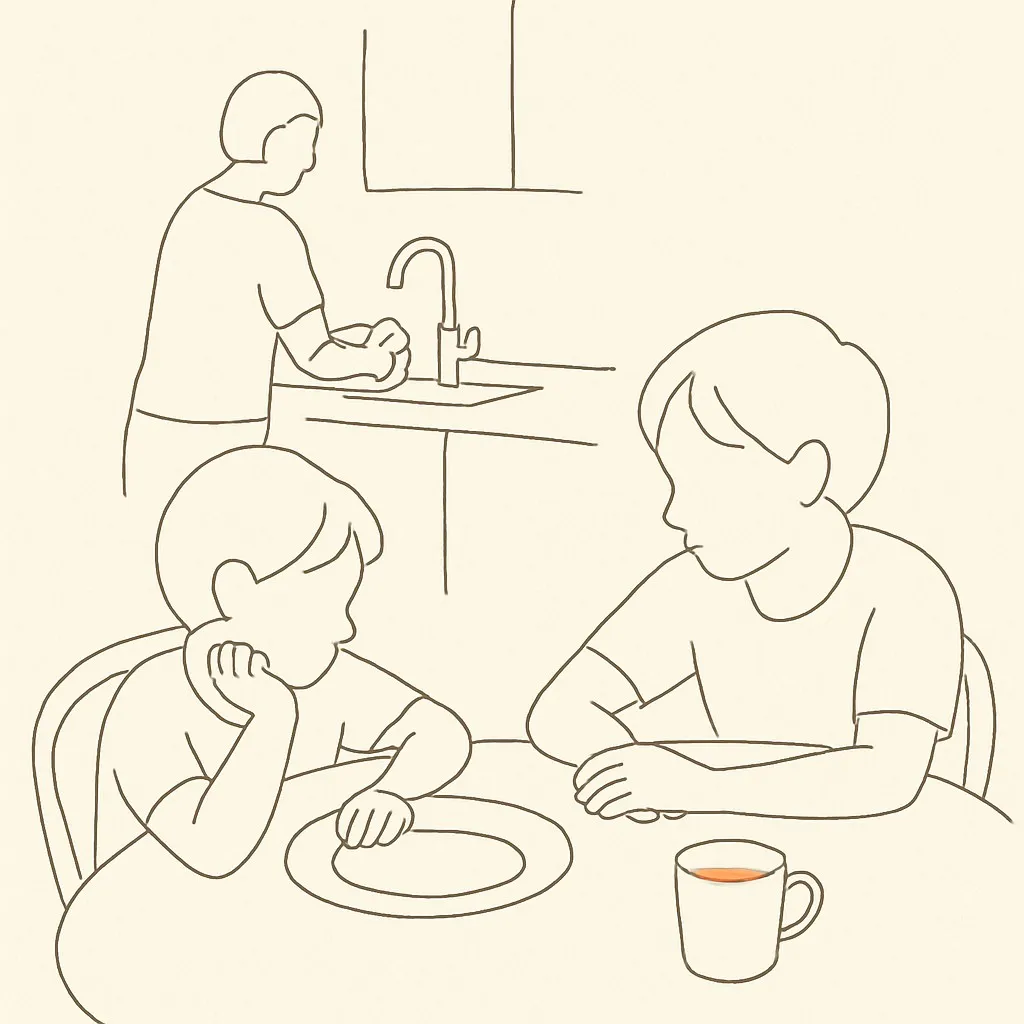
What's happening.
Your 14-year-old, after seeing you laugh at the 10-year-old's joke and barely register the 14-year-old's: “You treat them better than me. You always have.” You set down the sponge.
What we usually say — and why it backfires.
I treat you both exactly the same.
You laughed at theirs and didn't even hear mine.
Then say something funnier next time.
(absorbs that complaining about treatment gets the teen blamed for the treatment)
- “I treat you both exactly the same” is almost never accurate AND it's not what they asked.
- “Say something funnier next time” puts the burden on the teen to deserve equal attention.
- Long-term: teens whose parents denied disparate treatment grow into adults who can't perceive disparate treatment at work.
What works — and why.
Okay. Sit down. What's a recent specific where I treated them better than you?
Tonight. They told a dumb joke at dinner and you cracked up. I told one and you didn't even look up from your phone.
...you're right. I did that and I shouldn't have. I think I've been treating you like the responsible older one and them like the cute funny little one, and that's not fair to either of you, but especially to you. Tell me your dumb joke from tonight. I want to actually listen.
- Asking for a specific example (not asking IF it's true) honors that they have data and you're going to engage with it.
- Owning the specific failure (“I did that and I shouldn't have”) is the only credible apology.
- “I've been treating you like the responsible older one” names a real pattern — sibling order produces real disparate treatment. Naming it is the start of changing it.
Key phrases to reach for in the moment.
- Sit down. What's a recent specific where I treated them better than you?
- (Own the specific.) You're right. I did that and I shouldn't have.
- I've been treating you like [pattern] and them like [pattern]. That's not fair.
- Tell me your [thing] from tonight. I want to actually listen.