I.
The scene
What's happening.
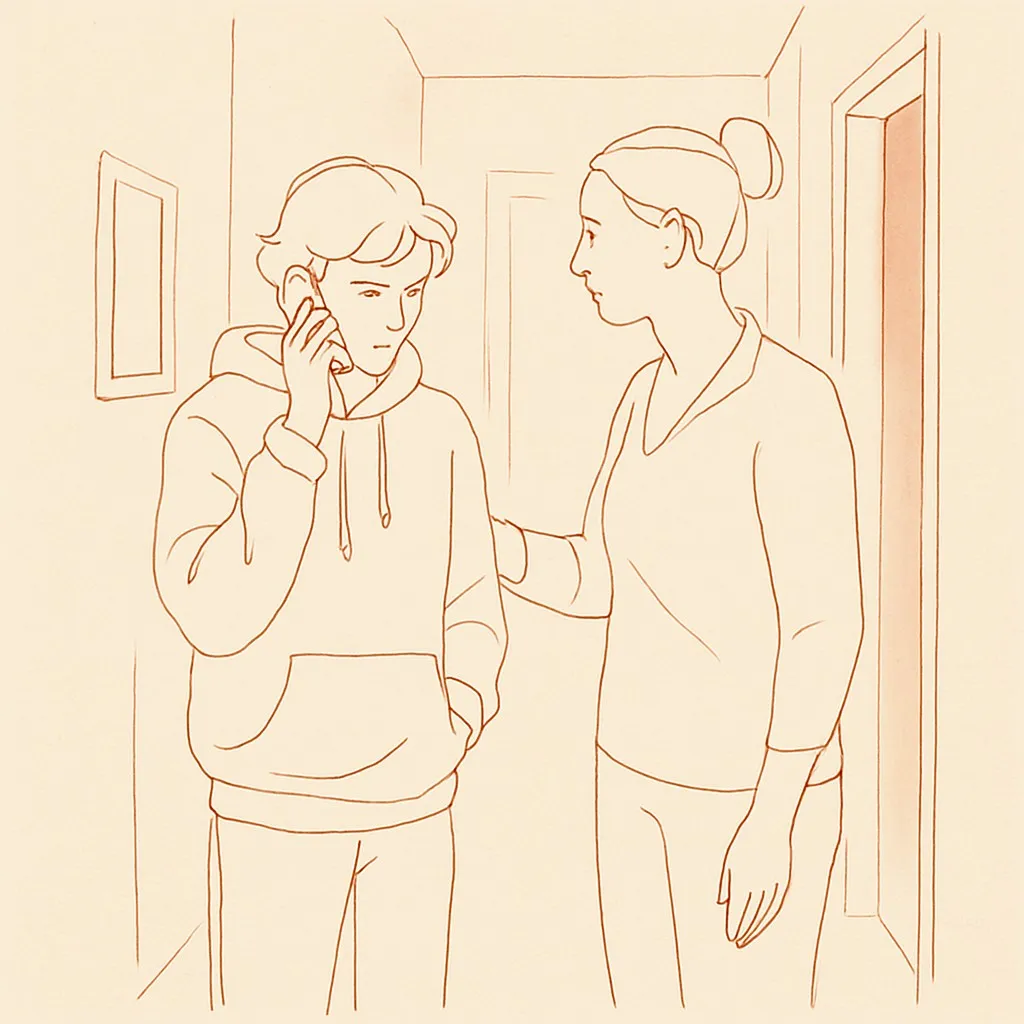
Your 13-year-old, after overhearing you snap at grandma on the phone: “Mom. Why do you talk to her like that? It was kind of mean.” You inhale.
II.
The instinctive version
What we usually say — and why it backfires.
Parent
You don't know what it's like to have her as your mother.
Teen
I have you as my mother and you talk to me better than that.
Parent
It's complicated. You wouldn't get it.
Teen
(catalogs adult excuse-making for adult bad behavior; learns it's normal)
- “You don't know what it's like” excuses present-tense behavior with historical context the teen isn't asked to absorb.
- “You wouldn't get it” is the parent shutting down honest feedback from a kid who just modeled the feedback the parent would want from THEM.
- Long-term: kids who watch parents excuse their own tone with grandparents grow into adults who do exactly the same with everyone.
III.
The better version
What works — and why.
Parent
(pause) You're right. That was sharper than it should have been. There's a lot of history with her and me that you don't know, but that doesn't excuse the tone — and you noticing matters. I'll call her back later and apologize. Thank you for telling me.
Teen
...okay. Thanks for not being mad.
- “You're right” first, then context, then commitment, models the apology structure you want them to use forever.
- “History doesn't excuse the tone” is the line that has to be said out loud because it's true and rarely modeled by adults.
- Calling her back to apologize is the proof — and it teaches the teen that apology isn't a feeling, it's an action.
IV.
Memorize these
Key phrases to reach for in the moment.
- (Pause.) You're right. That was sharper than it should have been.
- There's history you don't know — but that doesn't excuse the tone, and you noticing matters.
- I'll [make the repair: call back, apologize, etc.] later.
- Thank you for telling me.