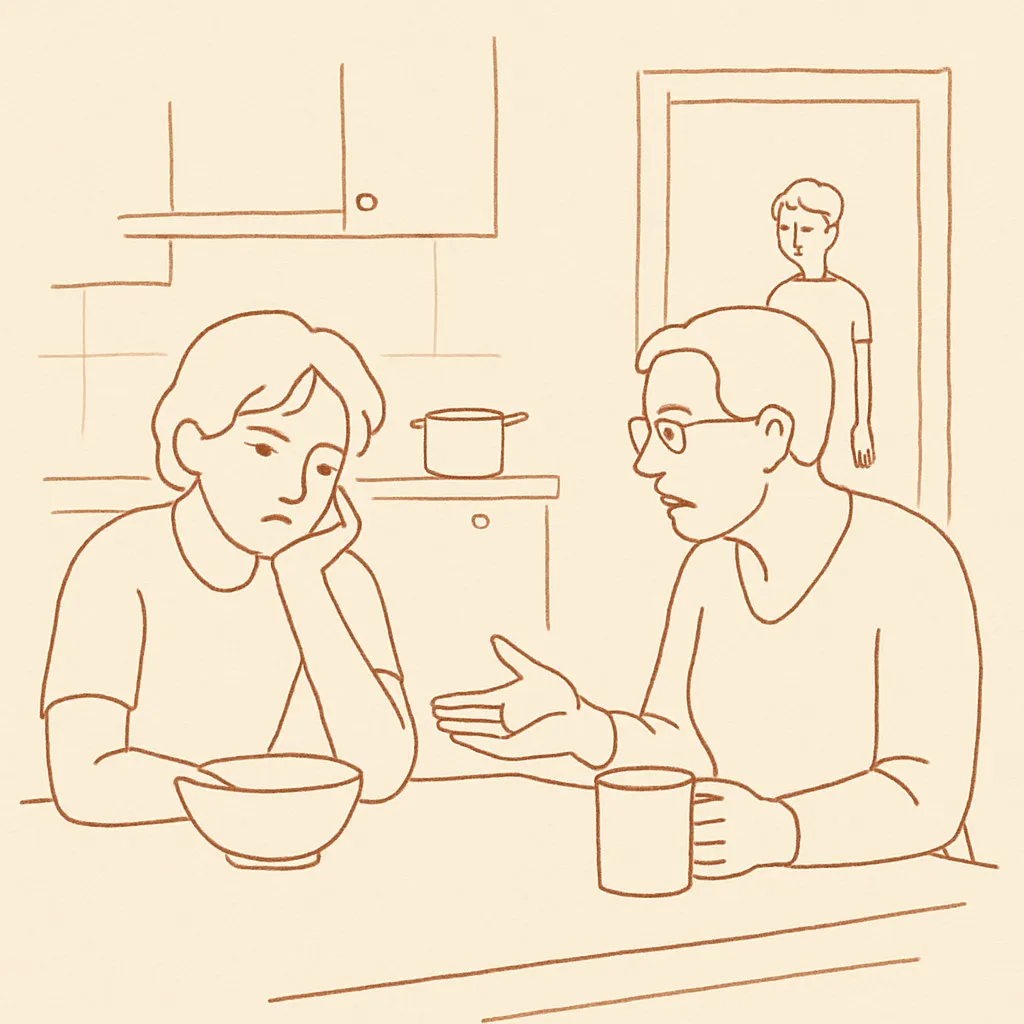
What's happening.
Your 13-year-old, after praise for the 10-year-old's report card: “You love them more than me. You always have.” You set down the dishes.
What we usually say — and why it backfires.
That is RIDICULOUS. I love you both the same.
Then why do you brag about them and not me?
I do brag about you! Stop being dramatic.
(catalogs another denial; resentment goes underground)
- “That is RIDICULOUS” attacks the feeling instead of investigating it. Most jealousy claims have at least a kernel of accurate observation.
- “I love you both the same” is a parental cliché that teens don't believe and that suppresses the conversation about HOW you each express love.
- “Stop being dramatic” names them as the problem instead of engaging the data they brought.
What works — and why.
Okay. Sit with me. That's a heavy thing to say out loud — tell me what made it land tonight.
You went on for ten minutes about their report card. You barely said anything when I got mine last week. Same grade.
...you're right. I did. I'm sorry. I think I was tired last week and I think I sometimes do that thing of celebrating the younger one's wins louder because they're newer and you're more familiar — which isn't fair to you. Loving you the same doesn't mean treating you the same — but it does mean I owe you the same effort when you do something great. I'll work on it.
Thanks.
- “Tell me what made it land tonight” honors that the feeling has a specific trigger — and almost always there's a real recent thing.
- Owning the specific failure (“ten minutes about theirs, almost nothing about yours”) is the only believable apology.
- “Loving you the same doesn't mean treating you the same — but it does mean owed effort” is the nuanced truth older siblings need to hear.
Key phrases to reach for in the moment.
- Sit with me. That's a heavy thing to say out loud — tell me what made it land tonight.
- (Own the specific failure they describe.)
- Loving you the same doesn't mean treating you the same — but it does mean I owe you the same effort.
- I'll work on it.