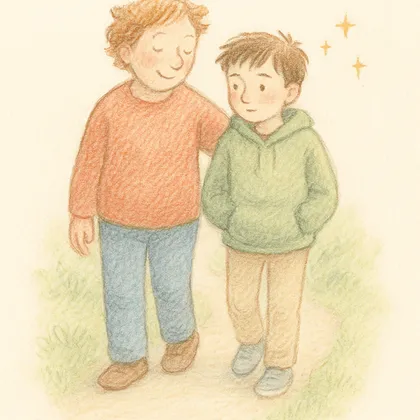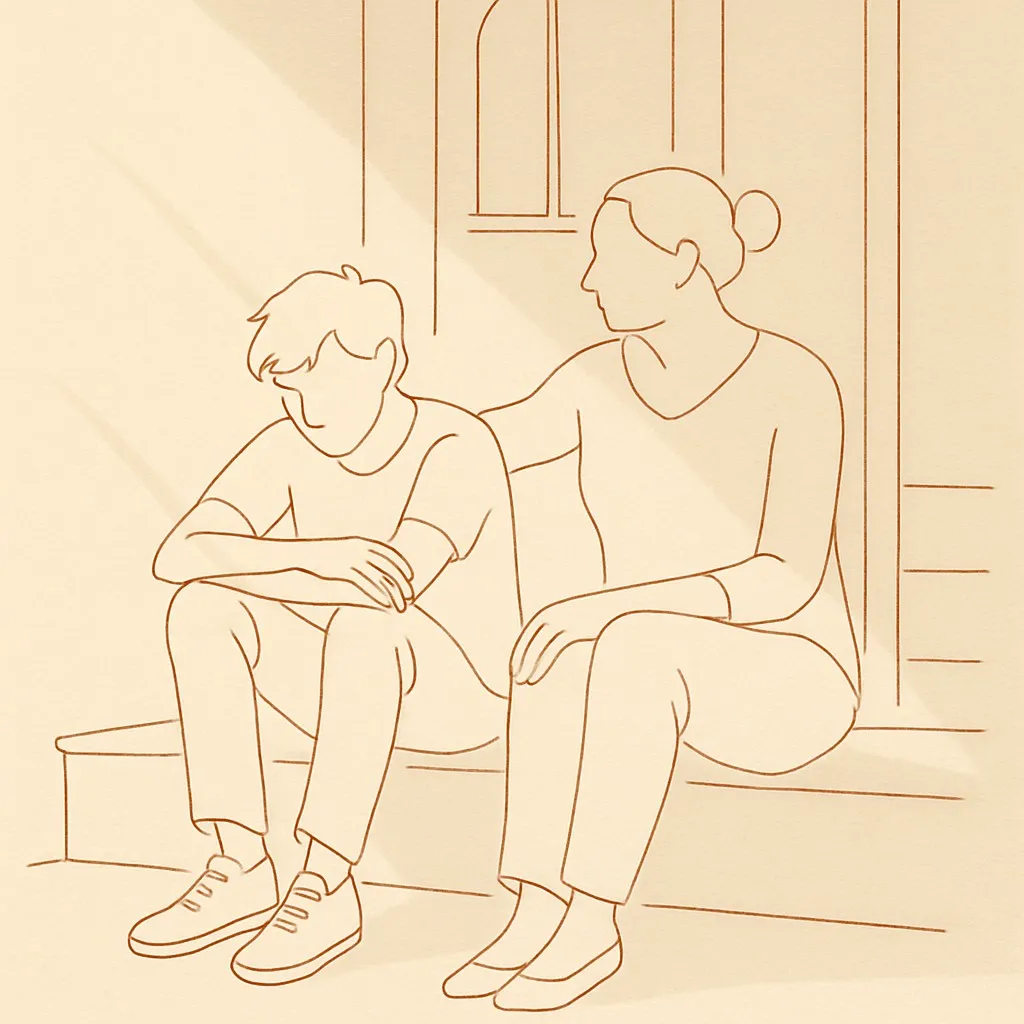
What's happening.
Your 13-year-old, walking in the door, eyes red: “Mom. A kid in my grade died. They didn't tell us how.” You set down everything.
What we usually say — and why it backfires.
Oh my god, who? Was it suicide? Was it an overdose?
I don't know. They didn't say.
I bet it was suicide. There's been so much of that lately.
(absorbs that adults' first instinct is to speculate about death cause; loses the grieving conversation entirely)
- Speculating about cause in the first 30 seconds turns grief into gossip. The teen will repeat that energy with their peers.
- “There's been so much of that” is the parent's anxiety overlay; doesn't help the teen with the specific loss in front of them.
- The grief never gets felt because the conversation became forensic.
What works — and why.
Oh. Come here. Sit with me. Do you want to tell me about them, even if you didn't know them well?
I didn't know them well. They were in my math class. I was just always next to them.
That counts. You don't have to have been their best friend for this to hurt. School will probably do an assembly or have counselors there tomorrow — that's normal and you can use them. If you want to go to whatever service or vigil happens, I'll go with you. And if you don't want to, that's okay too.
I think I want to.
- “Do you want to tell me about them” respects the loss without forensic curiosity — and gives the teen permission to grieve someone they weren't best friends with.
- “You don't have to have been their best friend for this to hurt” is the sentence that frees the teen from secondary guilt about how much grief they're allowed.
- Offering accompaniment to the service or vigil (and explicit permission not to go) gives them the dignity of choice in a moment with little choice in it.
Key phrases to reach for in the moment.
- Oh. Come here. Sit with me.
- Do you want to tell me about them, even if you didn't know them well?
- That counts. You don't have to have been their best friend for this to hurt.
- If you want to go to whatever service or vigil happens, I'll go with you. And if you don't, that's okay too.
Peer death in a school community: school counselors typically activate within 24 hours. If the cause was suicide, the school will have protocol around contagion risk — your teen may also benefit from a brief independent counseling check-in regardless. Tonight: don't be alone, model that crying is okay, eat something, sleep in proximity if helpful. The Dougy Center (dougy.org) has peer/family grief resources. If your teen mentions thoughts about themselves after a peer suicide: 988 + same-week therapist.