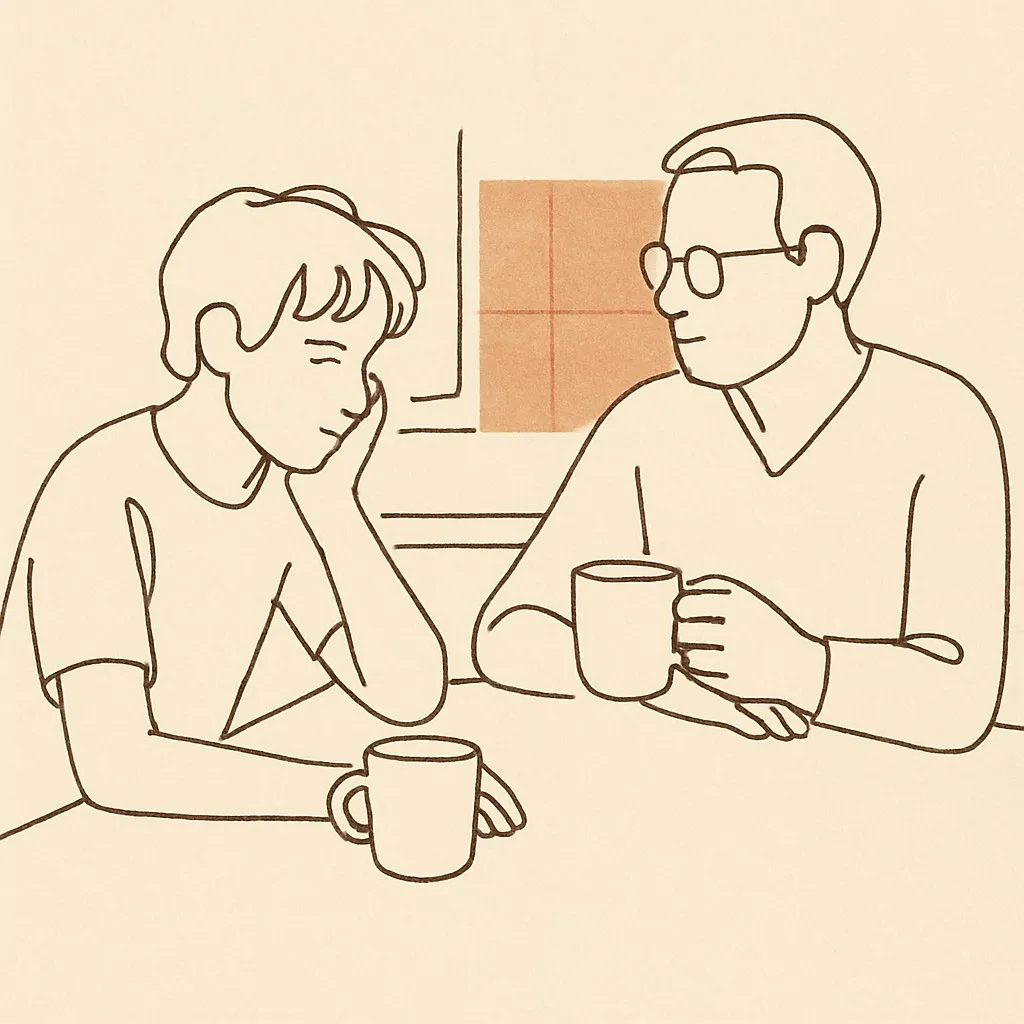
What's happening.
Your 13-year-old, after school: “There was a fight in the hallway today. Like a real one. Someone got their nose broken.” The casualness is half-real.
What we usually say — and why it backfires.
Were you involved? Did you tell a teacher? What did the school do?
I wasn't involved. Teachers broke it up.
Good. Stay away from those kids.
(parent processed it as logistics; teen carries the actual seeing-violence experience alone)
- Triple-question intake (involved / told teacher / school's response) treats it as a logistics issue rather than the witnessing-violence experience it actually was.
- “Stay away from those kids” is the parent's anxiety calling for distance, missing that the teen wanted to talk about what they saw.
- Witnessing violence at 13 leaves a residue. Not addressing the residue is the long-term cost.
What works — and why.
Yeah, that's a heavy thing to see. What was that like in the moment — were you scared, did time feel weird, were you mostly fine?
Time felt weird. Like it was slower than it should have been. Then super fast at the end.
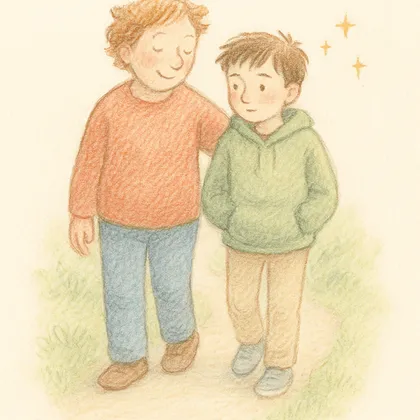
Yeah. That's how the brain handles seeing something out-of-routine like that. Pretty normal. Most people sit with it for a few days and then it fades. Tonight let's do something low-stakes together — walk, movie, whatever — sometimes the body just needs to be near another body after seeing something like that.
- “What was that like in the moment” gets at the witness experience rather than the logistics.
- Naming the time-distortion as normal (it is — fight-or-flight does that) gives the teen a framework instead of a vague unease.
- Co-presence (walk, movie) is the underrated, evidence-backed regulation move for witnessing violence at any age.
Key phrases to reach for in the moment.
- Yeah, that's a heavy thing to see.
- What was that like in the moment — scared, time felt weird, mostly fine?
- That's how the brain handles seeing something out-of-routine. Pretty normal.
- Tonight let's do something low-stakes together — walk, movie, whatever.