What's happening.
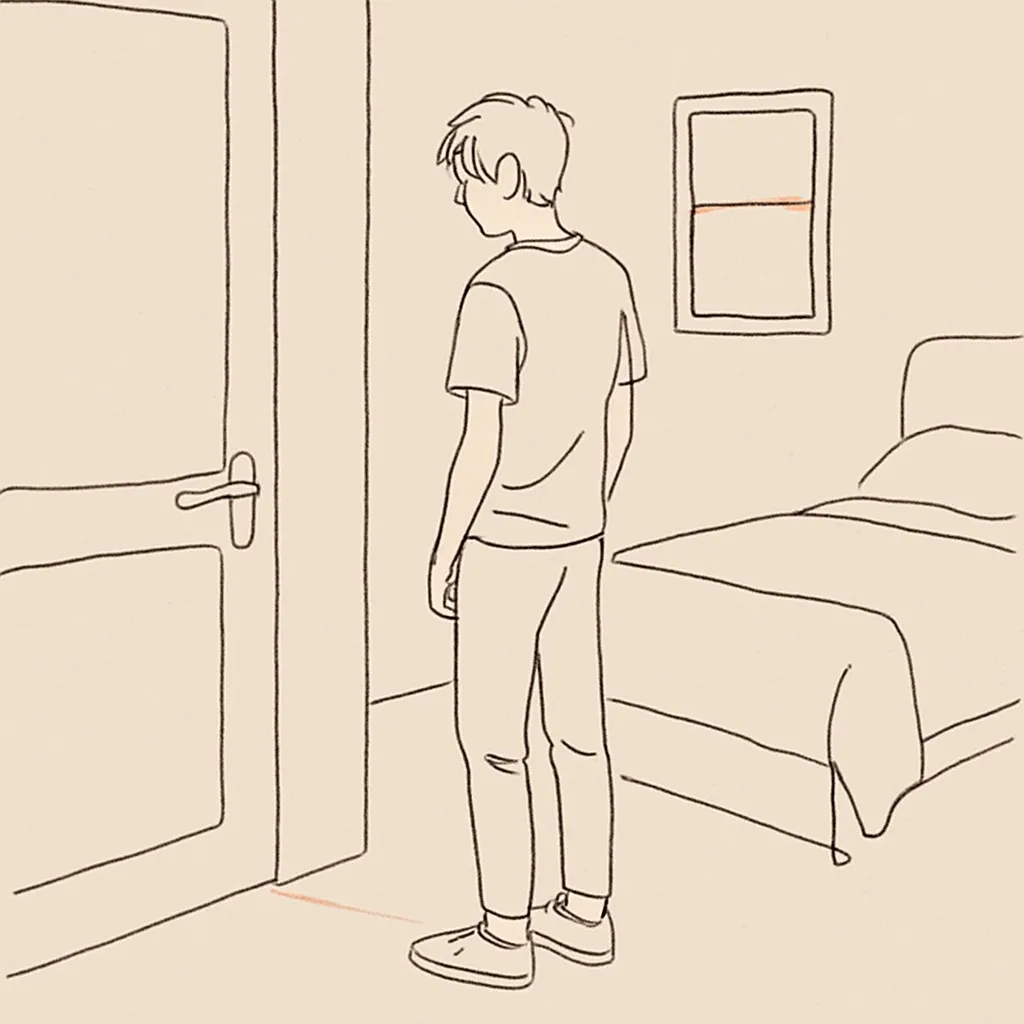
Your teen has been in their room for hours. You knock to check in. Through the door: “Leave. Me. Alone.” You feel the door close in both senses.
What we usually say — and why it backfires.
Don't talk to me like that. Open the door.
I said LEAVE ME ALONE.
Fine. I won't bother you anymore.
(Parent walks away. The teen interprets it as proof no one cares.)
- Demanding the door open is a power move that turns the moment into a battle. Even if you win, you lose the conversation.
- “I won't bother you anymore” lands as withdrawal of love, especially to a teen who's already running low on it.
- The walk-away is intended as respect for space; the teen brain (still developing emotional permanence) reads it as abandonment.
What works — and why.
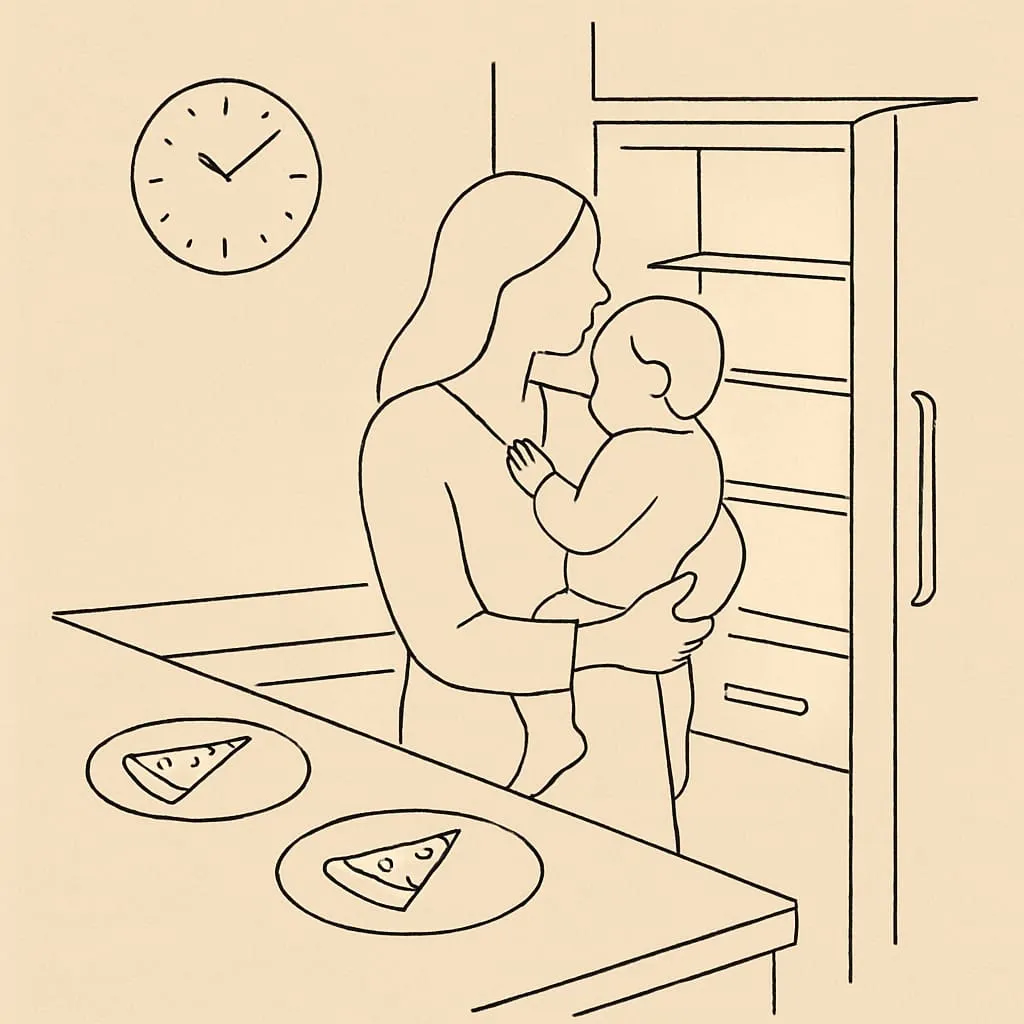
Okay. I'm here. I'll be in the kitchen if you need me. There's leftover pizza.
(45 minutes later, a knock on the kitchen wall.)
Is there still pizza?
Plate's on the counter. Want company or solo?
Solo. Maybe later.
Got it. I'm around.
- “I'm here” + a low-friction reason to leave the room (pizza) keeps the door physically and emotionally open without asking the teen to perform.
- Waiting for them to come to you is slower and harder than insisting, but it's the only move that doesn't escalate.
- “Want company or solo?” gives them control over the next 5 minutes, which is exactly what they need to feel right now.
Why this script works on a teen brain.
"Leave me alone" is a mistranslation problem. What the teen says: leave me alone. What the teen often means: I want you to stay, but I can't bear to ask, and I can't bear to be looked at right now. The teen brain has a feature called emotional permanence — except adolescents don't have it yet. When the parent walks away, the teen doesn't trust the parent is still emotionally present. The walk-away is filed as proof no one cares.
This is one of the most-missed signals in adolescent parenting. The behaviorally correct move (respect their stated request, leave the room) is the emotionally wrong move. The actually-correct move is to leave the room they're in but remain audibly, visibly, smelling-of-cooking-something present in the next room. The teen has space without abandonment. The brain registers both at once.
The low-friction return move ("there's pizza," "the dog wants a walk," "I'm going to the store, want anything") gives the teen a way to leave their room without performing recovery. They don't have to explain themselves to access food, comfort, or company. Most teens take the off-ramp within an hour when it's offered this way.
Same dynamic, different surface.
Your 13-year-old has locked themselves in the bathroom for 40 minutes. You can hear them crying. You knock gently. "Are you okay?" You hear: "GO AWAY." You feel terrified and useless.
What usually happens.
Open the door. Right now. I need to see you.
I SAID GO AWAY.
If you don't open the door I'm going to take it off the hinges.
FINE. I'll come out. Are you HAPPY now?
- Demanding the door open turns the moment into a power conflict, which is what a flooded teen cannot handle.
- Threatening to remove the door physically is a threat the teen will remember for years. It will not be filed as care.
- "Are you HAPPY now" tells you that you got the door open but not the connection. The teen learned: I am not safe to fall apart in front of you.
What works better.
Okay. I'm not going anywhere. I'll sit out here. Take your time.
(Parent sits on the hallway floor. 15 minutes pass.)
I have a glass of water out here if you want it. No talking required.
(The door opens 6 inches. A hand reaches out. Parent puts the water in it. Door closes.)
(20 minutes later, the door opens.)
Can I sit with you for a minute?
- "I'm not going anywhere" is the antidote to the abandonment fear the teen is running. The presence itself is the medicine.
- The water — not a question, not a hug, just a glass of water — is the bridge. Care without demand. Often the smallest gesture that opens the door.
- "Can I sit with you" is the teen offering co-regulation on their terms. The right response is to scoot over and say nothing for a while.
Key phrases to reach for in the moment.
- Okay. I'm here.
- I'll be [nearby] if you need me. There's [low-friction reason to come out].
- Want company or solo?
- Got it. I'm around.
When to use each one.
-
Okay. I'm here.
Use as the first response — short, present, no follow-up. The presence is the message.
-
I'll be [nearby] if you need me. There's [low-friction reason to come out].
Use to set the off-ramp. Pizza, the dog, a trip to the store — any non-emotional reason to leave the room.
-
No talking required.
Use when offering food, water, or company to a shut-down teen. Removes the verbal price tag.
-
Want company or solo?
Use when they emerge. Lets them keep choosing the format, which is how trust rebuilds.