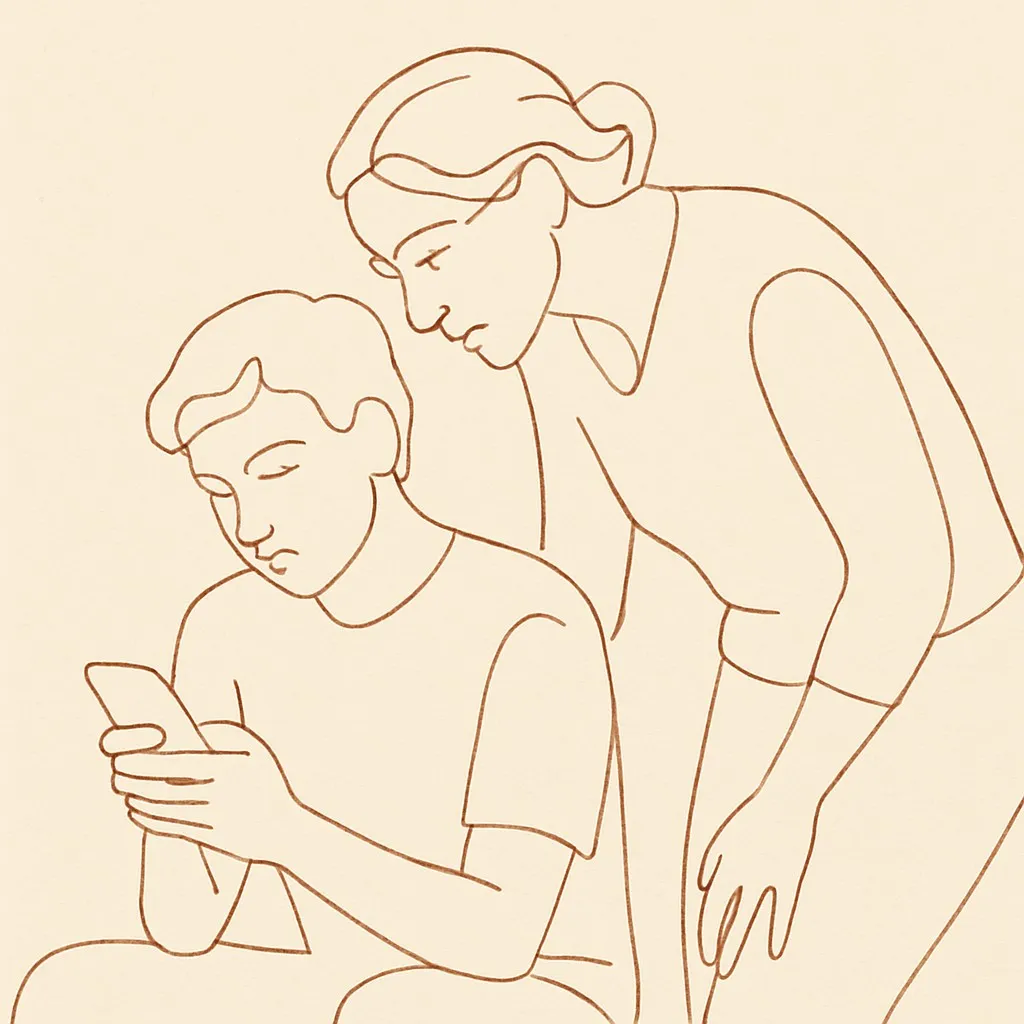
What's happening.
Your 15-year-old shows you a TikTok and says, “All five of these are me. I think I have ADHD.” You feel the urge to dismiss and the urge to over-react in equal measure.
What we usually say — and why it backfires.
Everyone on TikTok thinks they have something. You're fine.
You're not even going to look at it.
I don't need to. You don't have ADHD. You're just a teenager.
(stops bringing you anything they noticed about themselves)
- Dismissing TikTok wholesale is wrong — some teens correctly identify real conditions there, and some don't. Both deserve evaluation, not blanket dismissal.
- “You're just a teenager” may even be true and still closes the door on the conversation. The teen heard their self-noticing as a complaint and you swatted it.
- Long-term: this is one of the biggest predictors of teens NOT bringing parents their mental-health self-observations. The cost is silent.
What works — and why.
Show me the video. I want to see what you saw.
(plays it)
Okay. Which of these feels most like you? Walk me through a recent example.
Like the part about not being able to start anything. Last weekend I had three assignments and I just sat on my floor for two hours.
That's worth taking seriously. TikTok isn't a diagnosis but you noticed something real about yourself. Let's get you evaluated by an actual clinician — not to slap a label on you, just so you know what's actually going on. Sound okay?
Yeah. Thanks for not blowing it off.
- “Show me” is the magic invitation. Watching it together puts you on their team, and you might actually learn something useful about what they're noticing.
- Asking for a real recent example separates pattern-recognition from costume — both deserve respect, but only the first deserves clinical evaluation.
- “Not to slap a label on you, just so you know what's actually going on” reframes evaluation from threat to investigation. Most teens accept this framing.
Why this script works on a teen brain.
TikTok self-diagnosis is the defining mental-health parenting issue of the 2020s. The reflexive parent moves — dismiss ("you're fine, get off TikTok") and over-react ("we'll start meds Monday") — are both wrong, and they're wrong in opposite directions. The right move sits in the middle: take the self-noticing seriously without granting it diagnostic authority.
The reason this matters more than parents realize: a teen who is dismissed when they bring a self-observation will stop bringing them. That stops at the cost of catching real things — ADHD, depression, eating disorders, OCD — at the age window where intervention is most effective. The parental dismissal is statistically the single largest barrier to under-18 mental-health evaluation in the U.S. Don't be it.
The "not to slap a label on you, just so you know what's actually going on" reframe is the operational version. It moves the teen from "asking for a label" to "asking for information about themselves" — which is what they actually wanted, and which is the framing under which evaluation is no longer scary. Most teens accept clinical evaluation when offered this way; most refuse it when offered as confirmation of a diagnosis.
Same dynamic, different surface.
Your 13-year-old has been watching depression-coded content for months. Tonight, head on the kitchen counter: "I think I might be depressed. Like clinically." You take a slow breath.
What usually happens.
You're not depressed. You're a teenager. Everyone feels low sometimes.
Mom, I haven't been able to do anything for weeks.
Get more sleep, get off your phone, you'll be fine in a week.
Forget I said anything.
- "You're not depressed, you're a teenager" denies the possibility before hearing the evidence. Closes the channel for the next thing.
- "Get more sleep, get off your phone" is the parent prescribing without evaluating — the very thing you'd be angry at a doctor for doing.
- "Forget I said anything" is the teen logging that disclosing internal experience to you is more cost than it's worth.
What works better.
Okay. That's a real thing to say and I'm taking it seriously. Tell me — when did this start, and what does it look like day to day for you?
Like the last month. I sleep too much but I'm still tired. I don't want to see Lily or anyone. I'm crying for no reason.
Yeah. That's enough that I want a real clinician to weigh in, not me guessing. Let's find a child psychiatrist or therapist who does adolescent intake — we can start tomorrow with the call. And in the meantime, I love you, and you don't have to figure out what this is by yourself.
...okay. Thank you for not telling me to just go for a walk.
- "That's a real thing to say and I'm taking it seriously" is the entire intervention in the first 10 seconds. Most teens have practiced the dismissal in their head and bracing against it; you defused the brace.
- Asking when + what-does-it-look-like daily gathers the clinical-grade data without requiring it from a clinician's chair.
- "You don't have to figure out what this is by yourself" names the loneliness that depression in adolescence runs on. Worth the sentence.
Key phrases to reach for in the moment.
- Show me the video. I want to see what you saw.
- Walk me through a recent example.
- TikTok isn't a diagnosis, but you noticed something real about yourself.
- Let's get you evaluated — not to slap a label on you, just so you know what's actually going on.
When to use each one.
-
Show me the video. I want to see what you saw.
Use when they bring TikTok self-noticing. Watching together is the act of taking it seriously.
-
Walk me through a recent example.
Use to separate pattern from costume. Real recent examples sort themselves quickly.
-
TikTok isn't a diagnosis, but you noticed something real about yourself.
Use to validate the noticing without endorsing the label. Honest on both counts.
-
Not to slap a label on you, just so you know what's actually going on.
Use to reframe evaluation as information, not judgment. Most teens accept this framing.