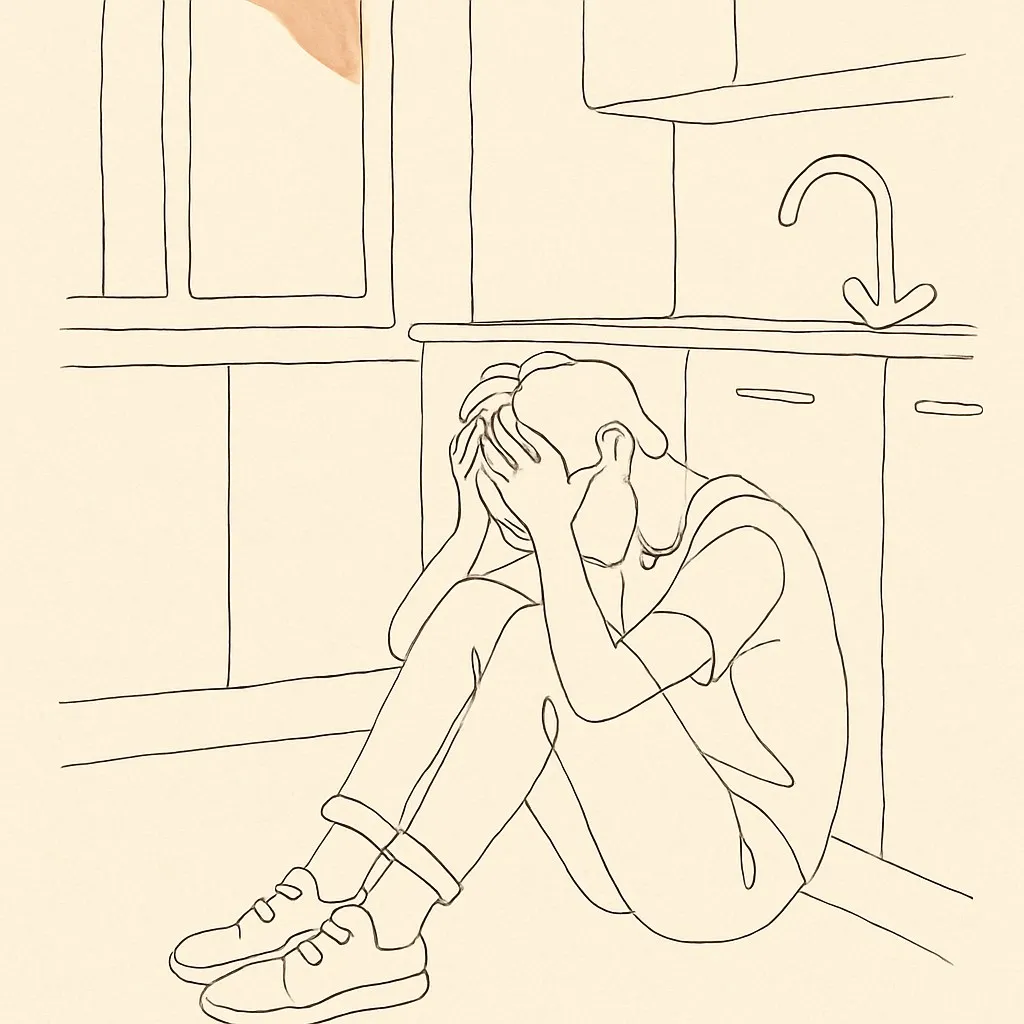
What's happening.
Your teen breaks a glass loading the dishwasher. You sigh. They drop everything and slide down the cabinet: “I can't do anything right.” It's about way more than the glass.
What we usually say — and why it backfires.
It's just a glass. Don't be dramatic.
Of course you'd say that.
What does that mean?
Nothing. Forget it.
- “Don't be dramatic” names the response as wrong instead of asking what made it that big. The teen has nowhere to go with the feeling.
- “Of course you'd say that” is the teen telling you they expected to be dismissed. Worth pausing on.
- The “forget it” at the end is the teen burying the feeling. Buried feelings come back as anger, withdrawal, or eventually a real mental-health crisis.
What works — and why.
Hey. Sit with me a sec. This isn't about the glass, is it?
I just feel like everything I do is wrong this week.
Tell me about the week.
I bombed the math test. Coach said I'm not in the starting lineup. And Maya didn't text me back today.
That's a lot, all in one week. The glass isn't the thing. Let's get the glass cleaned up and then go for a walk.
- “This isn't about the glass, is it?” gives the teen permission to surface what's actually going on. Most teens take the opening when offered.
- Asking for the week lets them itemize. Spoken aloud, the list becomes legible to them too.
- “The glass isn't the thing” validates that they're not being dramatic — they're carrying real weight — and pivots to a low-stakes co-activity (the walk) that creates space without forcing more talking.
Why this script works on a teen brain.
Shame researchers (Brown, Tangney) distinguish sharply between guilt — "I did a bad thing" — and shame — "I am a bad thing." The bigger the response to a small slip, the more likely the teen is sitting in shame, not guilt. "I can't do anything right" is a shame sentence in plain text. The teen isn't asking you to be reassured about the glass; they're telling you they've crossed the line from making a mistake to being one.
Arguing with the content ("it's just a glass") is well-intended and exactly wrong because it minimizes the felt experience without addressing the underlying state. The teen now has two problems: the original shame, plus the new evidence that their parent doesn't see them clearly. The skill is to name the gap between the trigger (glass) and the response (collapse) — that's what "this isn't about the glass, is it?" does. It invites them out of the shame loop without forcing them to defend it.
The physical co-activity afterward (walk, drive, baking) is doing two things the conversation alone can't. It returns the teen to a body that's competent at something. And it gives them a sideways angle from which to talk — eye contact off the menu, hands busy. Many of the most important parent-teen conversations happen this way, which is partly why the family dinner-table model of Connection often underperforms compared with the family-on-a-walk model.
Same dynamic, different surface.
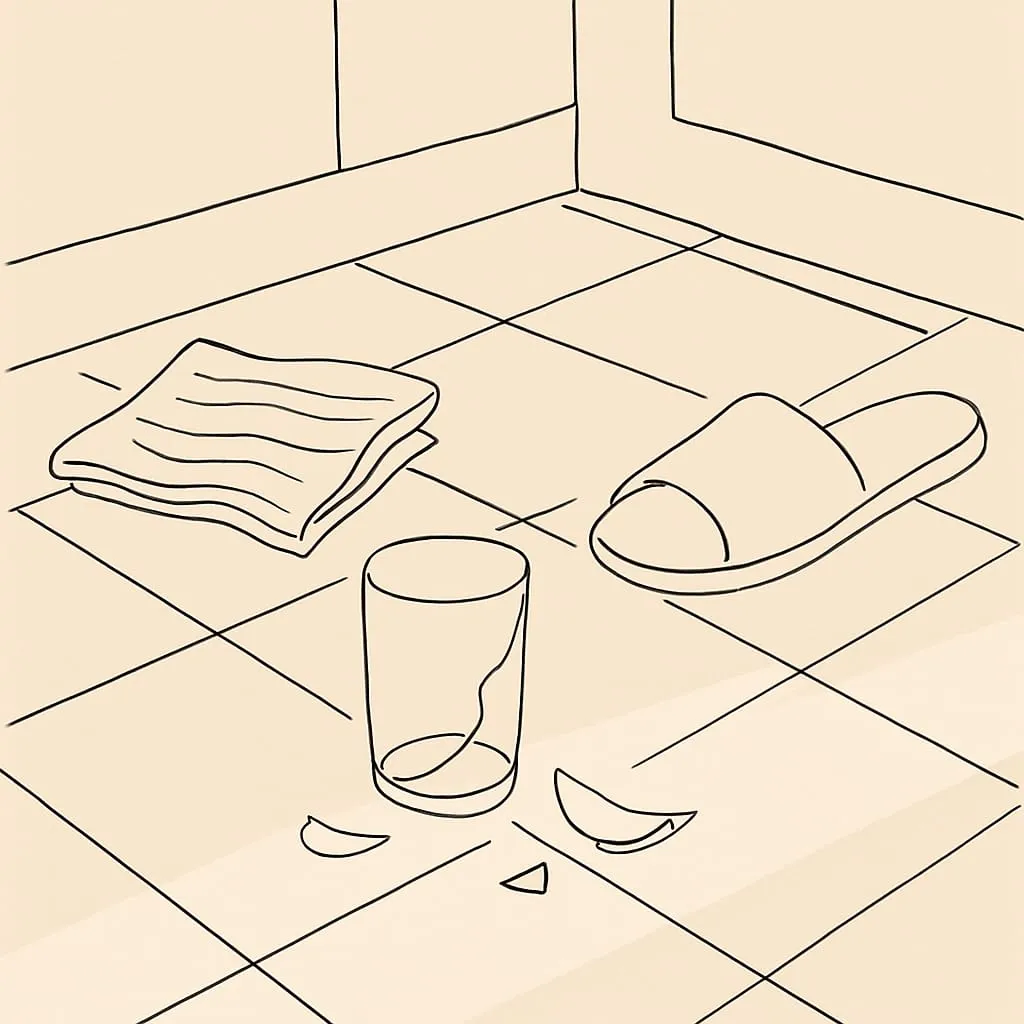
Your 15-year-old got a C on a chemistry quiz. They walk in, see their younger sibling getting praised for a school art project, and quietly say to no one in particular: "I'm so stupid. I can't believe I'm related to her." You're the only one who heard it.
What usually happens.
Don't talk about yourself that way. You're not stupid.
Yeah I am. Did you see my chem grade?
One C isn't going to ruin your life. Snap out of it.
(walks upstairs, doesn't come down for dinner)
- "Don't talk about yourself that way" outlaws the feeling without addressing it. The teen will say it less out loud — and continue to believe it more.
- "One C isn't going to ruin your life" is true and beside the point. The C is not the thing; the comparison with the sibling just under your nose is.
- "Snap out of it" is a phrase that has never once worked on a shame spiral. Worth striking from your repertoire entirely.
What works better.
Hey. Come here for a sec. The chem thing — and the timing with Ada getting praised — that's a lot to land at once.
I'm just always the one who messes up.
That's not true, but I hear you feeling it. Tell me — when have you NOT felt that way recently?
...I guess when I'm in the kitchen making something with you.
Then let's go make something. Bring the chem book; we'll look at the quiz together at the counter while the dough rises.
- Naming the timing ("the chem thing AND Ada getting praised, at once") tells the teen you saw the full picture — which is exactly what they didn't think you saw.
- "When have you NOT felt that way recently?" is a research-backed reframing question that gets the brain to retrieve a counterexample, breaking the absolute language ("always," "never") that shame thrives on.
- Combining the comfort activity (cooking) with the source of the shame (chem book) at the counter teaches a long-term skill: hard things go better when stacked with something competent.
Key phrases to reach for in the moment.
- Hey. Sit with me a sec.
- This isn't about the [glass / grade / thing], is it?
- Tell me about the week.
- Let's [low-stakes co-activity]. We can talk more if you want.
When to use each one.
-
Hey. Sit with me a sec.
Use as the opener for any "I can't do anything right" moment. Slows the spiral; signals you're staying, not problem-solving.
-
This isn't about the [glass / grade / thing], is it?
Use when the response is way bigger than the trigger. Names the gap; invites the real thing out.
-
When have you NOT felt that way recently?
Use to interrupt absolute language ("always," "never"). The brain retrieves a counterexample and the spiral breaks.
-
Let's go do something with our hands.
Use as the closer. The body needs evidence of competence; cooking, walking, sorting laundry all qualify.