
What's happening.
Your teen does something stubborn — refuses to apologize, holds a grudge, won't ask for help. You sigh and say, “You are just like your father.” They flinch. You meant it as a tease. They didn't take it that way.
What we usually say — and why it backfires.
Oh come on, I was joking. You ARE like him. It's not all bad.
It's the way you say it. Like it's the worst thing.
Don't put words in my mouth.
I'm not. It's just true.
- “I was joking” insists on your intent over their experience. Teens read tone better than parents think; if it landed, it landed.
- “It's not all bad” is the parent half-conceding the framing the teen just objected to.
- Defending the comment instead of taking it back is the parent prioritizing being right over the relationship — which is what made the comment land that way in the first place.
What works — and why.
You know what, you're right. I've been saying that a lot and it's not fair. You're not him. You're you.
It just feels like every time I do something you don't like, that's the first place you go.
That's because it's an easy shorthand for me. But it costs you something every time. I'll stop.
Thanks.
- “You're not him. You're you” is the simplest disentangling sentence and exactly what the teen needed to hear.
- Owning that it's “easy shorthand for me” explains your habit without justifying it — explanation is fine; justification isn't.
- Committing to stop, with no caveats, is what makes the apology mean something. Make sure you actually stop.
Why this script works on a teen brain.
Family systems theorists call this dynamic "identification by negative comparison" — the parent who, often without noticing, slots the teen into the role of an ambivalently-felt other family member. Even when the comparison is mostly affectionate, the cumulative effect is that the teen learns: who I am, in this house, is defined by who I'm being measured against. That framing, repeated enough, becomes the teen's self-concept by default.
The teen's protest is not a rejection of the relative being compared to — it's a request to be seen as an individual whose traits aren't a verdict pre-loaded by family history. Even when the comparison is to the parent themselves ("you're so much like me at that age"), it can land as constraining. Adolescents are doing the work of differentiation, which means they need permission to be both like and unlike the people they came from, without either dimension being the headline.
The repair is short and the follow-through is everything. Verbal apologies in this domain expire within about a week if the comparison habit continues — and they amplify resentment when the habit returns. The single most-effective practice is to substitute one specific positive observation about the teen for every comparison you'd previously have made. Not a compliment campaign; just a different default.
Same dynamic, different surface.
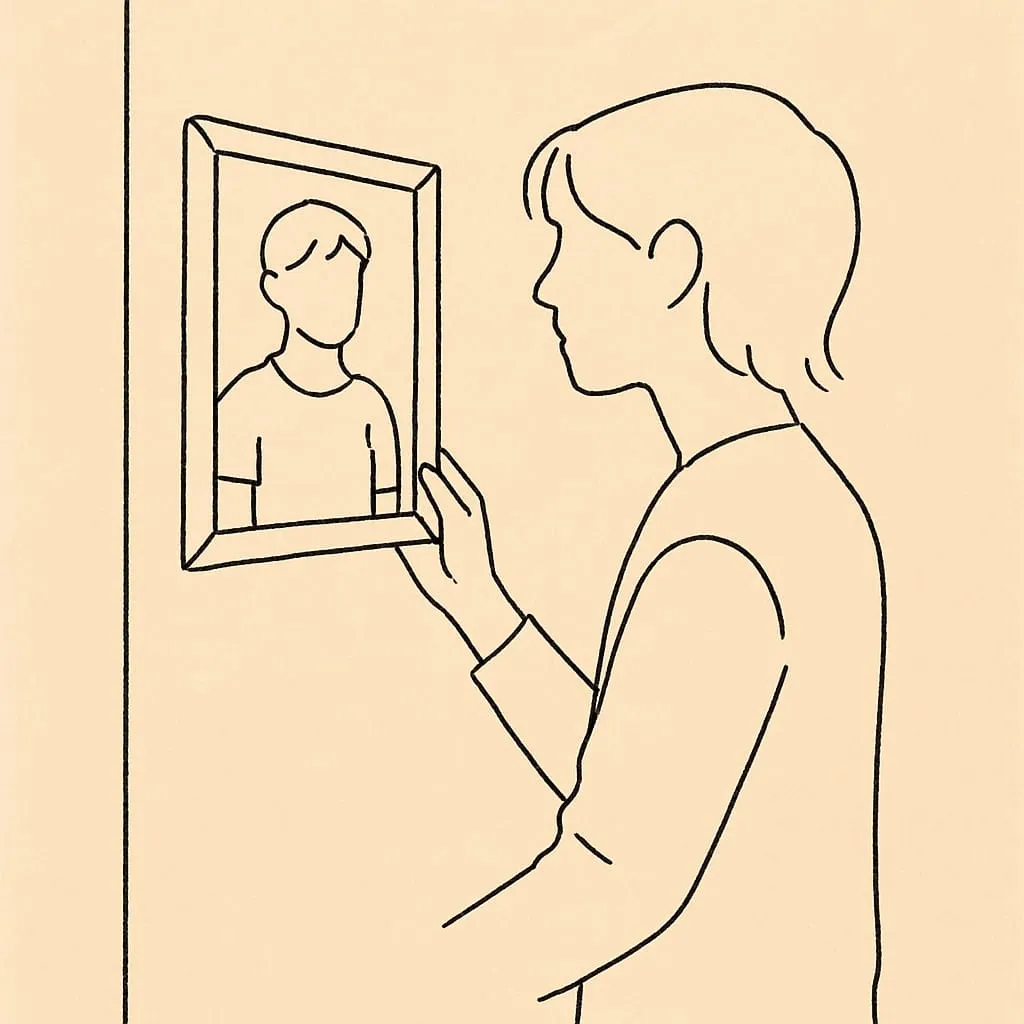
Your 12-year-old is helping cook. They mix the salad dressing intensely, taste it, adjust, taste again. You say, smiling, "You're such a little Grandma Rose." Your mother, Rose, has been the family's complicated figure since before your teen was born. They put the whisk down. "Mom, can you not."
What usually happens.
Oh come on, sweetie, it's a compliment. Grandma Rose was an incredible cook.
Grandma Rose also yelled at everyone. I don't want to be her.
I didn't mean THAT part. I meant the cooking.
I know what you meant. You always meant it.
- "It's a compliment" denies the part of the comparison that lands — and the teen has correctly identified that the full Grandma-Rose package was loaded into the sentence whether you meant it or not.
- "I didn't mean THAT part" tries to surgically separate what you said from how it landed. Adolescents are skeptical of this surgery and they're usually right.
- "You always meant it" is the teen telling you the comparison has been a longer-running pattern than you realized. Worth pausing for.
What works better.
You're right. That was an unfair thing to say. You're not Grandma Rose. You're a kid who tastes their dressing carefully, which is its own thing.
Thanks.
I'm going to try to stop doing the comparing thing in general. If I slip, will you call me on it? Even with one word?
Yeah. I'll say 'compass.'
Compass. Got it.
- Acknowledging the comparison was unfair, and naming the specific thing you actually observed ("a kid who tastes their dressing carefully"), is what "see me as me" actually requires.
- Asking for a one-word signal turns the future repair into a co-managed system. The teen will use it sparingly and effectively.
- The teen choosing the code word ("compass") gives them ownership of the pattern interruption. Small power transfers like this compound into durable trust.
Key phrases to reach for in the moment.
- You know what, you're right.
- You're not [the parent / sibling / relative]. You're you.
- It's an easy shorthand for me. But it costs you something every time.
- I'll stop. (And then actually stop.)
When to use each one.
-
You know what, you're right.
Use as the opener. Skip the joking-defense; it never recovers from the wrong start.
-
You're not [relative]. You're you.
Use to disentangle the comparison cleanly. Say it once with sincerity; don't repeat it, or it becomes a punchline.
-
It costs you something every time. I'll stop.
Use to acknowledge the cumulative pattern, not just the moment. The naming of the pattern is the apology.
-
If I slip, what's the one-word signal you'll use?
Use to set up future repair. Co-designing the signal makes them more likely to actually use it.