
What's happening.
Your 13-year-old looks up from their phone with that hollow expression. “Everyone's prettier, everyone's smarter, everyone's funnier. I'm so basic.” The phone is still in their hand.
What we usually say — and why it backfires.
That is absolutely not true. You're beautiful and smart and so funny.
You have to say that.
Then put the phone down. That stuff is fake anyway.
You don't get it.
- Disputing the claim with compliments treats their feeling as a math problem you can solve with better numbers. It doesn't work.
- “Put the phone down” is correct intervention with bad timing — saying it in the spiral makes it sound like a punishment, not a help.
- “That stuff is fake anyway” is true and useless. The teen knows it's fake; they're still affected. Adults are too.
What works — and why.
That sounds awful. Can I sit?
Whatever.
Can I tell you something weird? The same thing happens to me when I scroll Instagram too long. It's the app, doing what apps do.
It still feels real.
It does. Every time. Different question — when's the last time you felt good in your own skin? What were you doing?
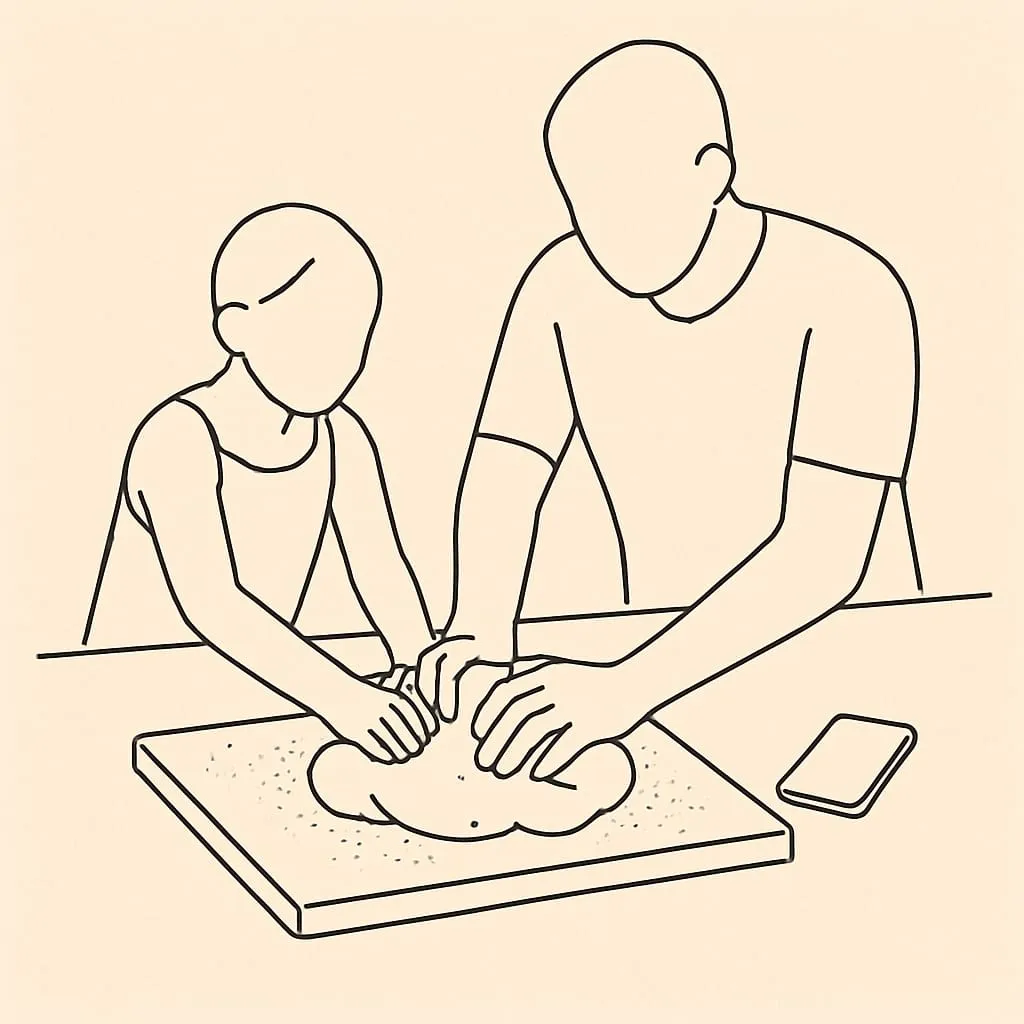
...probably last weekend. When we baked the bread.
Then let's go do something with our hands tonight. The phones can sit on the counter for a bit.
- Naming that adults get it too (without making it about you) collapses the shame. They thought this was personal failure; it's not.
- “When's the last time you felt good in your own skin?” redirects from comparison to lived experience. The brain has somewhere better to land.
- Doing something with your hands together is the actual cure for comparison spirals — it returns the teen to their own body and skill, away from the highlight reel.
Why this script works on a teen brain.
Upward social comparison is the engine behind most algorithmic feeds. The algorithm doesn't show you what's true; it shows you what's engagement-shaped, which means it disproportionately surfaces the top decile of looks, lives, and accomplishments in the teen's near-cohort. Two hours of scrolling means the teen's brain has averaged together hundreds of curated peaks and registered the average as "normal." Their own life, measured against that fake normal, fails. It's a measurement error, but the brain doesn't know that.
This is why arguing the content ("you're prettier than them") doesn't land. The teen isn't responding to one image; they're responding to a statistical mirage built out of hundreds. The intervention that works has to attack the mirage, not the individual data points. "Same thing happens to me when I scroll too long" does that — it names the feed as the cause, not the self, and it does so in a way the teen can verify by introspection in the next 30 seconds.
The redirect to embodied competence ("when did you feel good in your own skin?") is doing the deeper work. Body-image distress in adolescence is, in part, a dissociation from the actual lived body in favor of the imagined-other-bodies. Doing something with the hands — cooking, building, sport, walking — is one of the few reliable ways to return the teen to ownership of their body as a thing that does things, not a thing being judged.
Same dynamic, different surface.
Your 16-year-old comes back from a friend's beach trip with a hundred filtered photos on her camera roll. That evening she's quiet, then says: "I look so different than them. Why didn't anyone tell me." The phone is open to a comparison shot.
What usually happens.
You look beautiful in those pictures. What are you talking about?
Compared to them I look so weird.
Stop looking at it then. Delete the photos.
(closes phone, doesn't talk for the rest of the evening)
- "You look beautiful" is the parent-perception trap from earlier — your view of her body is the one she's filtered out as biased.
- "Delete the photos" treats the symptom (the file on her phone) and ignores the cause (the comparison logic she's running). She'll find the next set.
- Her silence for the rest of the evening is her processing alone what she came to you to process together. You missed the window.
What works better.
Oh, ouch. Show me what you're seeing — not to argue, just so I understand which photos are hitting hard.
Like this one. They all look so... finished. I look halfway done.
I see what you mean. Want to know what I noticed about that whole album? You're the one who took most of the candid ones. The framing, the moments — that's your eye.
...I didn't think about that.
Take a beat from the album tonight. Tomorrow if you still want to talk about it, I'm in.
- Asking to see the actual photos, without argument, treats her perception as a credible report. Most parents skip this step.
- Naming a competence she actually demonstrated in the album (the framing, the candid eye) gives her body-image brain a different category to retrieve — maker, not subject.
- "Take a beat tonight. Tomorrow if you still want to talk, I'm in" is the open-door close. The pause is what lets the new framing settle.
Key phrases to reach for in the moment.
- That sounds awful. Can I sit?
- Same thing happens to me when I scroll too long. It's the app, doing what apps do.
- When's the last time you felt good in your own skin?
- Let's go do something with our hands.
When to use each one.
-
That sounds awful. Can I sit?
Use as the opener. Names the weight, asks for permission to stay — both are unusual enough that the teen pays attention.
-
Same thing happens to me when I scroll too long.
Use to collapse the shame. Names the algorithm as the cause, not personal failure. Only works if it's true; don't fake it.
-
When's the last time you felt good in your own skin?
Use mid-spiral. Forces a retrieval of a counterexample, which is what breaks comparison loops.
-
Let's go do something with our hands.
Use as the closer. The body needs evidence of competence; the phone needs to be put down for an hour, not lectured about.