I.
The scene
What's happening.
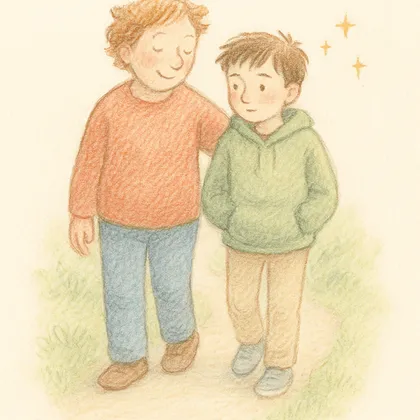
Your 14-year-old walks in, drops their backpack, and says, “Can I have a hug?” You're mid-task.
II.
The instinctive version
What we usually say — and why it backfires.
Parent
What happened? Are you okay?
Teen
Just need a hug.
Parent
Tell me what's wrong first.
Teen
(walks away; learns that direct asks come with intake questionnaires)
- “What happened? Are you okay?” gates the hug behind explanation that the teen didn't offer because they didn't want to give one.
- “Tell me first” is the parent's anxiety needing to know before they can deliver care.
- Long-term: the rare direct hug-ask gets rarer when it costs an interview.
III.
The better version
What works — and why.
Parent
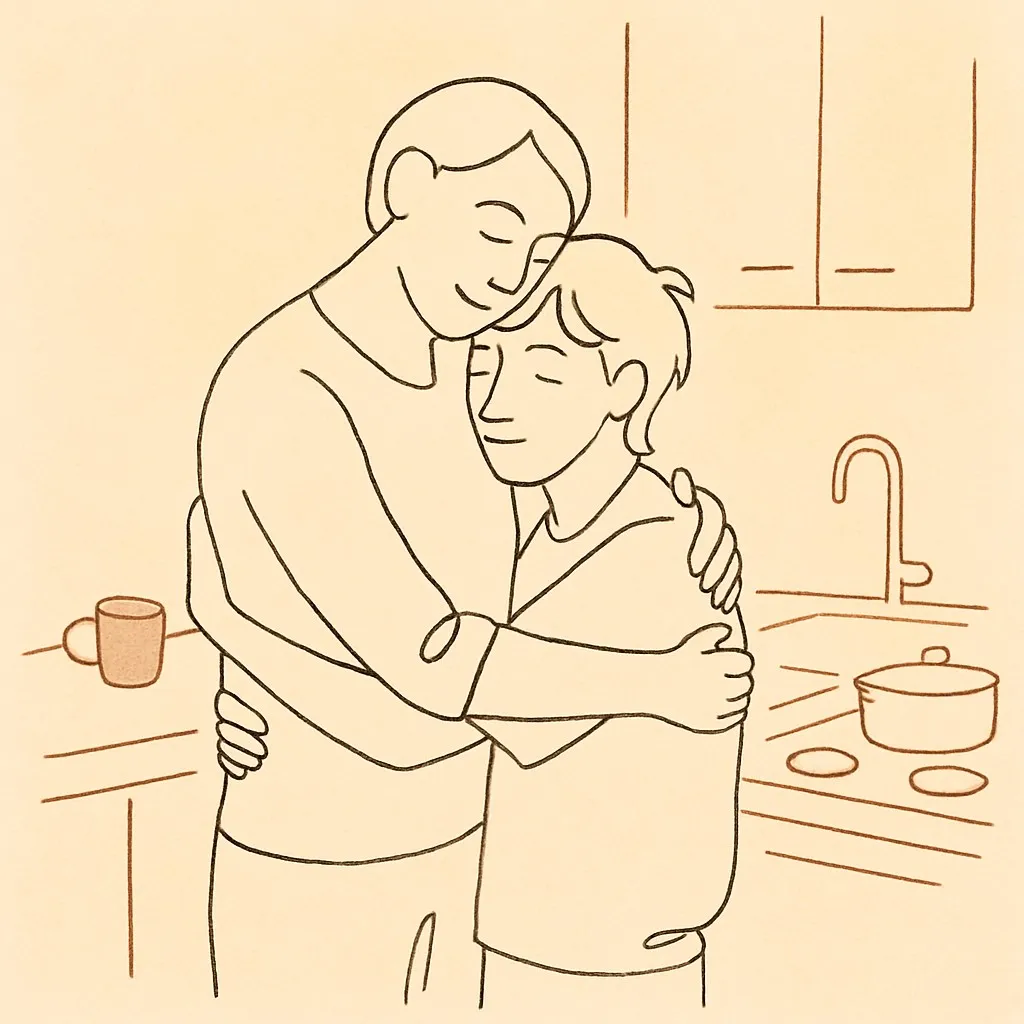
(puts down whatever you're holding, opens arms) Always. Come here.
Teen
(long hug)
Parent
(after they let go) Anything you want to say or want me to do? Or are you good?
Teen
I'm good. Thanks.
- Putting down what you're holding is the action that matters more than the words.
- “Always. Come here” is two words longer than “okay” and infinitely warmer.
- Asking AFTER the hug, not before, respects that sometimes the hug IS the whole event.
IV.
Memorize these
Key phrases to reach for in the moment.
- (Put down what you're holding. Open arms.)
- Always. Come here.
- (After the hug.) Anything you want to say or want me to do? Or are you good?