I.
The scene
What's happening.
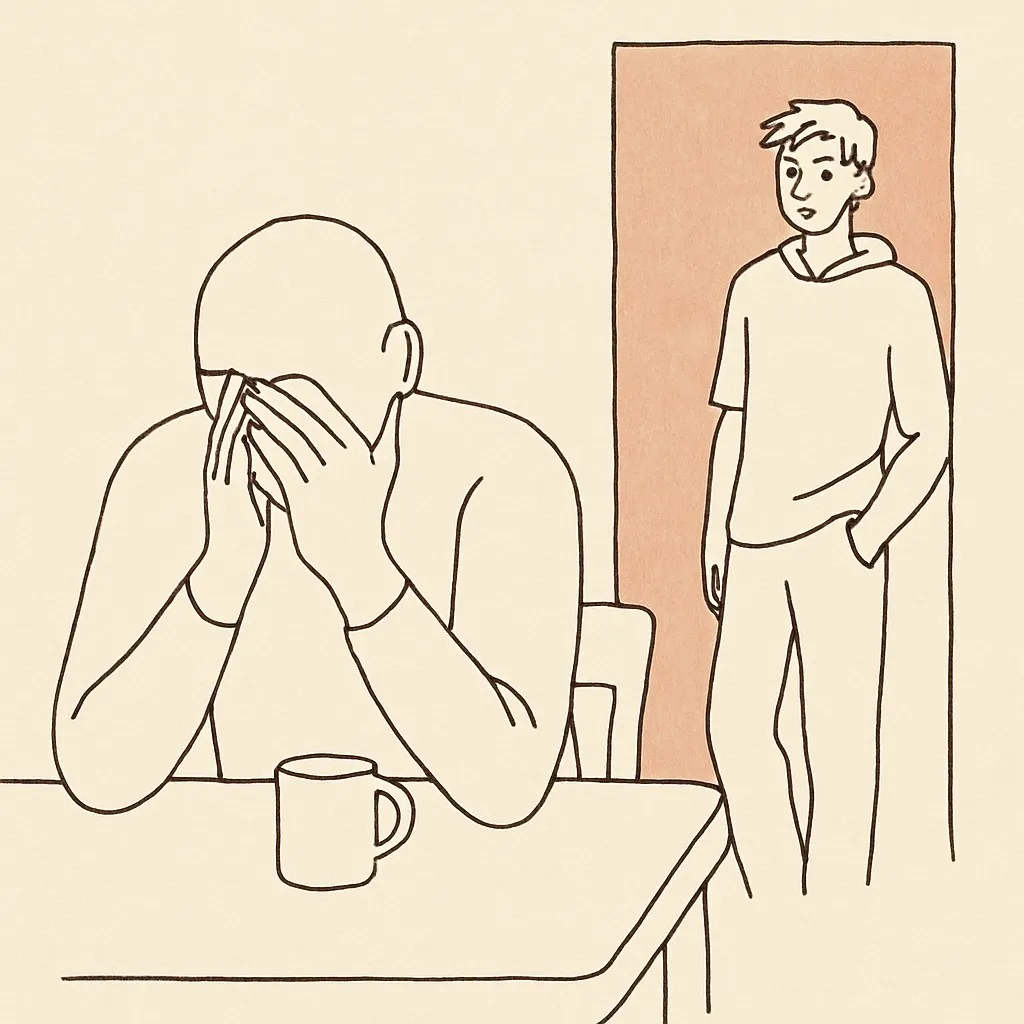
Your teen walks into the kitchen at 9pm and sees you crying at the table. They freeze. “Why are you crying?” Your instinct is to wipe your face and say everything's fine.
II.
The instinctive version
What we usually say — and why it backfires.
Parent
(wipes face) I'm fine. It's nothing.
Teen
Are you sure?
Parent
Yes. Go to bed.
(The teen learns that crying is something to hide. They mirror it for the rest of their life.)
- “I'm fine. It's nothing” is the lesson you accidentally teach: emotions are things to deny in front of family. Your teen will absorb it permanently.
- “Go to bed” signals they shouldn't have walked in. They'll stop walking in when something seems wrong, which is the opposite of what you want.
- You've also missed a rare moment where you could model adult emotional regulation in real time — one of the most-needed and least-modeled skills.
III.
The better version
What works — and why.
Parent
I'm a bit upset about something at work. Nothing dangerous, nothing about you or our family — just a stressful day. Thanks for asking. I'll be fine in a few minutes.
Teen
Do you want to talk about it?
Parent
Not specifically tonight, but thank you for offering. That meant a lot. Want some tea? I was about to make some.
Teen
Yeah. Okay.
- Naming the cause AND specifying it's not about them (“nothing about you or our family”) prevents the teen from secretly absorbing it.
- Modeling that adults cry, name the feeling, and then move through it is the single hardest emotional skill to teach — and you can only teach it by doing it.
- Accepting the offer of tea without dumping the work problem is the right modeling: connection now, problem-solving later, both can coexist.
IV.
Memorize these
Key phrases to reach for in the moment.
- I'm a bit upset about [thing]. Nothing dangerous, nothing about you or our family.
- Thanks for asking. I'll be fine in a few minutes.
- Not specifically tonight, but thank you for offering. That meant a lot.
- Want some tea?