What's happening.
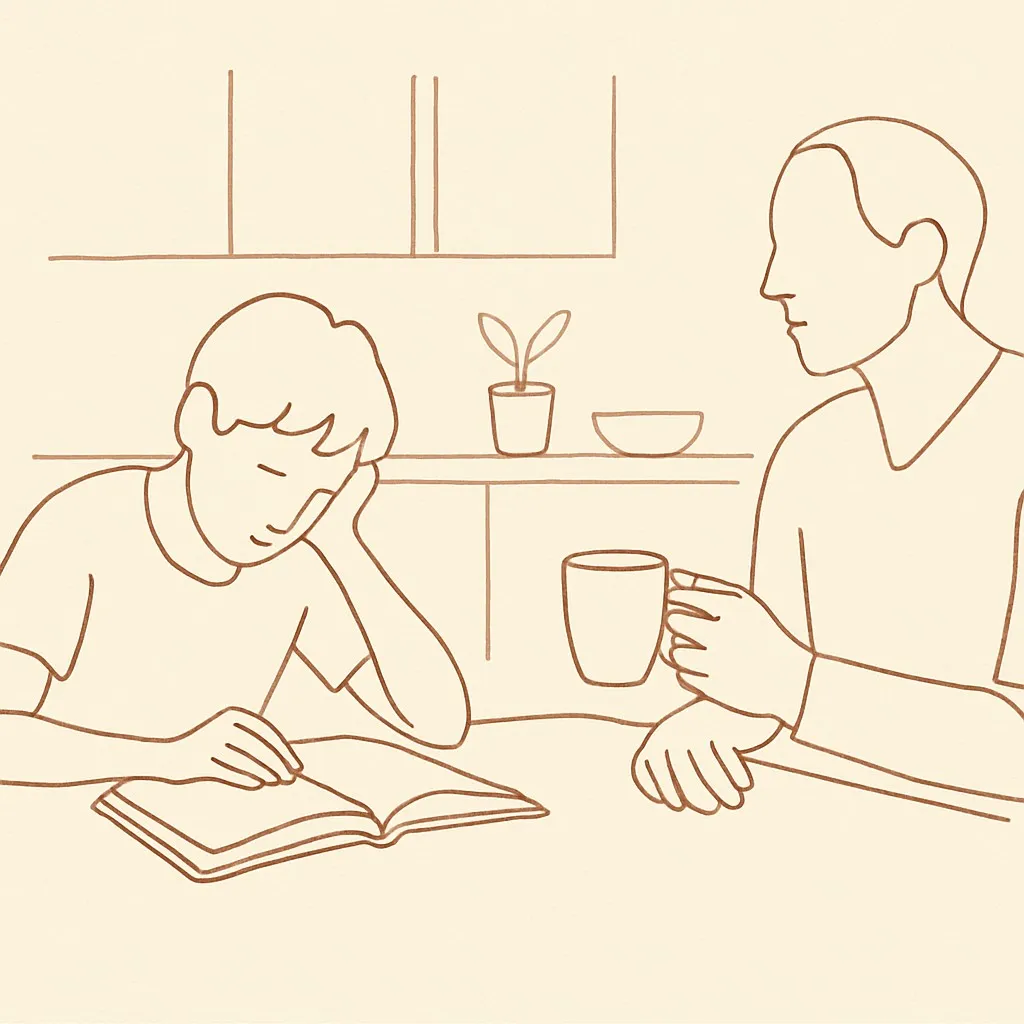
Your 13-year-old, doing homework, casually: “I have zero friends. Like literally zero people I'd call.” You set down what you're holding.
What we usually say — and why it backfires.
That's not true. You have lots of people you sit with.
Sitting with isn't the same as friend.
Then you should put yourself out there more. Be friendlier.
(stops mentioning the loneliness; the lesson is solve-it-yourself)
- “That's not true” fights the headline without engaging the distinction the teen JUST DREW (sit-with vs. friend).
- “Be friendlier” is the parent assigning the cause to the kid, which they correctly resent.
- Long-term: chronic loneliness in adolescence is a real mental-health risk factor. Worth taking seriously even when it sounds casual.
What works — and why.
Yeah. That's heavy. Tell me what the distinction is for you — sit-with vs. friend, what's the difference?
Like, sit-with is people I have lunch with so I'm not alone. Friend is someone I'd text at 9pm if something bad happened. I don't have a 9pm person.
That's a really clear way to put it. The 9pm person matters. Two thoughts — first, that kind of friendship usually takes a year of consistent low-stakes time together; you're 13, the runway is real. Second, it sometimes works to build that friendship in a smaller pool than school — a club, a job, a class outside school. Is there something you'd actually like to try?
...I've been wanting to do the photography club but it felt weird joining mid-year.
Mid-year is fine. Real talk — most of the people in those clubs ALSO don't have a 9pm person. That's why they're there.
- “The 9pm person matters” validates a real distinction the teen made, which earns the next sentence.
- Naming that adolescent friendship usually takes a year is honest data that prevents the 'something's wrong with me' spiral.
- “Most people in those clubs ALSO don't have a 9pm person” is true and reframes the smaller-pool strategy as a community of similarly-lonely people, not a desperate gambit.
Key phrases to reach for in the moment.
- Yeah. That's heavy.
- Tell me what the distinction is for you.
- That kind of friendship usually takes a year of consistent low-stakes time together.
- Most people in [the club] ALSO don't have a 9pm person. That's why they're there.