What's happening.
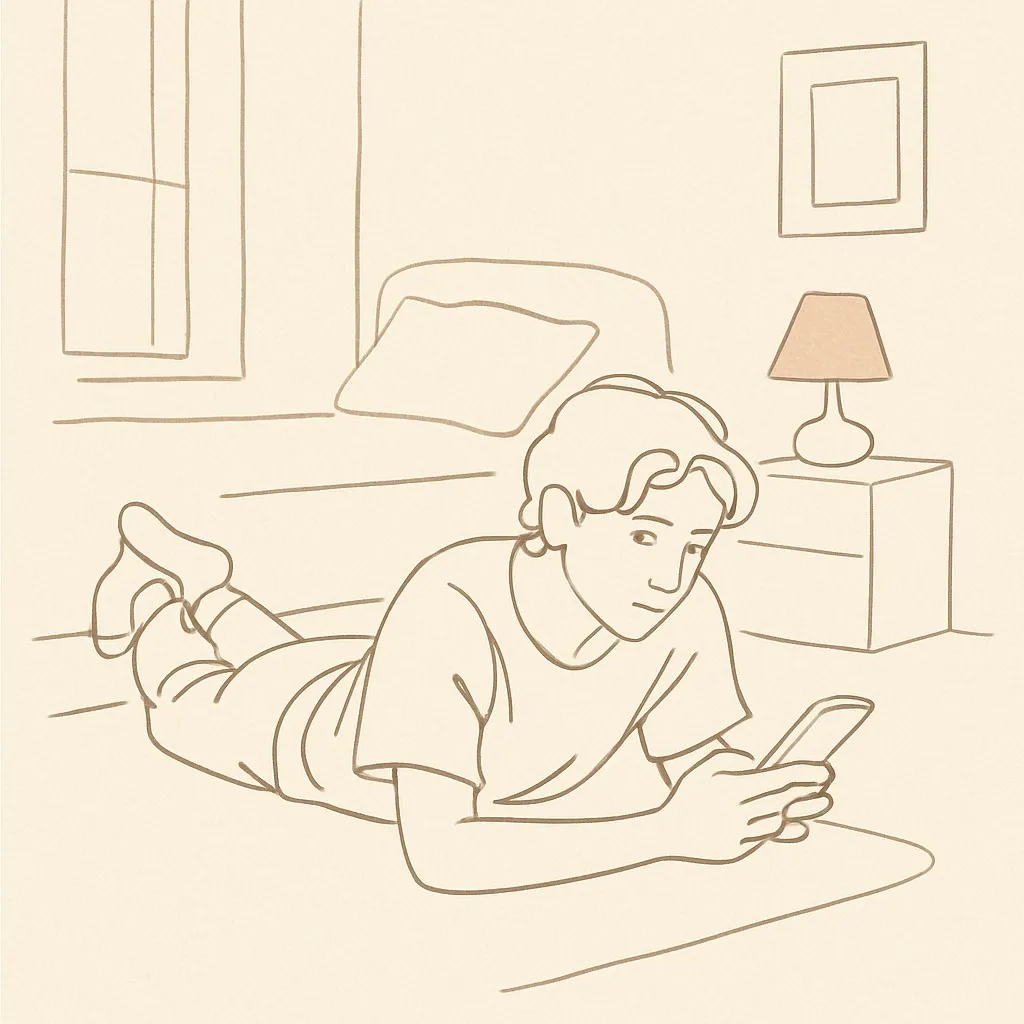
Your 14-year-old, on the floor of their room: “Mom. I can't stop scrolling. I open it to check one thing and lose an hour and feel terrible after. Every time.”
What we usually say — and why it backfires.
Then put it down. Use willpower.
It's not willpower, it's the app.
We had to be disciplined when we were your age. You can too.
(stops mentioning it; the lesson is parents don't actually understand the design problem)
- “Use willpower” misunderstands the design — these apps are engineered by hundreds of behavioral scientists to defeat willpower. Saying willpower is the answer is like saying willpower beats a slot machine.
- “We had to be disciplined” is a generation-comparison that doesn't survive contact with the actual hardware.
- The teen brought a real self-aware ask. Dismissing it teaches them not to bring those.
What works — and why.
Yeah. You're not failing at willpower — the apps are designed specifically to beat willpower. Adults are also losing this fight. Couple of things that actually work — one, time-of-day rules instead of self-discipline: phone in the kitchen by 9pm, no charger in your room. Two, grayscale mode on the phone — it makes scrolling less addictive instantly, took me a week to adjust. Three, delete the worst-offender app for two weeks as an experiment and see if the urge fades. Want to try any of those together?
...all of them maybe. Especially the grayscale thing.
Same. I'm in. We do it together tonight.
- Naming the design (“engineered by hundreds of behavioral scientists to defeat willpower”) takes the moral failure framing off the table.
- Concrete infrastructure interventions (time-of-day rule, grayscale, app deletion) are the only things that actually work — research-backed.
- “I'm in. We do it together” is the parental move that turns it from teen-vs-parent to humans-vs-app, which is the actually true framing.
Key phrases to reach for in the moment.
- You're not failing at willpower — the apps are designed specifically to beat willpower.
- Time-of-day rules beat self-discipline. Phone in the kitchen by [time], no charger in your room.
- Grayscale mode on the phone — makes scrolling less addictive instantly.
- I'm in. We do it together.