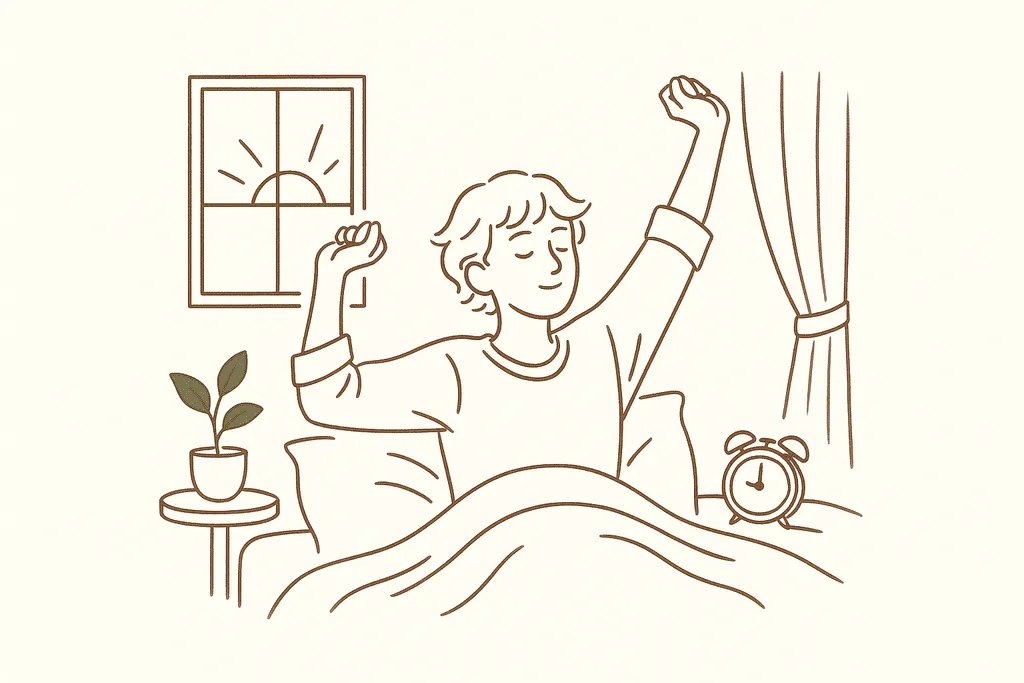
Teen bodies are wired to sleep later; moving the first bell back delivered real sleep and better grades — without kids staying up later.
- Teen sleepiness in the morning is biology, not laziness, and naming it that way changes the conversation.
- A later bell helps teens sleep longer rather than simply staying up later, so the gain is real, not borrowed.
- Some of the biggest levers for teen wellbeing are structural policies, not nightly household battles.
- Protecting a consistent sleep schedule and keeping phones out of the bedroom guards whatever the bell time gives you.
The situation, the move, the outcome.
Adolescents' biological clocks shift later, so early bells cost them sleep. When Seattle moved high-school start times from 7:50 to 8:45 a.m., researchers measured the effect with wrist activity monitors rather than self-reports. Teens gained a median 34 minutes of sleep a night, median grades rose about 4.5%, and attendance improved. Crucially, students didn't just stay up later — they slept longer, confirming the change worked with teen biology rather than against it.
In practice the change works by aligning the school day with how adolescent bodies are actually wired rather than fighting that biology each morning. Because a later first bell lets teens sleep longer instead of merely shifting their bedtime, the extra rest is genuine and shows up in how alert and engaged they are. Measuring it with activity monitors rather than self-reports made it possible to confirm the teens really slept more, not just felt like they did. The improvements in grades and attendance follow naturally once students arrive less sleep-deprived.
Why it matters beyond one family.
The American Academy of Pediatrics recommends middle and high schools start no earlier than 8:30 a.m. for this reason. It's one of the clearest structural levers for teen wellbeing — and it's a policy, not a nightly battle.
This generalizes because it's a structural fix, and structural fixes scale in a way that nightly willpower never does. A schedule change applies to every student at once and doesn't depend on any single family winning a bedtime argument, which is why it's such a clean lever for teen wellbeing. The underlying principle — work with adolescent biology instead of against it — extends to how families think about sleep at home, from consistent routines to keeping screens out of the bedroom. For parents, the takeaway is to advocate for the policy where they can and protect the basics where they can't.
- Researchers measured the change with wrist monitors instead of relying on what teens reported, so the findings are unusually trustworthy.
- Better sleep came alongside better grades and attendance, showing the benefits ripple beyond rest.
- It's a one-time policy fix rather than a daily struggle, which makes the gains durable.
- A respected pediatric body backs the principle, giving parents solid footing to advocate at the school board.
How to apply it.
- Support a later start at your school board; the evidence is strong and measured.
- Protect a consistent sleep schedule at home regardless of the bell time.
- Frame sleep as performance fuel, not laziness — the biology is real.
I know mornings are brutal right now. It's honestly not your fault — your body clock really does run later at your age.
Try telling that to my first-period teacher.
Fair. While the school figures out start times, can we protect the sleep you can actually get?
Meaning what, exactly?
Mostly keeping the phone charging out here at night so it's not pulling you awake at one a.m.
I use it as my alarm though.
We can grab you a cheap alarm clock — that solves it. This isn't a punishment, it's just giving your brain a real shot at resting.
Okay, I'll try the clock thing.
Concrete next steps.
- Bring the Seattle study to your district's start-time discussions.
- Pair any schedule with a phones-out-of-bedroom rule to protect the gains.
- Advocate within state efforts (e.g., later-start laws) where they exist.
Read it for yourself.
Call or text 988 (Suicide & Crisis Lifeline, 24/7) · Text HOME to 741741 (Crisis Text Line) · Find a child psychiatrist at aacap.org · For immediate danger, call 911.