Bullying drops when the bystanders change — KiVa cut victimization by turning the silent majority into defenders.
- The bystanders, not just the bully and the target, are the real lever — their reactions decide whether bullying pays off.
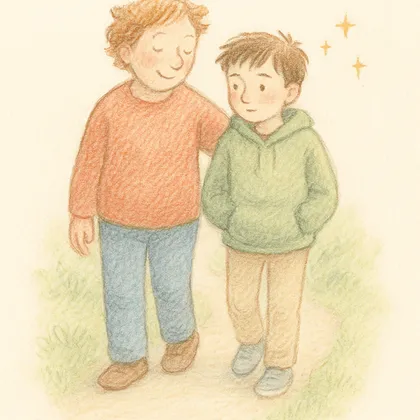
- Teaching a child small, safe ways to support a peer can shift a dynamic that lectures to the bully never reach.
- Framing bullying as everyone's responsibility takes the lonely weight off the target.
- What works in the hallway works online too: refusing to amplify cruelty is its own kind of defending.
The situation, the move, the outcome.
Most anti-bullying efforts target bullies and victims. KiVa, developed in Finland, focuses on the bystanders — teaching the silent majority to stop rewarding bullies and to defend peers — alongside clear protocols for handling cases. In a large Finnish randomized trial across 234 schools, KiVa significantly reduced bullying and victimization across every form including cyberbullying, increased empathy and school liking, and lowered anxiety and depression. Remarkably, 98% of victims who met with their school's KiVa team felt their situation improved.
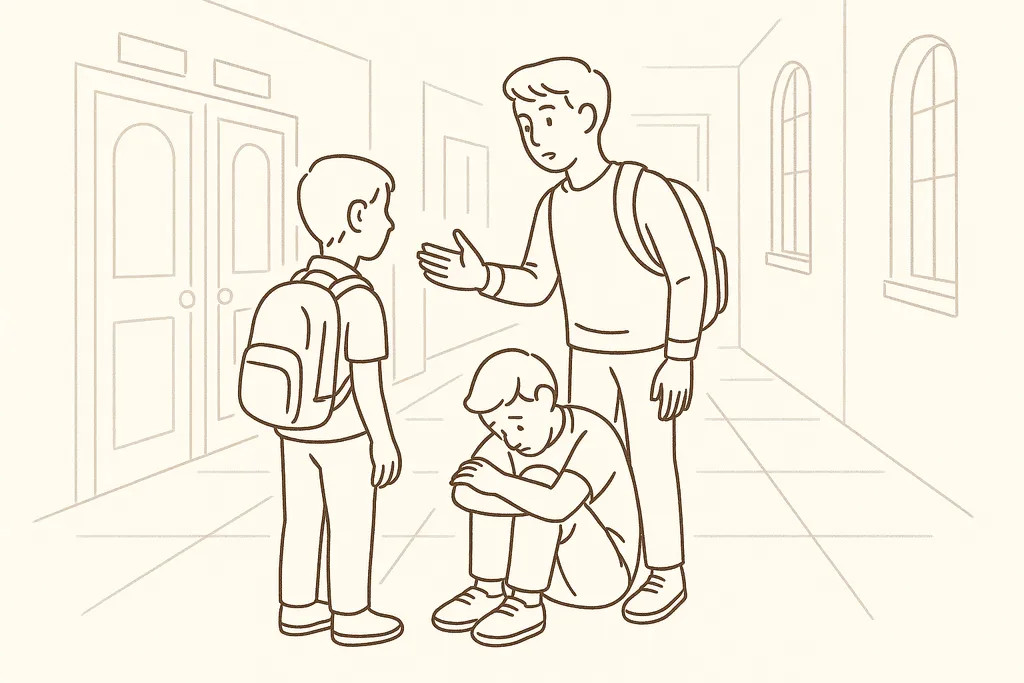
In practice the approach works by removing the social reward that bullying depends on. Bullying is often a performance for an audience, so when bystanders stop laughing, stop sharing and start quietly backing the target, the behavior loses its payoff. Teaching the silent majority concrete, low-risk ways to support a peer turns passive onlookers into a stabilizing force, while clear protocols make sure serious cases still reach adults. The dynamic shifts from one target standing alone to a group that no longer rewards cruelty.
Why it matters beyond one family.
Now used in many countries, KiVa shows its largest effects in primary grades. Its core insight — that bystander behavior is the lever — transfers to how families talk about standing up for peers online and off.
This generalizes because the bystander insight applies almost anywhere a crowd is watching, including the always-on audience of group chats and social feeds. The same move that defuses a hallway incident — declining to amplify, quietly supporting the target, escalating the serious stuff — translates cleanly to online spaces. For families, the practical lesson is to coach children into the upstander role rather than framing bullying as solely the target's problem to survive. The effect tends to be strongest with younger children, which is a useful cue that these habits are best taught early, before the norms harden.
- The program succeeds by activating the silent majority of kids who already dislike bullying but stay quiet.
- It was proven across a very large school trial, so the approach rests on solid ground rather than a single classroom.
- It improved more than just bullying numbers, lifting empathy and how much kids liked school.
- The overwhelming majority of victims who got help through it felt their situation actually improved.
How to apply it.
- Teach your child the 'upstander' role: small acts of support shift the whole dynamic.
- Ask whether your school uses an evidence-based program like KiVa.
- Frame bullying as everyone's responsibility, not just the target's problem.
There's this kid everyone piles on in the group chat. I don't join in, but I don't say anything either.
It's good you're not part of it. Can I ask what stops you from stepping in?
I don't want them to turn on me next.
Totally understandable — that fear is real. You don't have to call anyone out publicly to make a difference, though.
What else can I even do?
You could message the kid privately, just to say you saw it and it wasn't cool. And not laughing or reacting matters more than you'd think — bullies feed on the audience.
Yeah, people only keep going because everyone reacts.
Exactly. And if it gets serious, telling an adult isn't tattling — it's making sure someone isn't dealing with it alone.
Concrete next steps.
- Share KiVa's research with your school if it lacks a structured program.
- Coach kids on safe ways to support a targeted peer and report serious cases.
- Pair school programs with consistent home messages about kindness and reporting.
Read it for yourself.
Call or text 988 (Suicide & Crisis Lifeline, 24/7) · Text HOME to 741741 (Crisis Text Line) · Find a child psychiatrist at aacap.org · For immediate danger, call 911.