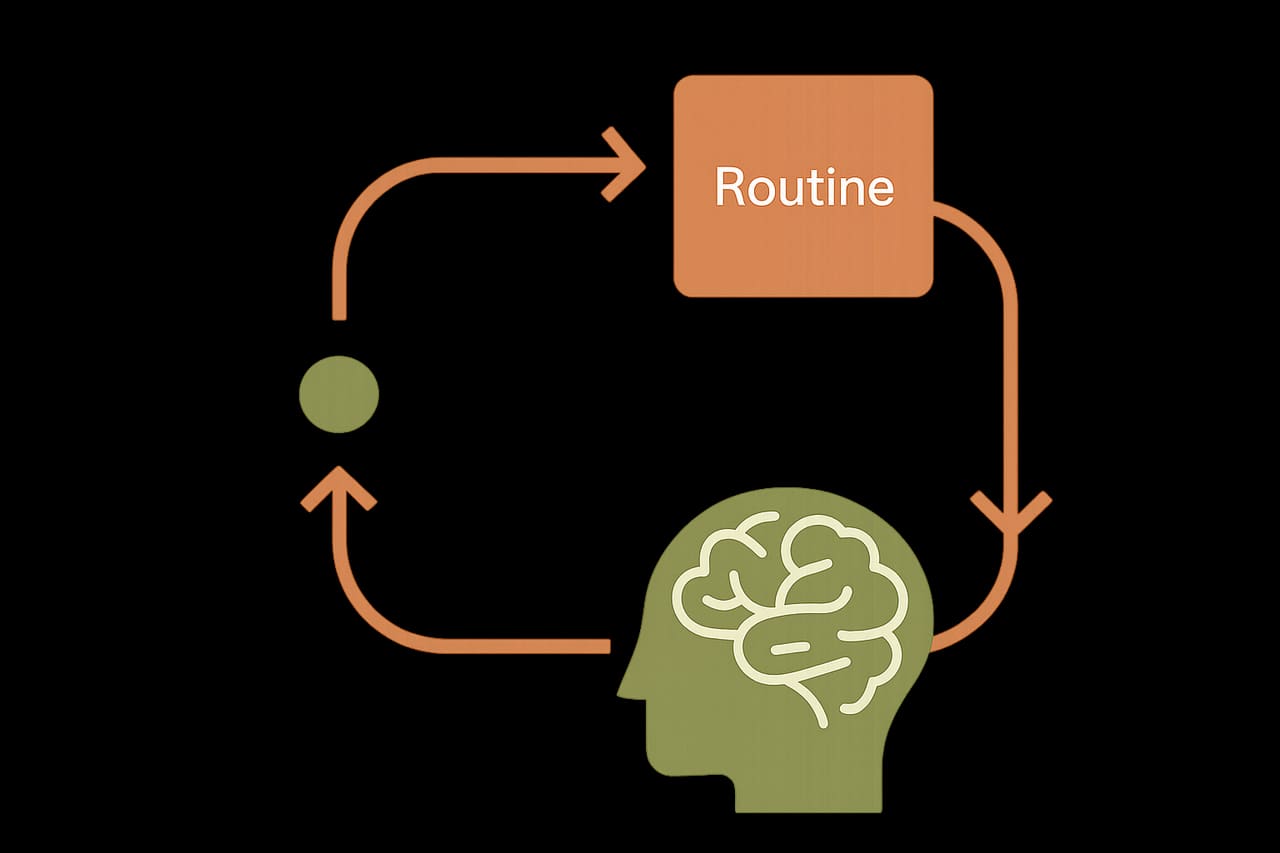
Apps are engineered around the brain's reward loop.
The short version.
Many apps use 'variable rewards' — you never know when the next like, message, or interesting post will land — which is the most compelling reward schedule the brain has. Combined with the teen's heightened reward sensitivity, it makes putting the phone down genuinely hard. Pointing at the design, not the teen, makes it a problem to solve together rather than a character flaw to shame.
What researchers actually find.
- Unpredictable rewards drive more compulsive checking than predictable ones.
- Infinite scroll and autoplay remove natural stopping points.
- The teen reward system is especially susceptible to these designs.
- Infinite scroll and autoplay remove the natural stopping points that used to end a session.
The reason apps are sticky is that they pair the brain's most compelling reward schedule with a teen's especially reward-sensitive wiring. Unpredictable rewards — you never know if the next refresh brings a like, a message, or something interesting — produce more persistent, harder-to-stop checking than predictable ones, because the maybe is what keeps the loop spinning. On top of that, features like infinite scroll and autoplay quietly delete the natural stopping cues that used to end a session, so there's no built-in moment where the brain gets the 'you're done' signal. The adolescent reward system is running especially hot and is still developing the braking system that helps adults disengage, which is exactly the gap these designs lean into. None of this is a flaw in your teen; it's a system engineered by skilled teams to be hard to put down.
You might recognize this.
- Checking 'just in case' something new appeared.
- Losing track of time in feeds and videos.
- Genuine difficulty stopping, even when they want to.
- Genuine difficulty stopping even when they say they want to.
How to help.
- Externalize control: app limits, grayscale, notifications off.
- Name the design so it's the app's fault, not their character.
- Create hard stops — chargers outside the bedroom, screen-free meals.
- Add back the friction the app removed — grayscale, app timers, notifications off, charger outside the bedroom.
How this changes by age
First phones and games arrive, and this is the easiest stage to set norms before strong loops form. Build in external structure — app timers, no devices in the bedroom — early, while they're not yet entrenched and not yet expecting full autonomy.
Social validation hits peak sensitivity, so the pull of likes and messages is intense and the difficulty stopping is real. Name the design as the thing you're fighting together, and use friction — grayscale, notifications off, hard stops at meals — rather than relying on their in-the-moment willpower.
They're old enough to grasp the persuasion mechanics and to start managing themselves before they leave home. Show them how the design works so they can choose their own limits, shifting from your controls toward their own self-regulation.
Tonight, turn off non-essential notifications on one app together and frame it plainly: 'This isn't because you can't handle it — the app is built to keep pulling you back, so let's take away some of its hooks.' Putting it on the design makes it a shared problem to solve instead of a flaw to defend.
Calling apps 'addictive' is a useful metaphor, but most teens are not clinically addicted, and treating ordinary heavy use like a disorder can backfire. The screen-time figures here are population averages, not a target every child must hit — what matters more is whether use is crowding out sleep, school, movement, and in-person life than the raw hours themselves.
This is a plain-words summary of well-established psychology — a map, not a diagnosis. If your teen is struggling in a way that worries you, a pediatrician or licensed mental-health professional is the right next step. In crisis: call or text 988 (Suicide & Crisis Lifeline, 24/7) · text HOME to 741741 · call 911 for immediate danger.