Change the cue or the reward, not just the willpower.
The short version.
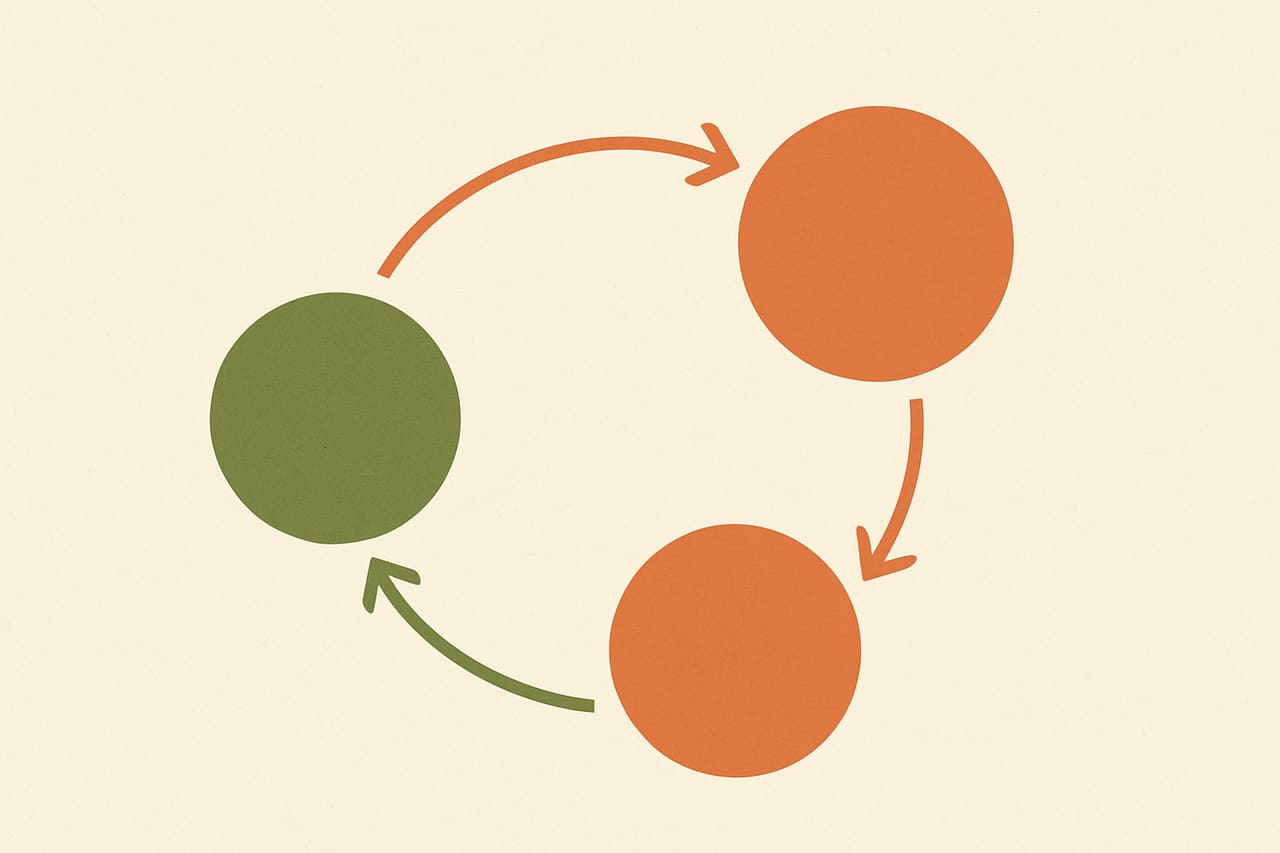
Habits form through a loop: a cue triggers a routine that delivers a reward, and the brain learns to run it automatically. Teen behaviors — phone-checking, snacking, study patterns — are mostly loops. You change a habit by redesigning the loop, not by demanding more willpower. Once you see behavior as loops rather than willpower, the lever becomes obvious: redesign the cue and the reward.
What researchers actually find.
- Repetition wires habits into automatic brain circuits.
- Cues (time, place, emotion, a notification) reliably launch the routine.
- The most effective change targets the cue and reward, not raw self-control.
- Making a good behavior easier and a bad one harder beats relying on motivation, which always fluctuates.
A habit forms because the brain is wired to automate anything that reliably pays off, freeing up conscious attention for everything else — so habits aren't a sign of weak character, they're a feature. The loop runs cue, routine, reward, and with enough repetition the cue alone starts to trigger a craving for the reward, which is what makes the behavior feel automatic and oddly hard to skip. The most overlooked link is the cue: a time of day, a location, an emotional state, or a buzzing phone can launch the routine before any decision is consciously made. This is why willpower is a poor lever — by the time the teen 'decides,' the loop is often already running. The reliable move is to redesign the environment so the cue for a good habit is everywhere and easy, and the cue for an unwanted one is removed or made inconvenient.
You might recognize this.
- Reaching for the phone the instant it buzzes (or just out of boredom).
- Stress-snacking on autopilot.
- The same after-school routine running without thought.
- An automatic after-school routine that runs the same way every day without a decision being made.
How to help.
- Remove or change the cue — phone in another room kills the buzz-then-check loop.
- Swap the routine while keeping the reward (a real break instead of a scroll).
- Make good habits easy and bad ones inconvenient.
- Stack a new habit onto an existing one ('after dinner, then homework') to borrow its cue.
How this changes by age
Habits are forming fast and are still quite malleable, and routines lean heavily on you for structure. Build the loops you want now — homework right after a snack, devices charging in the kitchen — while the patterns are easy to set.
Phone-checking and study patterns are hardening into strong loops, and direct commands increasingly meet resistance. Shift from policing to redesigning together: agree on where the phone lives during homework so the cue to check simply isn't there.
They have the abstract capacity to understand and engineer their own habits, which is a skill worth handing over before they leave home. Teach the cue-routine-reward idea explicitly and let them design their own systems, since they'll soon be the only one in the room.
Pick one small habit and stack it onto something that already happens automatically — 'right after dinner, backpack gets packed for tomorrow' — so the existing routine becomes the cue. Borrowing an established trigger is far easier than trying to remember a brand-new one.
The well-known 'about two months to feel automatic' figure is an average with enormous spread — some habits settle in weeks, others take much longer, and a single missed day doesn't undo the progress. And redesigning the loop helps with ordinary habits; compulsions or behaviors that feel genuinely out of control are a different category that may need more than environment tweaks.
This is a plain-words summary of well-established psychology — a map, not a diagnosis. If your teen is struggling in a way that worries you, a pediatrician or licensed mental-health professional is the right next step. In crisis: call or text 988 (Suicide & Crisis Lifeline, 24/7) · text HOME to 741741 · call 911 for immediate danger.