Reinvention is identity testing, not flakiness.
The short version.
Teens 'try on' identities the way you'd try on clothes — adopting styles, subcultures, and beliefs to see which fit. Most of these phases are experiments, not permanent declarations. The trying-on is how a durable self gets assembled. Most of these phases are rentals, not purchases — experiments to be observed, not emergencies to be stopped.
What researchers actually find.
- Identity exploration involves sampling roles and values before committing.
- Most phases are temporary experiments, not final destinations.
- Heavy-handed opposition can entrench a phase or push it underground.
- Heavy-handed opposition tends to entrench a phase or push it out of sight rather than ending it.
Trying on selves works because identity gets built by sampling, not by deciding in the abstract. A teen can't reason their way to who they are; they have to wear an aesthetic, join a subculture, or hold a belief for a while and feel from the inside whether it fits. Most of these are rentals, not purchases — experiments meant to be tested and returned, which is why a wholehearted new persona can fade in a few months without leaving a trace. The borrowing is often deliberate: mirroring a group is a way to feel belonging while road-testing a possible self. Heavy-handed opposition backfires because it raises the stakes — fighting a phase can entrench it as a loyalty test or simply push it out of your sight rather than ending it. Staying calm keeps you in the loop as the experiments run their course.
You might recognize this.
- A new aesthetic or persona every few months.
- Intense, short-lived passions.
- Mirroring whichever group they're currently in.
- A wholehearted new identity that quietly fades a few months later.
How to help.
- Stay calm through the phases; most pass on their own.
- Keep the lines of communication open rather than mocking.
- Reserve your real concern for safety, not style.
- Save your strong reactions for genuine safety issues, not hair, clothes, or music.
How this changes by age
Early try-ons are usually about surfaces — a fandom, a style, copying an admired older kid. Stay relaxed and curious; these are short rentals, and your interest matters more than your approval.
This is peak reinvention: aesthetics, personas, and intense passions can change every few months, often mirroring the current group. Avoid mocking or banning style choices, which only drives the experiment underground — save your real reactions for genuine safety.
The trying-on narrows as some experiments start to 'take' and become more lasting commitments. Help them notice what's actually felt right over time, and treat the keepers with the same respect you gave the phases.
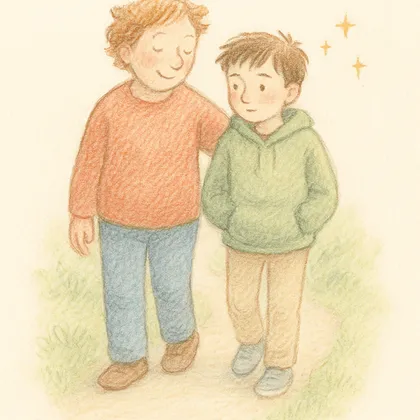
The next time a new look or obsession appears, lead with curiosity instead of a verdict: 'Tell me what you like about it.' One non-judgmental question keeps the door open so you stay the person they explore out loud with.
Treating phases as experiments doesn't mean ignoring everything — genuine safety issues (dangerous behavior, signs of real distress, hateful ideologies) still warrant a real response. And 'most phases pass' is a general pattern, not a guarantee about any one teen; calm acceptance of style is different from waving off warning signs.
This is a plain-words summary of well-established psychology — a map, not a diagnosis. If your teen is struggling in a way that worries you, a pediatrician or licensed mental-health professional is the right next step. In crisis: call or text 988 (Suicide & Crisis Lifeline, 24/7) · text HOME to 741741 · call 911 for immediate danger.