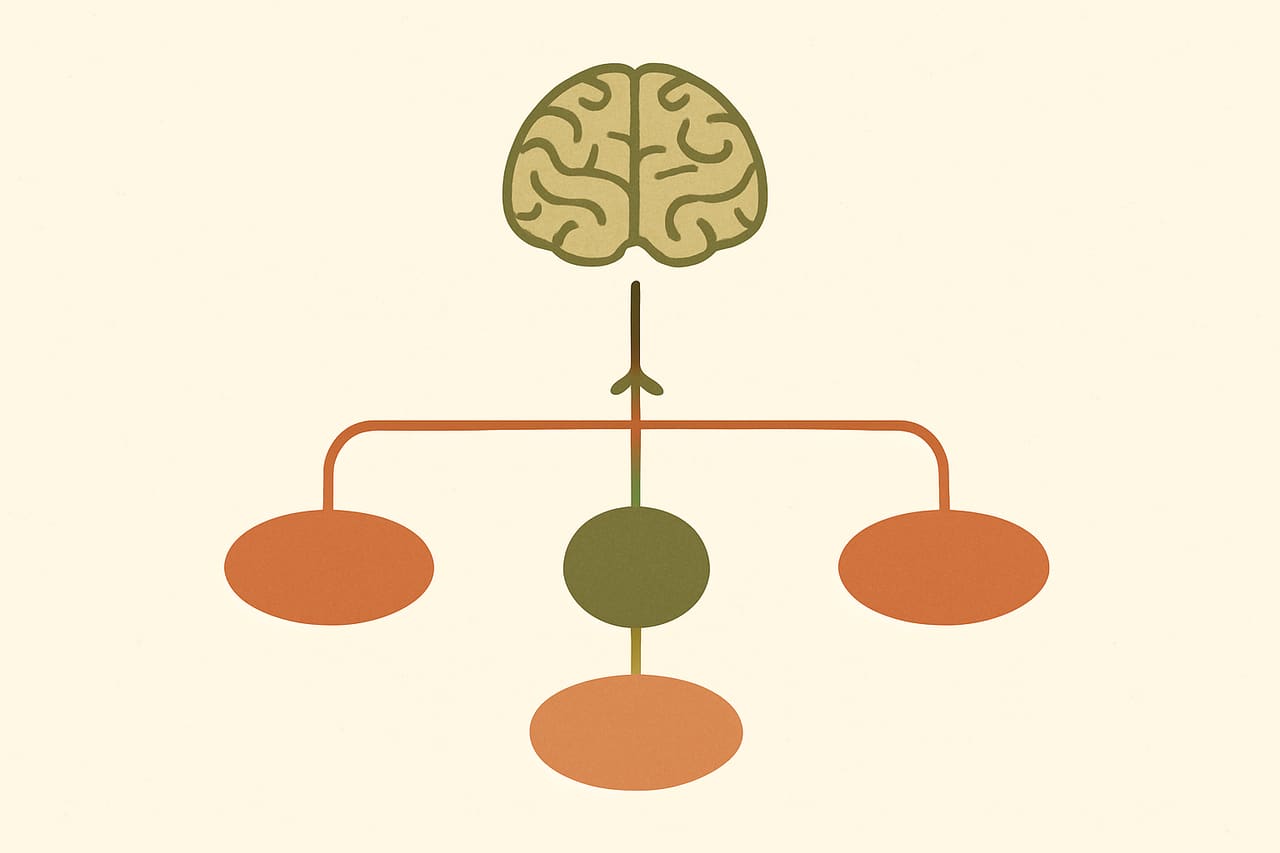
Pushing for independence is the brain doing its job.
The short version.
Adolescents are wired to seek autonomy — to make their own choices and separate from parents enough to function as adults. The pushback and boundary-testing are the visible edge of a healthy, necessary process of becoming a separate self. The goal of parenting a teen isn't to win control — it's to hand it over safely, a piece at a time.
What researchers actually find.
- The drive for autonomy is a universal developmental task.
- Granting age-appropriate autonomy supports healthier development than tight control.
- Autonomy and closeness can coexist; independence isn't the same as disconnection.
- Teens given age-appropriate autonomy tend to fare better than those kept under tight control.
The push for independence is a built-in developmental program, not a personal rejection — every healthy adolescent is wired to separate enough to eventually run their own life. 'I can do it myself' and the resistance to help are the visible edge of that program reorganizing the parent-child relationship from authority-over to partnership. The friction often runs ahead of the judgment because the drive to decide for themselves matures faster than the experience to decide well, so they reach for control before they're fully ready to handle all of it — which is exactly why it's handed over in pieces. Granting age-appropriate autonomy actually supports better outcomes than clamping down, because teens practice decision-making while the stakes are still survivable and you're still nearby. Crucially, autonomy isn't the same as disconnection: a teen can grow more independent and stay close, and the parenting goal is to transfer control safely rather than to win it.
You might recognize this.
- 'I can do it myself' and resistance to help.
- Pushing on rules and boundaries.
- Wanting privacy and their own space.
- Bristling at help they'd have welcomed a year or two ago.
How to help.
- Grant autonomy in steps as they earn it — a widening circle, not a cliff.
- Pick battles; concede the small stuff to hold the important lines.
- Frame independence as something you're coaching them toward, not fighting.
- Make autonomy a reward that grows with demonstrated responsibility, so independence and trust rise together.
How this changes by age
Autonomy shows up in small bids — choosing clothes, wanting to walk somewhere alone, doing homework their own way. Say yes to the low-stakes ones; early practice at deciding builds the muscle for bigger choices later.
The pushing intensifies — rules, privacy, and 'you can't make me' — and friction with you tends to peak here. Pick your battles, concede the small stuff to hold the important lines, and frame limits as safety, not control.
They're rehearsing near-adult independence — driving, money, curfews, real consequences. Widen the circle as they show responsibility, so trust and freedom rise together and they leave home having practiced, not just been protected.
Hand over one decision you've been keeping: 'You're old enough to own this one — it's your call.' Pick something real but low-risk (their own bedtime on a weekend, how they spend a set allowance), and then actually let the choice, and its outcome, be theirs.
Granting autonomy doesn't mean removing all limits — age-appropriate is the key phrase, and structure plus warmth beats both control and a free-for-all. Pushing for independence is also normal across temperaments: a less confrontational teen isn't failing to individuate just because they don't slam doors, and intense conflict isn't automatically a red flag.
This is a plain-words summary of well-established psychology — a map, not a diagnosis. If your teen is struggling in a way that worries you, a pediatrician or licensed mental-health professional is the right next step. In crisis: call or text 988 (Suicide & Crisis Lifeline, 24/7) · text HOME to 741741 · call 911 for immediate danger.