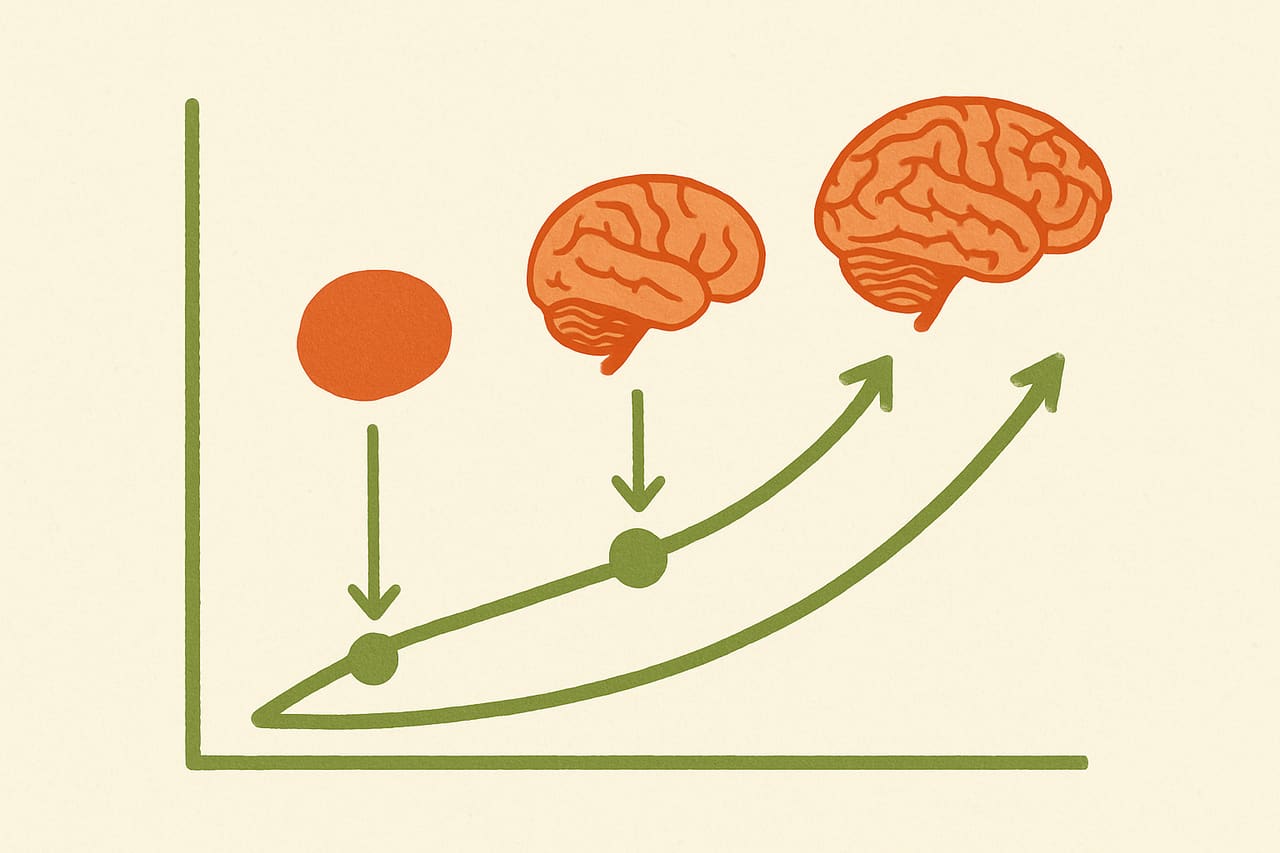
Believing ability can grow changes how teens face hard things.
The short version.
A 'growth mindset' is the belief that abilities can develop with effort and strategy, versus a 'fixed mindset' that treats them as set. Teens leaning toward growth tend to persist through setbacks and treat failure as information. The mindset is malleable — and shaped by how adults praise. Mindset isn't fixed either — the way adults praise quietly teaches a teen which one to hold.
What researchers actually find.
- Growth-oriented beliefs are linked to greater persistence and resilience.
- Praising effort and strategy (not raw 'smarts') nudges toward growth.
- Mindset effects are most powerful for struggling students facing real challenge.
- Mindset effects show up most for struggling students facing genuine challenge, not for easy work.
The idea beneath this is simple: how a teen explains a setback shapes what they do next. If ability feels fixed, a bad grade reads as a verdict about who they are, so quitting protects their self-image; if ability feels trainable, the same grade reads as feedback about strategy and effort, so trying again feels worth it. Adults quietly teach which story a teen carries — praising 'smart' rewards looking able, while praising effort and approach rewards the process that actually improves it. Honestly, the research here has been revised: early claims of large, easy gains didn't always replicate, and the real effects are modest and most visible for struggling students facing genuine challenge. Think of it as removing one self-imposed brake on effort, not as a switch that unlocks hidden potential.
You might recognize this.
- 'I'm just bad at math' as a fixed verdict.
- Giving up fast when something feels hard.
- More persistence when they see ability as trainable.
- 'I'm just not a math person' offered as a permanent verdict after one hard test.
How to help.
- Praise effort, strategy, and progress — not being 'smart' or 'gifted.'
- Reframe failure as data: 'What did that teach you?'
- Model your own learning and struggle out loud.
- Praise the strategy and the effort, and treat each failure as data about what to try next.
How this changes by age
Labels stick fast at this age — 'I'm bad at math' can harden into identity after a couple of rough days. Praise specific strategies and visible progress, and gently retell setbacks as 'not yet' rather than 'not me.'
Self-image and peer comparison get intense, so teens may hide effort to avoid looking like they tried and still failed. Make struggle normal and unembarrassing — share where you're working hard at something — so effort stops feeling like proof of being untalented.
Stakes feel higher with grades, tests, and college on the horizon, and fixed thinking can curdle into avoidance or burnout. Focus less on outcomes and more on adjusting approach — what to try differently next time — and connect effort to goals they actually care about.
After your teen mentions something hard today, skip 'you're so smart' and ask instead, 'What did you try, and what would you tweak next time?' You're praising the strategy, not the talent.
Mindset is real but oversold — it won't override a chaotic classroom, a learning disability, a sleep deficit, or genuine lack of instruction, and 'just believe you can improve' can shade into blaming a kid for outcomes outside their control. Effects are modest and clearest under real challenge; it's one helpful lever among many, not a cure.
This is a plain-words summary of well-established psychology — a map, not a diagnosis. If your teen is struggling in a way that worries you, a pediatrician or licensed mental-health professional is the right next step. In crisis: call or text 988 (Suicide & Crisis Lifeline, 24/7) · text HOME to 741741 · call 911 for immediate danger.