I.
The scene
What's happening.
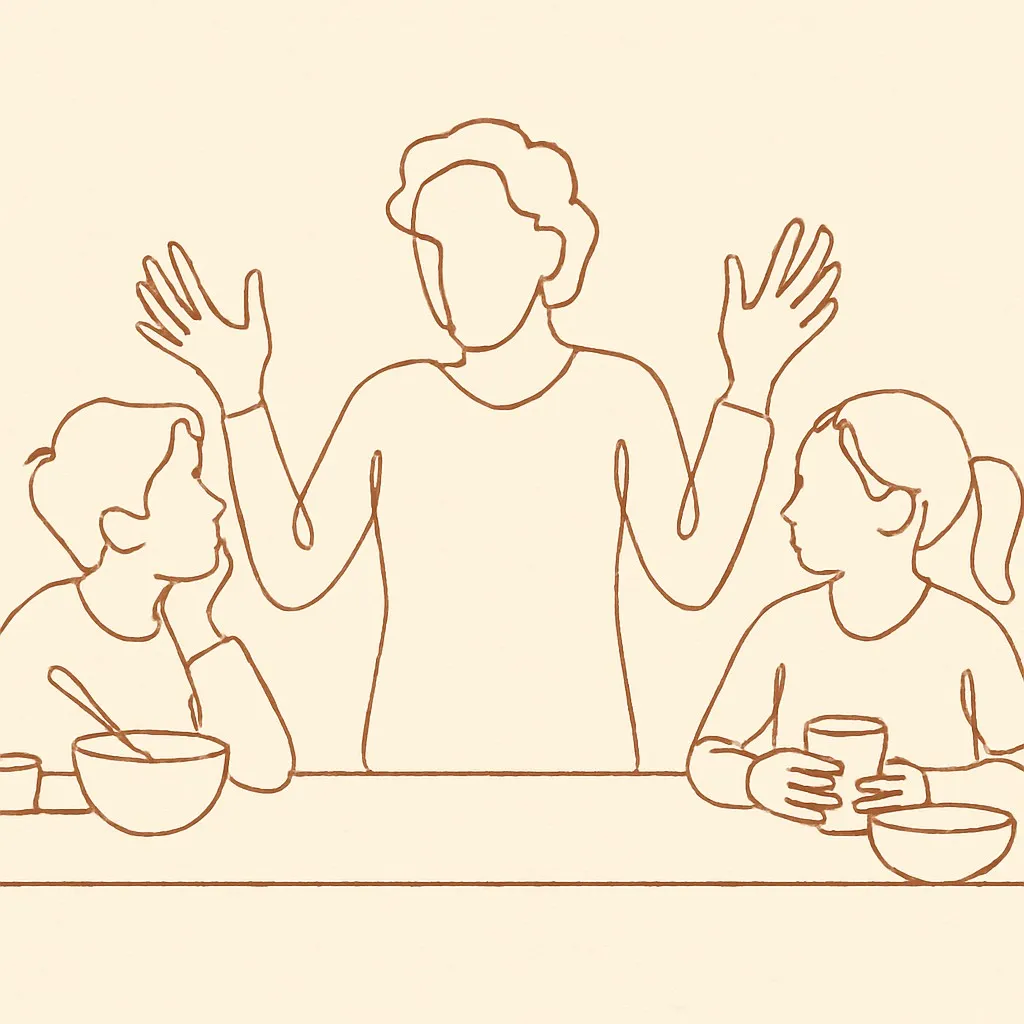
You've reminded your 14-year-old three times to take out the trash today. Their 11-year-old sibling has done nothing all evening. The 14-year-old: “Why do you always pick on me?”
II.
The instinctive version
What we usually say — and why it backfires.
Parent
Because you're the one who didn't do what I asked.
Teen
Did you ask THEM to do anything?
Parent
That's not the point. You're old enough to handle your own list.
Teen
Yeah. Of course.
- “You're the one who didn't do what I asked” is technically correct and dodges the actual question (is the distribution fair?).
- “You're old enough” is the older-kid tax in plain language — the same logic that makes older siblings resent younger ones into adulthood.
- The teen's resigned “of course” is them logging it and moving on. The complaint stays alive inside them.
III.
The better version
What works — and why.
Parent
Wait — let me actually think about that. You're right that I've asked you three times today and I haven't asked your sister once. That's not on purpose, but it's not fair either.
Teen
Yeah.
Parent
(turning) Hey kiddo — can you load the dishwasher? Right now please. (back to teen) Trash is still yours but I hear you on the imbalance. I'll be more careful about spreading the asks.
Teen
Thanks.
- “Wait — let me actually think about that” shows in real time that you're willing to update on new evidence. Most teen complaints close because parents won't.
- Conceding the imbalance AND assigning the sibling work in front of them is the proof. The teen sees the rule applied symmetrically.
- Keeping the original ask intact (“trash is still yours”) shows the concession isn't a giveaway. They get fairness AND keep the rule.
IV.
Memorize these
Key phrases to reach for in the moment.
- Wait — let me actually think about that.
- You're right. That's not on purpose, but it's not fair either.
- (Assign the sibling work in front of them.)
- Your [task] is still yours, but I'll be more careful about spreading the asks.