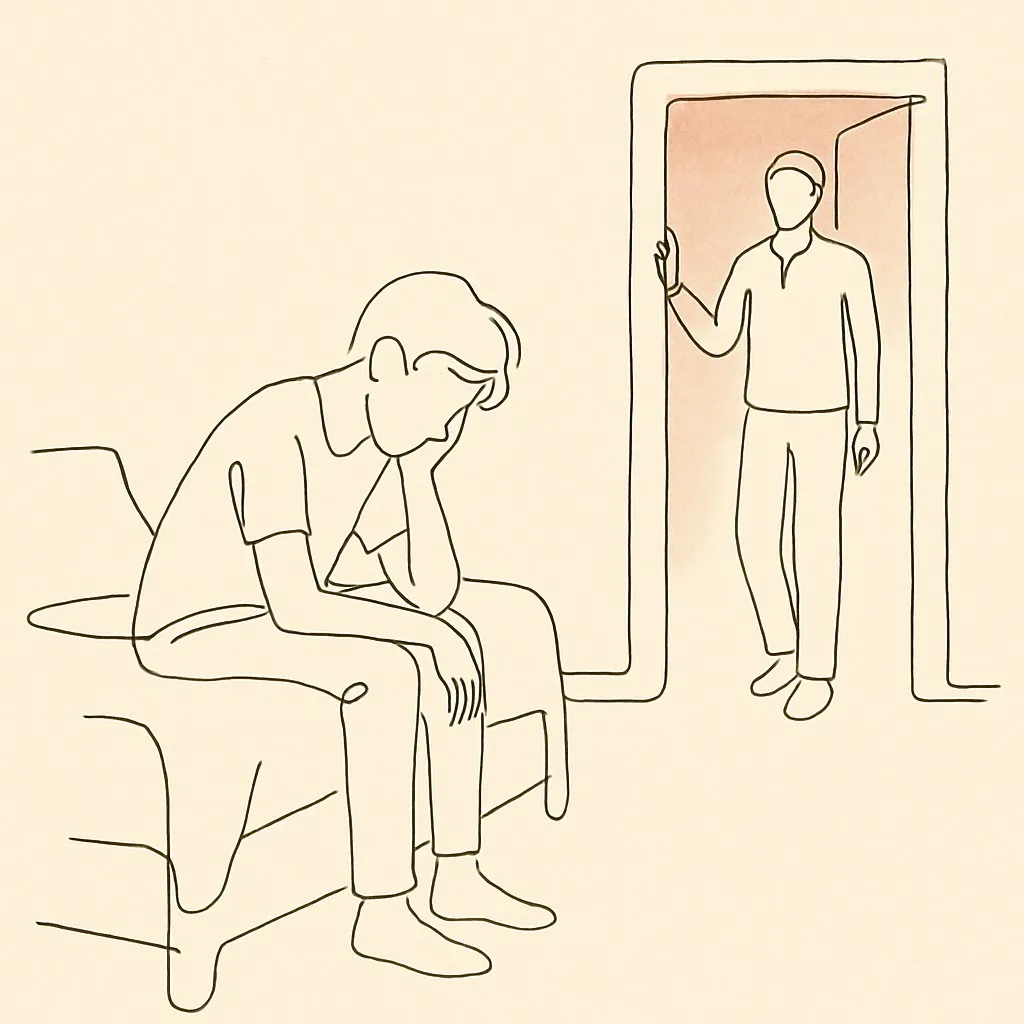
What's happening.
You're saying goodnight. Your teen, blanket pulled up to their chin, says quietly: “Mom… what if I'm not okay?” You feel time stop.
What we usually say — and why it backfires.
Honey, you're okay! You're just tired. Get some sleep, you'll feel better in the morning.
...yeah. Probably.
I love you. Sweet dreams.
(The teen lies awake for hours. Doesn't bring it up again for months.)
- “You're okay” isn't a reassurance, it's a contradiction. The teen just told you they aren't. You just told them they're wrong about themselves.
- “Just tired” explains their feeling away. They won't bring you bigger feelings if the small one got dismissed.
- The bedtime is when this confession comes precisely because they don't have to look at you. Brushing past it means it may not come back around for a long time.
What works — and why.
I'm so glad you told me. Can you tell me what 'not okay' feels like right now?
I don't know. Like… heavy. All the time. And I don't really want to do anything.
Thank you for telling me. That sounds really hard. Has it been like this for a while, or is it new?
Maybe a few months.
Okay. Here's what I want us to do — I'm going to call our doctor tomorrow and get you in to talk to someone. Not because you're broken, because we all need help sometimes and getting it early is just smart. Is that okay?
...yeah.
- “I'm so glad you told me” rewards the bravery before doing anything else. That sentence guarantees they'll tell you the next thing.
- Asking what it feels like (not WHY it feels like that) keeps them out of the explaining-and-defending mode that ends most adolescent mental-health conversations.
- “We all need help sometimes and getting it early is just smart” reframes therapy from “you're broken” to “you're smart.” It works.
Why this script works on a teen brain.
Adolescent depression often presents as flatness rather than sadness — a generalized heaviness, a withdrawal of interest, a hard time naming what's wrong. "What if I'm not okay" is one of the most clinically meaningful sentences a teen can say, precisely because it's a teen's brain telling you it has noticed itself slipping and is asking, sideways, whether the slip is something. Crucially, the question shows the teen still trusts you enough to ask — that trust has a half-life, and a wrong response narrows the window for the next ask.
The bedtime timing is not accidental. Teens disclose hard things when eye contact is off the menu — at night with a blanket between you, in a car staring at the road, on a walk side by side. This is one of the most robust findings in adolescent communication research. The corollary: schedule "big talks" sitting across a kitchen table and you'll get nothing useful; let the disclosure happen in a sideways moment and you'll get the truth.
The move to professional help ("I'm going to call our doctor tomorrow") matters because the parent is the one taking the action, immediately. Many adolescent mental-health protocols delay because the parent waits to "see how it goes." Adolescent-medicine guidance is consistent: when a teen names "not okay," the parent should make the appointment within 24 hours. Not crisis-room urgent, but not next-month either. The follow-through is the proof that the disclosure was a good decision.
Same dynamic, different surface.
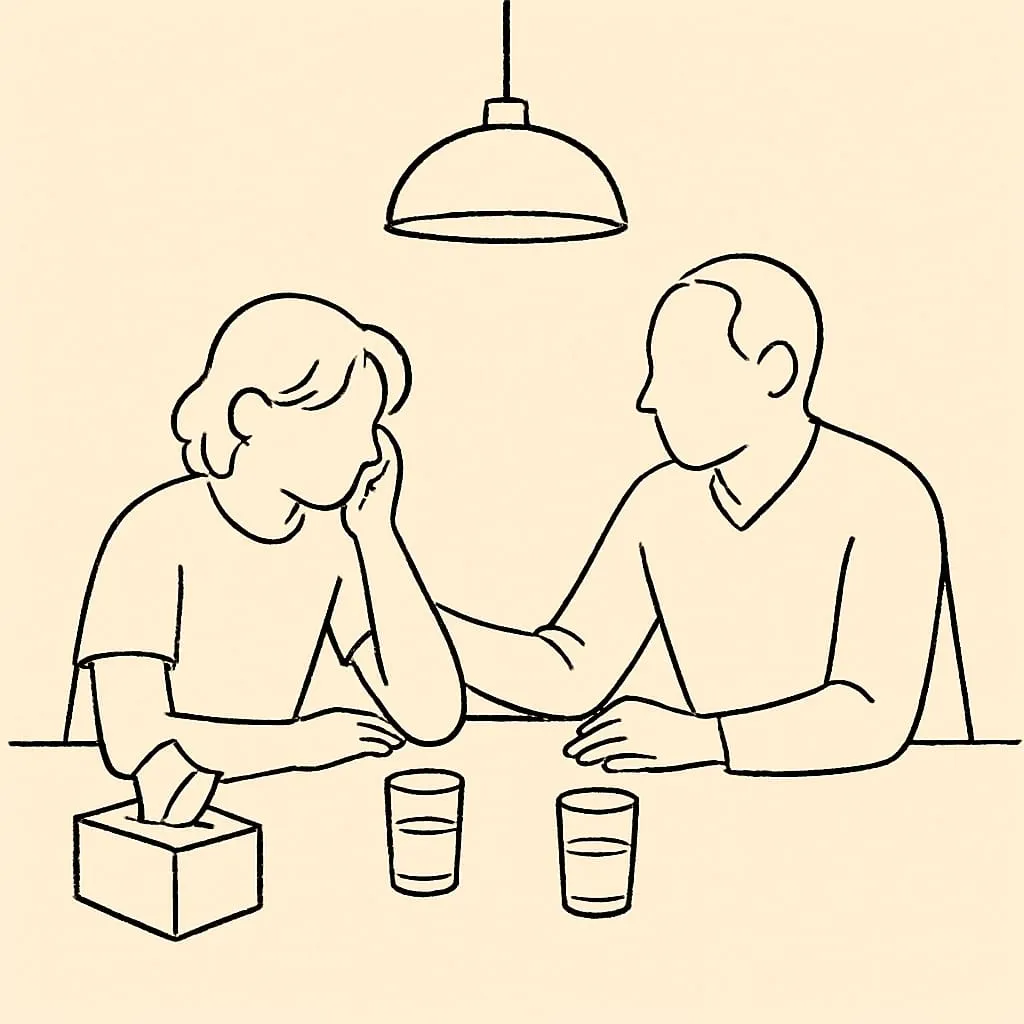
Driving your 14-year-old to a Saturday robotics meet. They've been quiet for 15 minutes. Then, watching the road: "Do you ever feel like you're just going through the motions and nothing matters?" You keep your hands on the wheel, deliberately.
What usually happens.
Honey, of course things matter. You have so much going for you.
Yeah, I know. I don't know why I said anything.
Maybe you're just tired. You've had a busy week.
Yeah. Probably.
- Listing what they have going for them is a values argument against a felt experience. The brain doesn't override the felt thing with the inventory.
- "Maybe you're just tired" gives them a permissible exit from the disclosure. They will take it; you will not get a second offer this month.
- Driving past this moment without a beat means the teen now has data: even sideways disclosure doesn't land. They'll go straighter next time, or not at all.
What works better.
Yeah. I do feel like that sometimes. Are you feeling it a lot lately?
Kind of. Like, every day.
Thank you for telling me. Has anything specifically gotten worse, or is it more of a baseline thing?
Just baseline. Kind of all the time.
Okay. When we get home I'm going to text Dr. Lin to get you in to talk to someone who's good at this stuff. Not because you're broken — because feeling that every day means we get you backup. Sound okay?
Yeah. Thanks.
- Answering "yes, I feel it too sometimes" before the clinical question removes the otherness — they're not alone, and they're not necessarily broken.
- Distinguishing "baseline" from "got worse" is the question a good adolescent clinician would ask. The teen feels taken seriously by the precision.
- Naming the action ("when we get home, I'm going to text Dr. Lin") with a real name is what makes the help feel inevitable in a good way, not threatening.
Key phrases to reach for in the moment.
- I'm so glad you told me.
- Can you tell me what 'not okay' feels like right now?
- Has it been like this for a while, or is it new?
- We all need help sometimes and getting it early is just smart.
When to use each one.
-
I'm so glad you told me.
Use as the very first response to any mental-health disclosure. Frontload the reward before any other response — non-negotiable.
-
Can you tell me what 'not okay' feels like right now?
Use to invite description without forcing causation. "What does it feel like" is much safer for the teen than "why do you feel that way."
-
Has it been like this for a while, or is it new?
Use to gather clinical-grade information without sounding clinical. Tells you and the future clinician how acute the situation is.
-
We all need help sometimes and getting it early is just smart.
Use when proposing professional help. Reframes therapy from "you're broken" to "you're proactive," which is what gets a teen to actually go.
988 Suicide & Crisis Lifeline (call or text) · Text HOME to 741741 · 911 if there is immediate self-harm risk · Pediatrician or adolescent psychiatrist within 1–2 days, not weeks.