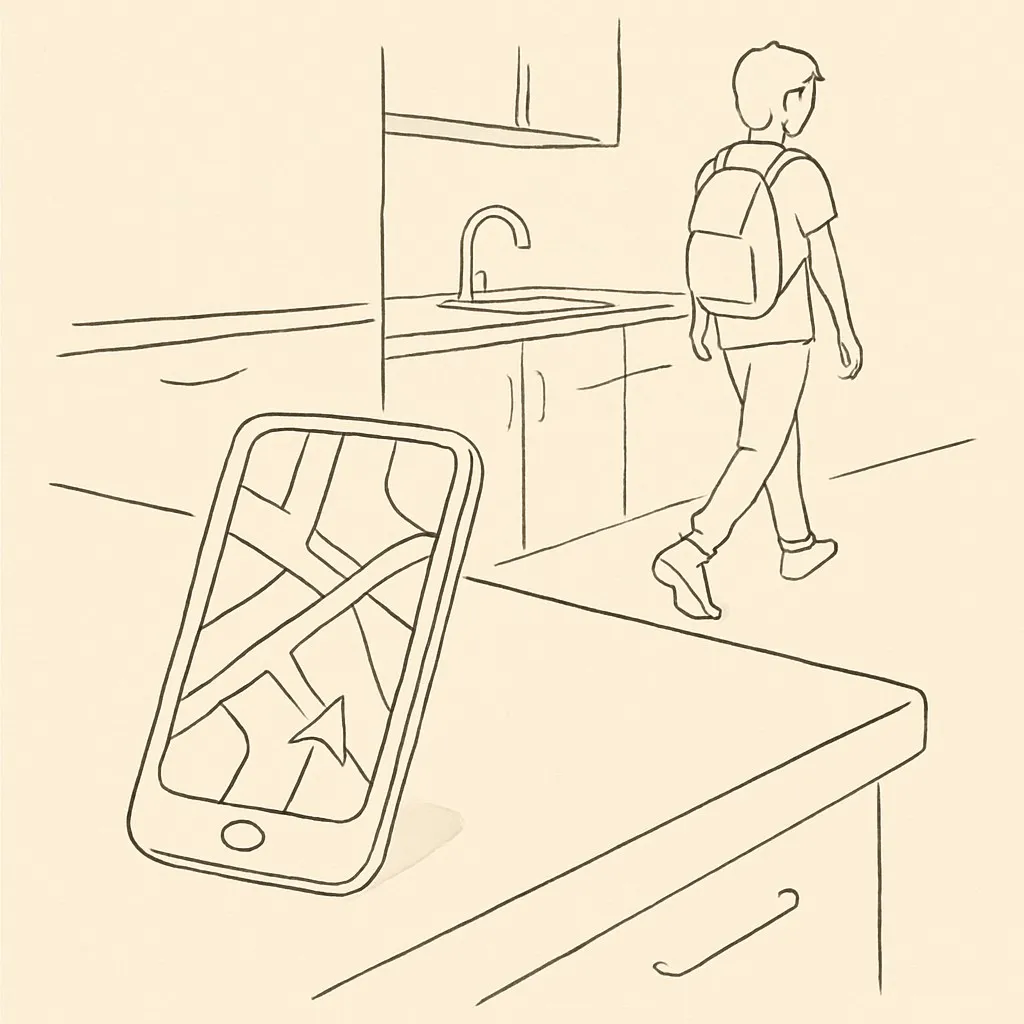
What's happening.
You text your teen to ask where they are. They reply, “You can literally see on Life360. Stop checking on me.” You realize the app has quietly become the issue.
What we usually say — and why it backfires.
I'm your parent. It's my job to know where you are.
It's stalking. None of my friends have to deal with this.
Their parents are negligent. End of discussion.
I'm leaving my phone at home from now on.
- “It's my job to know where you are” conflates safety with surveillance — they're not the same and your teen knows it.
- “Their parents are negligent” insults the teen's friends and ends any chance of negotiation.
- The teen's “I'll leave my phone at home” is the predictable next move and it actually makes them less safe, not more.
What works — and why.
You're right that I've been checking more than I need to. The app was supposed to be for logistics, not surveillance, and I lost the line.
Yeah.
How about this — I'll stop checking unless I haven't heard from you and it's past curfew, or you don't show up where you said you'd be. Deal?
Fine.
And — independent of any app — if you ever need a no-questions ride home from anywhere, that's standing. You text, I show up, we don't discuss it in the car.
- Owning the over-reach (“I lost the line”) gives the teen back their dignity and ends the fight immediately.
- A specific rule (when you WILL check) is calmer than open-ended monitoring and easier to hold yourself to.
- The no-questions-ride offer makes the relationship the safety net, not the app — which is what actually matters when a teen is in trouble.
Why this script works on a teen brain.
Location tracking changes the parent-teen relationship in ways most parents don't notice until the damage is done. Day to day, it feels like safety: you can see they're at school, at the friend's, on the way home. But the brain that's being formed in the back seat is learning a lesson you didn't mean to teach — that being known equals being watched. By the time the teen is 17, that equation calcifies, and it shapes whether they tell you the truth about anything that matters.
The research-backed alternative is not no monitoring; it's narrow, rule-bound monitoring with the teen's informed consent. "I'll check when X happens" is dramatically different from "I can see you whenever" — even though the technical capability is identical. The first version preserves the teen's experience of privacy, which preserves their willingness to bring you hard information later.
The no-questions-ride offer is the second half of the same move. It says: I am not the surveillance, I am the safety net. When a teen at a party realizes the alcohol situation is past their comfort, they call the parent who is the safety net. They never call the surveillance.
Same dynamic, different surface.
Your 16-year-old leaves for a friend's house. An hour later you check Life360 "just to see" — they're at a different address. You text. They reply: "Why are you checking?" You realize you don't have a good answer.
What usually happens.
You said you were at Jordan's. You're not.
We went to get food. Are you SERIOUS right now.
Don't take that tone with me. I'm checking because I'm your parent.
Cool. I'm turning my location off.
- Catching them at a different address with no actual concern (it was food, not danger) confirms the surveillance is the relationship.
- "Don't take that tone" sidesteps the real point — they caught you checking with no reason.
- "Turning my location off" is the teen exercising the only power they have, and now you have less safety information, not more.
What works better.
Fair. I was on the app and I shouldn't have been. No problem with where you are — I was just being twitchy. Have fun.
...okay. Thanks for saying that.
- "Fair" is one of the most underused parenting words. It instantly de-escalates a fight you're going to lose anyway.
- Owning that the checking was for no reason ("twitchy") teaches the teen what's actually behind their parent's anxiety — which is information they didn't have before.
- "Thanks for saying that" is the teen logging trust. Banked moments like this are what they draw on when something actually goes wrong.
Key phrases to reach for in the moment.
- I've been checking more than I need to. I lost the line.
- The app was for logistics, not surveillance.
- If you ever need a no-questions ride home, that's standing.
- You text, I show up, we don't discuss it in the car.
When to use each one.
-
I've been checking more than I need to. I lost the line.
Use when you realize you've crossed from safety into surveillance. Owning the over-reach is the only move that restores trust.
-
The deal is: I'll only check if [specific trigger].
Use to redraw the boundary. Be specific — vague rules become creeping rules.
-
If you ever need a no-questions ride home, that's standing.
Use as a standing offer, repeated 2-3 times a year. The standing-ness is the point.
-
You text, I show up, we don't discuss it in the car.
Use the first time you set the no-questions-ride deal. The 'in the car' specificity makes it credible.