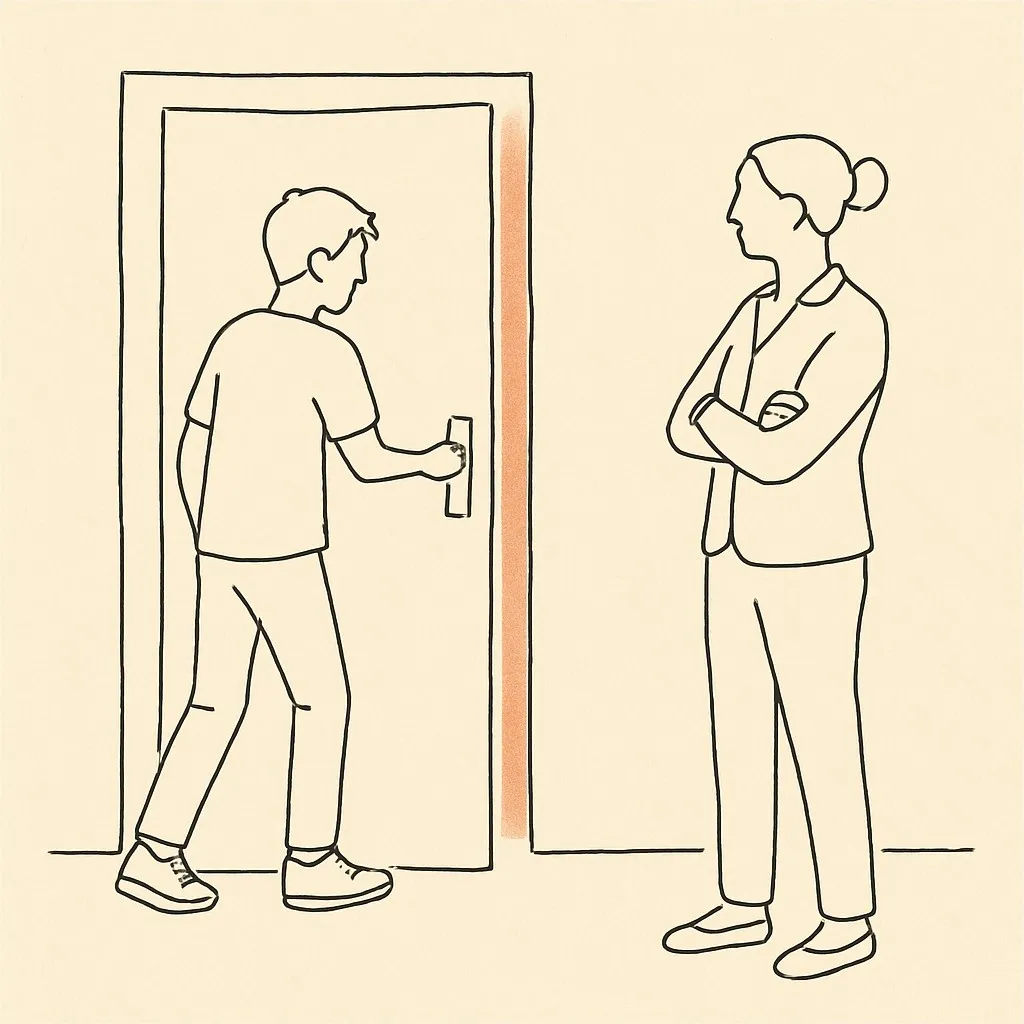
What's happening.
You ask who your teen is going out with tonight. They snap, “It's none of your business.” You feel the impulse to escalate — or to back off and lose track entirely.
What we usually say — and why it backfires.
As long as you live in this house, everything you do is my business.
I knew you'd say that.
Then don't make me ask again. Who. Are. You. With?
Fine. I'm not going.
- “As long as you live in this house” turns a normal logistics question into a power struggle about identity and autonomy.
- Demanding tone confirms the teen's suspicion that you can't be trusted with the answer.
- “I'm not going” is the teen winning by giving up the thing you both wanted them to enjoy — a lose-lose.
What works — and why.
I get it — you don't want to feel interrogated. I'm not trying to control you, I'm trying to know where to send help if anything goes sideways.
Nothing's going to go sideways.
Probably not. But the deal is: I need a first name and a phone number for one person you're with. That's it. You don't have to tell me anything else.
Whatever. It's Sarah, 555-3201.
Thanks. Have fun.
- Naming what they're afraid of (“interrogated”) takes the heat out before they have to defend it.
- Trading a small, specific ask (name + number) for a big, specific freedom (no other questions) is a deal teens generally accept.
- “Have fun” at the end seals the deal as collaborative, not adversarial.
Why this script works on a teen brain.
Privacy is the central developmental work of adolescence. The teen is building a self that exists outside the family — and they need a wall around it to do that. When a parent insists on full visibility, they're not just losing the argument about the friend's name; they're competing with the developmental project the teen is biologically wired to prioritize. The teen will win, every time.
The trade that works ("a small specific ask for a large specific freedom") respects the wall while preserving the safety function you actually need. You don't need to know who all six friends are; you need a name and a number in case something goes wrong. Teens overwhelmingly accept this trade because it gives them their identity back. The ones who don't are usually the ones with something specific to hide — and that itself is information you wanted.
The long-game effect of getting this right is that your teen learns you can be told things without losing access to autonomy. That single belief is the foundation of every later honest conversation about sex, drugs, mental health, and trouble.
Same dynamic, different surface.
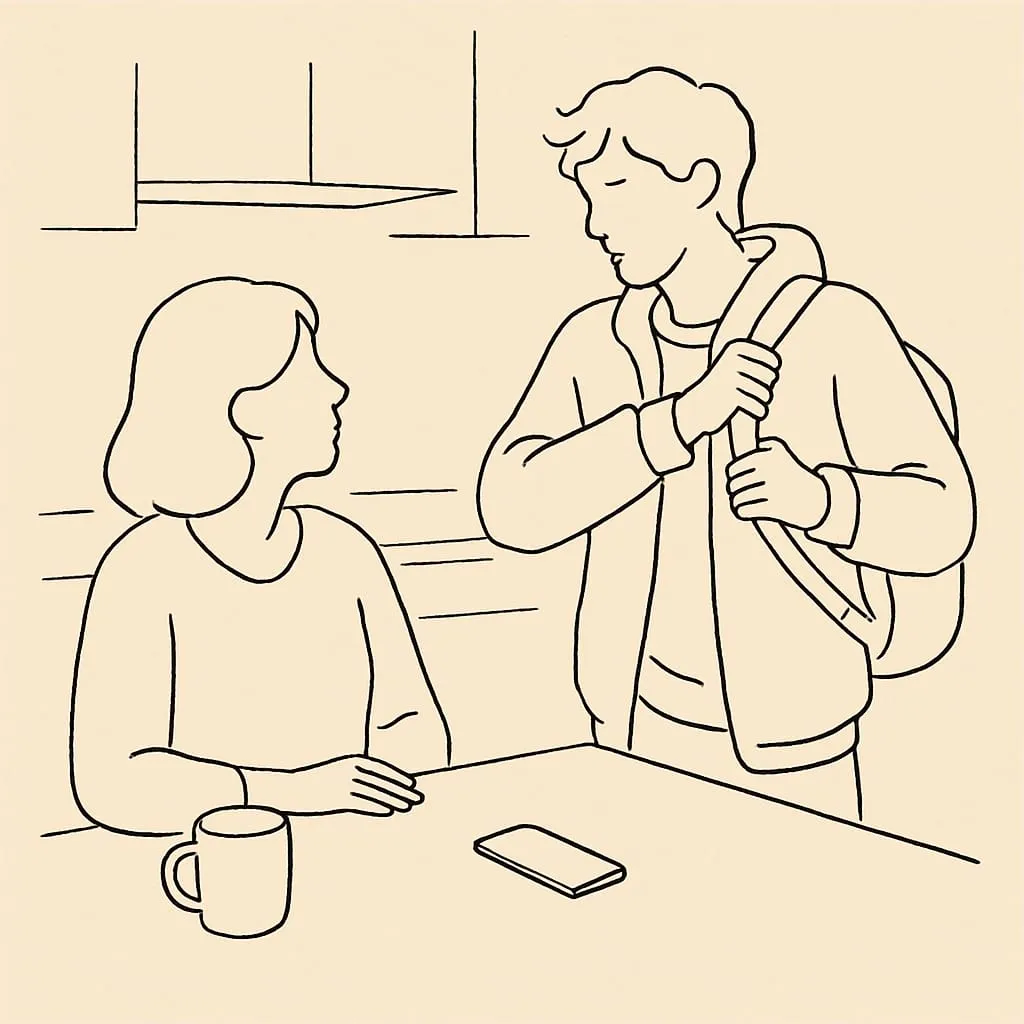
Your teen tells you they're "going to Sarah's." You ask which Sarah. They roll their eyes: "Why does it matter?" You can feel the gate slamming down.
What usually happens.
Because I asked. Last name, please.
Oh my god, you're so weird.
I don't care. Last name or you're not going.
Fine. I'm staying home. Happy?
- "Because I asked" cites authority instead of reason — which works on a 7-year-old, not a 14-year-old.
- Making the last name a yes/no gate creates a hill the teen has to die on. They will.
- You both lose: the teen sits home resentful, and you have no last name and no goodwill for the next ask.
What works better.
Curious because I want to know which Sarah to picture, that's all. Just a last name or even what street she lives on.
Reyes. From volleyball.
Got it. Sarah Reyes. Have a good time.
- Naming the reason ("to picture") removes the surveillance framing and makes the ask sound human.
- Offering two answers ("last name OR street") gives the teen a choice, which is what they're really negotiating for.
- Repeating the answer back ("Sarah Reyes") signals you actually wanted to know — and closes the loop with no further interrogation.
Key phrases to reach for in the moment.
- I'm not trying to control you, I'm trying to know where to send help if anything goes sideways.
- The deal is: [one specific ask]. That's it.
- You don't have to tell me anything else.
- Have fun.
When to use each one.
-
I'm not trying to control you, I'm trying to know where to send help if anything goes sideways.
Use when the teen accuses you of surveillance. Reframes the ask from authority to safety.
-
The deal is: [one specific ask]. That's it.
Use to name a trade. Always pair a small specific ask with a large specific freedom — never open-ended on either side.
-
You don't have to tell me anything else.
Use right after the small ask. Removes the fear of escalation, which is what makes them give you the small thing.
-
Have fun.
Use to close. Three letters of evidence that this was about logistics, not control.