What's happening.
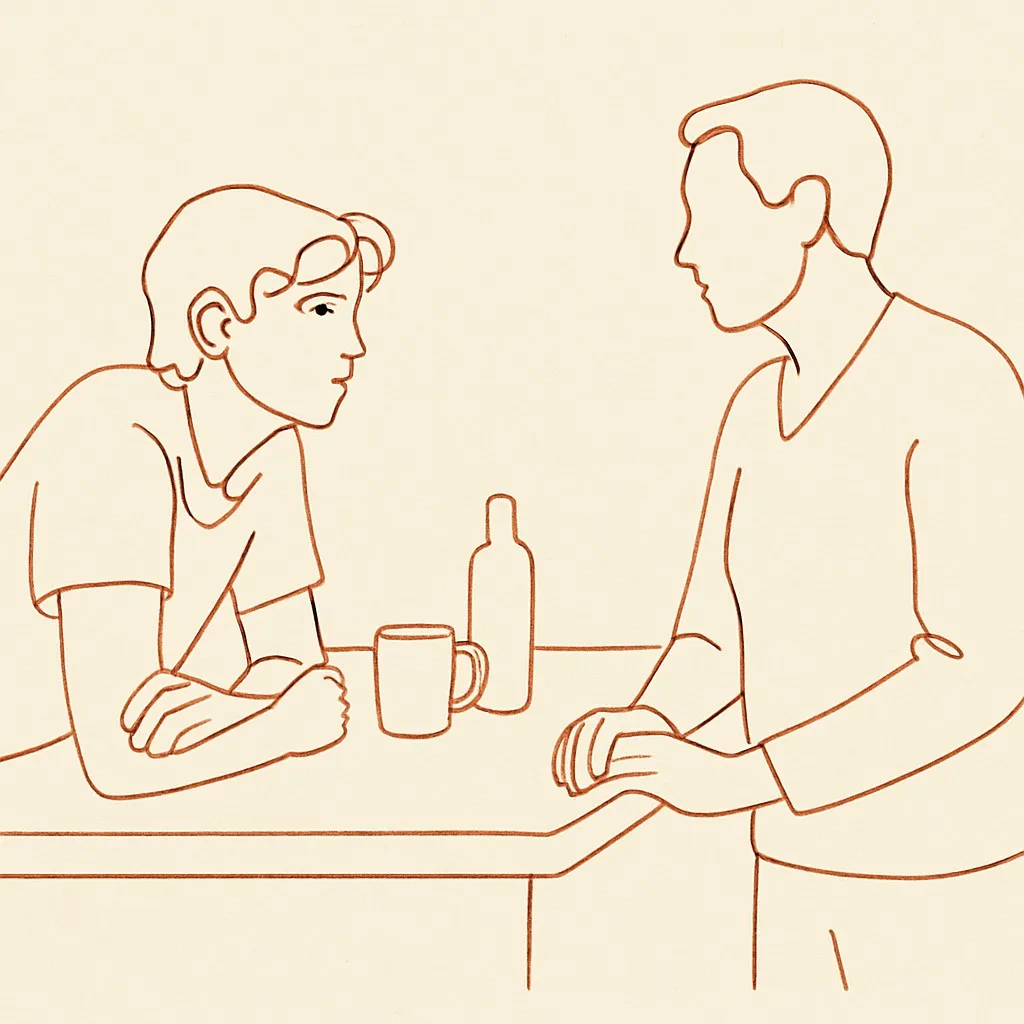
Your 16-year-old wants to go to a party Friday night. You ask whose. They name a kid you've never heard of. You ask if the parents will be home. They say “probably.” Every adolescent-medicine warning sign just lit up.
What we usually say — and why it backfires.
Absolutely not. End of discussion.
You never let me do anything.
Because you make terrible decisions.
Then I'll go anyway. You can't stop me.
- “End of discussion” teaches your teen that talking to you is the wrong move. The next party they don't ask about.
- “You make terrible decisions” attacks character instead of the specific situation.
- “I'll go anyway” is what you get when the conversation gives them no path that includes you.
What works — and why.
Tell me more. Whose place, who else is going, what's the vibe — small group, big party?
Like maybe 30 kids. At Jake's. His parents are around but not, like, monitoring.
Okay. Honest answer time, no judgment: will there be alcohol?
Probably some, yeah.
Thank you for being honest. Here's where I am — I'm not going to forbid it, but I need to ask you three things. One: no drinking, period — your brain at your age is still wiring, the research is real. Two: if anyone offers you a vape or a pill, text me the word 'pizza' and I'll be there in 15 minutes, no questions. Three: text me at midnight that you're alive.
Deal. Thanks for not freaking out.
- Information-gathering questions (whose, who else, vibe) signal that you're considering it, which is what gets you the honest answers about alcohol.
- “Thank you for being honest” reinforces the behavior you most want — them telling you the real situation.
- Specific instructions plus a code word (“pizza”) give them an exit they don't have to negotiate at the party — which is exactly when they can't negotiate.
Why this script works on a teen brain.
Adolescent risk-taking is not a bug in the system — it's a feature. The reward-seeking circuitry of the teen brain matures four to six years ahead of the impulse-control circuitry. Telling a 16-year-old not to take risks is biologically equivalent to telling a 6-year-old not to grow. The job of a parent in this window is not to eliminate risk; it's to keep one specific door open: the door home.
The "absolutely not" parent and the "sure go ahead" parent both end up in the same place: cut out of the loop. The parent who says "tell me the situation, then let's figure out how you stay safe" stays in. Adolescent-medicine research is unambiguous on this: teens whose parents engage rather than forbid have better outcomes on substance use, sexual safety, and mental health. Not worse. Better.
The code-word move ("text me 'pizza'") solves a specific cognitive problem: teens at parties cannot negotiate exits. They cannot say to friends, "I'm uncomfortable, can you drive me home?" without paying a social cost they'll feel for weeks. A prearranged signal that triggers an immediate parental extraction is one of the most studied protective factors in adolescent harm reduction. It works.
Same dynamic, different surface.
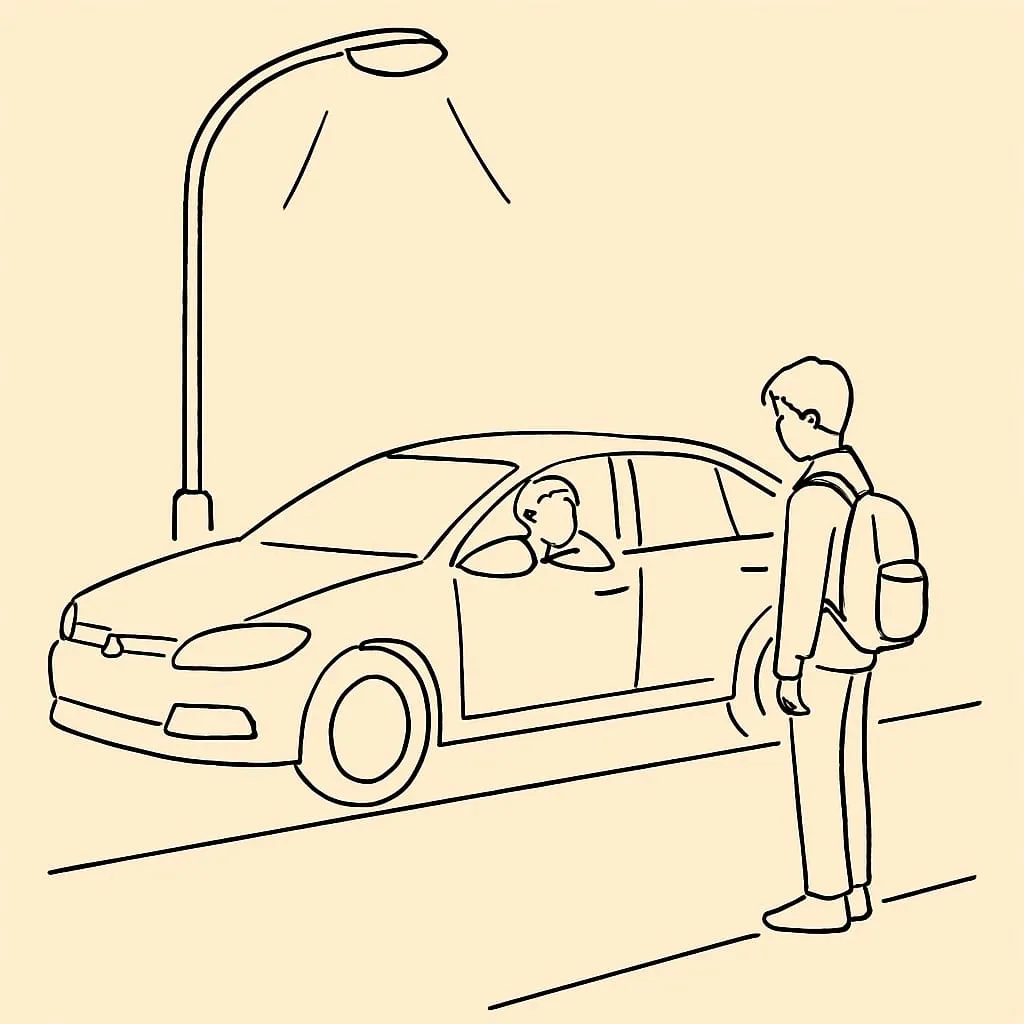
Your 17-year-old comes home from a Saturday night party at 11:30 — earlier than expected — and goes straight to bed. Sunday morning at breakfast they look at you and say: "I left because someone had coke. I didn't do any. I just wanted to get out."
What usually happens.
Cocaine?! At whose house?! Who was there?
I'm not naming people, that's not the point.
It IS the point. I need to call those parents. I need to call the school.
This is exactly why I don't tell you anything.
- Demanding names is the parent prioritizing their own action over the teen's act of disclosure. The teen learns: telling you costs me my friends.
- "I need to call the school" turns the moment into a procedural escalation. The teen will never bring you the next, harder thing.
- "This is exactly why I don't tell you anything" is the teen telling you what was at stake for them in disclosing — and what's now lost.
What works better.
Wait. Stop. I want to say two things before anything else. One: I'm proud of you for leaving. Two: I'm proud of you for telling me.
Okay.
I'm not asking who or where. I'm asking — how are you doing right now?
...weird. Honestly. I keep thinking about how easy it was for everyone to just be doing it.
Yeah. That part is rough to sit with. Want to talk through it now, or later, or just go for a walk?
- Naming what you're proud of before anything else seals the lesson: telling you was the right call.
- Explicitly not asking for names removes the consequence for friends, which removes the cost of telling you the next thing.
- "Now, later, or a walk" offers three doors. Letting the teen choose the format keeps the door open longer than forcing a sit-down would.
Key phrases to reach for in the moment.
- Tell me more. Whose place, who else, what's the vibe.
- Honest answer time, no judgment.
- Text me 'pizza' and I'll be there in 15 minutes, no questions.
- Thank you for being honest.
When to use each one.
-
Tell me more. Whose place, who else, what's the vibe.
Use as the opening question on any party ask. Signals you're considering, not refusing — which is what gets honest answers.
-
Honest answer time, no judgment.
Use right before asking about alcohol/drugs. Names the pact so they can take it.
-
Text me 'pizza' and I'll be there in 15 minutes, no questions.
Use to set the code word the first time. Repeat the deal monthly so it stays loaded.
-
I'm proud of you for telling me.
Use the moment they disclose something hard. Frontload the reward before any other response.