I.
The scene
What's happening.
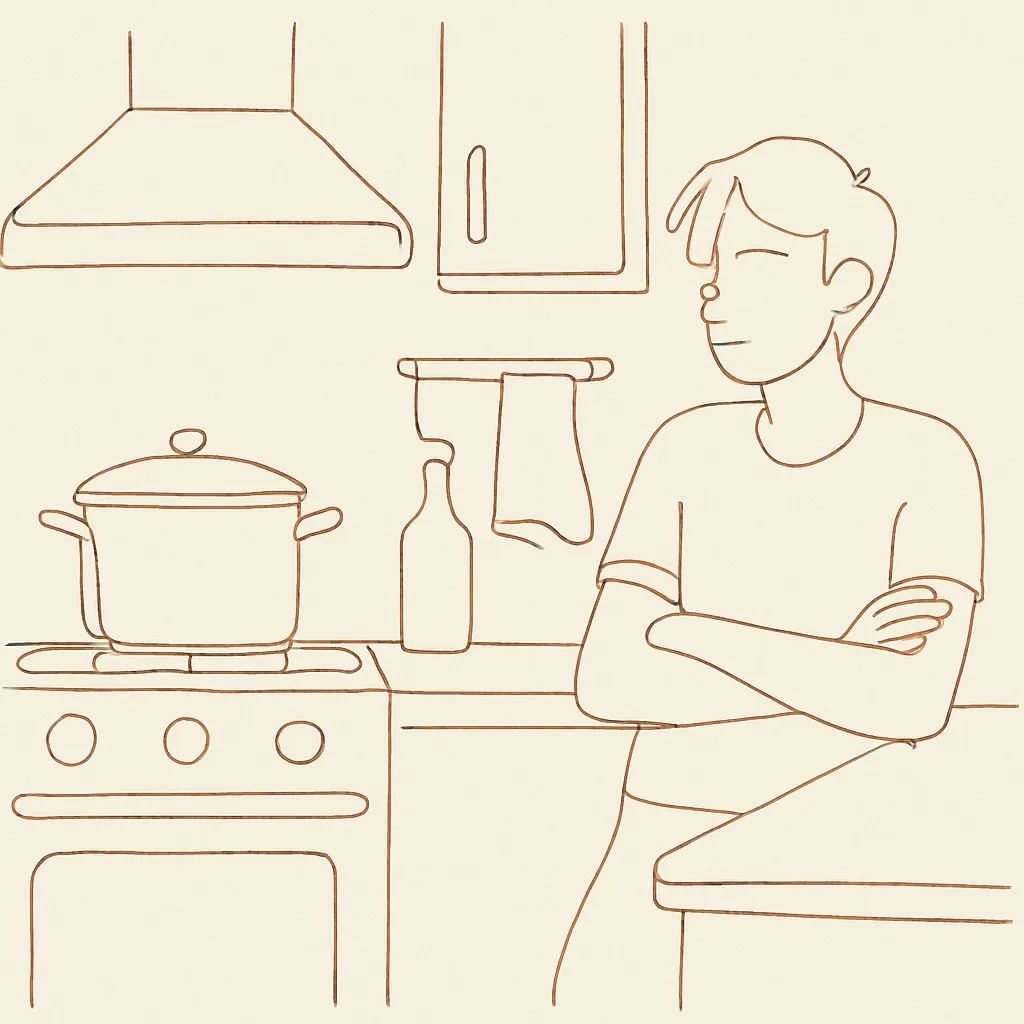
You're halfway through cooking dinner. Your teen wanders into the kitchen and says flatly, “I'm starving.” You hear it once a week and brush it off. Tonight you catch yourself wondering.
II.
The instinctive version
What we usually say — and why it backfires.
Parent
Dinner will be ready in 15 minutes.
Teen
I can't WAIT 15 minutes.
Parent
Then have an apple.
Teen
I don't want an apple. Forget it.
- “Dinner in 15 minutes” is the standard answer that solves the moment and misses any signal. Most of the time that's fine. Occasionally it isn't.
- “Then have an apple” reads as offering food they don't want, which a teen with shifting food relationships will translate as a rejection.
- “Forget it” at the end is the teen abandoning the request and feeling unseen for it — over time this trains the pattern: don't ask for food when you need it.
III.
The better version
What works — and why.
Parent
Yeah, you sound it. Did you eat at school today?
Teen
Just the granola bar in the morning. Lunch line was too long.
Parent
Ah. That'd do it. Let me grab you something now — there's cheese and bread in the fridge, or hummus. What sounds good?
Teen
Cheese and bread.
Parent
(handing it over) Heads up — let's not skip lunch, even on days the line is long. Pack something the night before, or I will. Deal?
- Asking about earlier meals casually turns a daily “I'm starving” into useful data over time. Patterns become visible.
- Offering two specific choices respects appetite without pushing. (A teen who refuses both is also data.)
- “Heads up — let's not skip lunch” names the pattern matter-of-factly, without alarm. If it's the start of a problem, this is the kind of low-key parent attention that catches it early.
IV.
Memorize these
Key phrases to reach for in the moment.
- Yeah, you sound it. Did you eat at school today?
- Let me grab you something now. [Two options.] What sounds good?
- Heads up — let's not skip lunch.
- (And then keep half-attention on the pattern.)