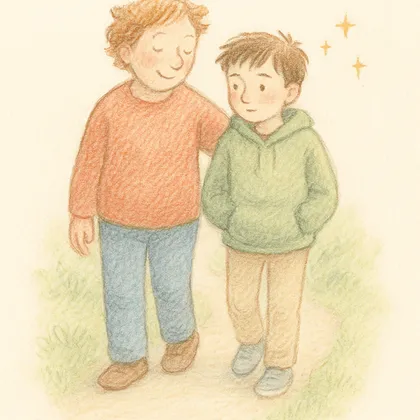
What's happening.
Your 14-year-old, at the bathroom door, voice tight: “I did it again tonight. Just now. I'm sorry.” You inhale once and step toward them.
What we usually say — and why it backfires.
Oh my GOD let me see how bad it is. Where? Show me right now.
Mom — please, it's not that bad —
We are going to the EMERGENCY ROOM.
(absorbs that disclosing acute self-harm produces a parental crisis that's harder to survive than the self-harm itself)
- Volume + forensic-exam energy in the first 5 seconds turns a vulnerable disclosure into an interrogation.
- Auto-ER for every self-harm event teaches the teen that telling = emergency room = restraint = humiliation. They'll handle the next one alone.
- Most adolescent self-harm doesn't need ER — needs first-aid + clinical follow-up. Knowing the difference matters.
What works — and why.
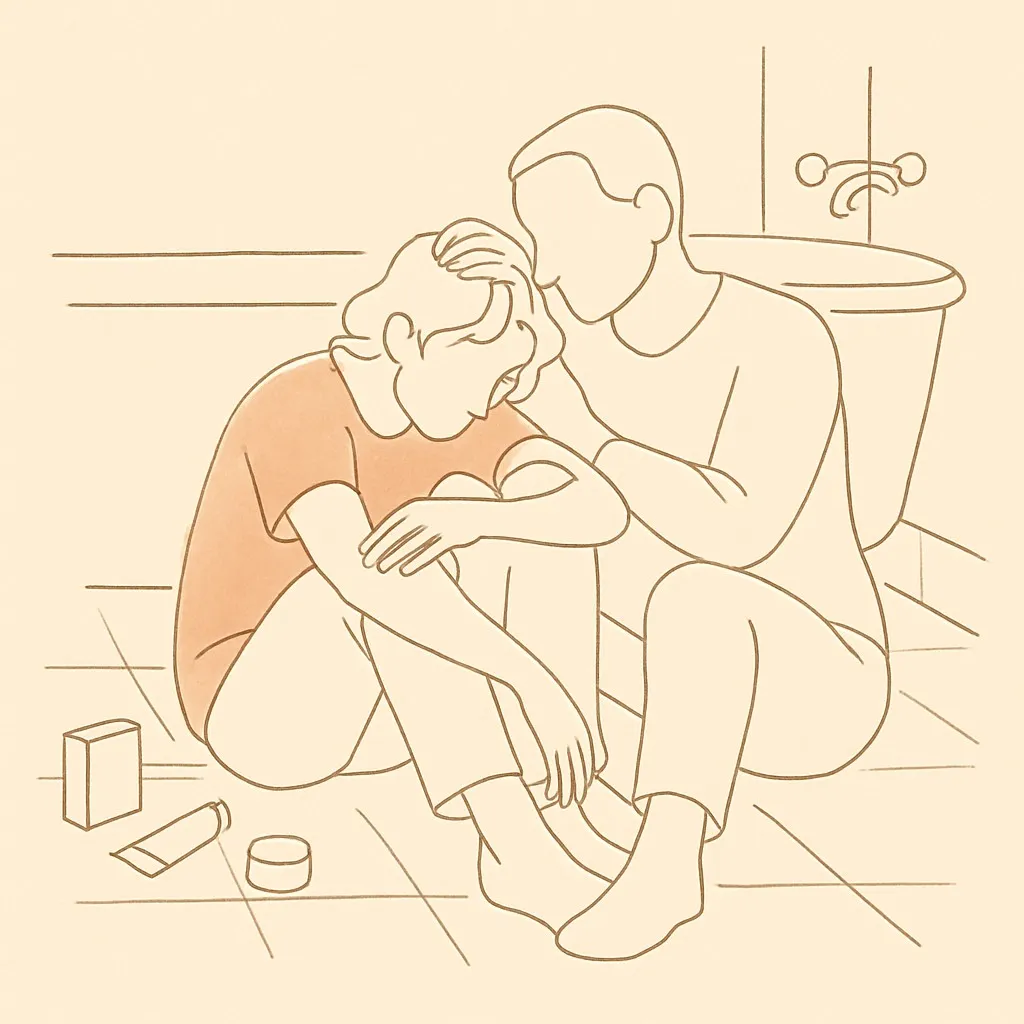
(opens arms) Hey. Come here. I love you. Let me look at you, gently — is it bleeding actively or has it stopped?
Stopped. It's pretty shallow.
Okay. Sit down on the floor with me. We're going to clean it carefully — water, mild soap, gauze. While we do, I want you to know: I am not mad. I am not disappointed. I'm just really glad you told me. After we patch this up, I want to call the on-call line for your therapist or pediatrician — not to drag you anywhere tonight, just to ask what they think we should do tomorrow. Are you having any thoughts of hurting yourself further or doing anything more serious tonight?
...no. Just needed to do that and then I was scared.
Okay. We sleep in the same room tonight — couch, floor, whatever — not because you're in trouble, because I want you to not be alone.
- Opening arms before words, then assessing (bleeding actively or stopped) before deciding action, models the right adult response — care first, plan second.
- Asking the suicide-specific follow-up question gently is essential — self-harm and suicidal intent are different but overlap. Treat them separately AND ask.
- Sleeping in the same room (not the ER) is the right level of intervention for non-life-threatening self-harm with a calm child — and the teen will tell you so much more in the next 24 hours.
Key phrases to reach for in the moment.
- (Open arms.) Hey. Come here. I love you.
- Is it bleeding actively or has it stopped?
- I am not mad. I am not disappointed. I'm just really glad you told me.
- Are you having any thoughts of hurting yourself further or doing anything more serious tonight?
Self-harm safety triage: actively bleeding hard / deep / not stopping → ER. Calm + stopped + shallow → wound care + call therapist on-call. ALWAYS ask the follow-up suicide question. Lock or remove sharp objects, medications, firearms during acute periods. 988 Crisis Lifeline. Specialist therapist (DBT skills are strongest evidence). The Mighty's self-harm safety plan template. Don't promise secrecy.